봄바람을 머금은 꽃의 여신과 영원한 아름다움의 찬가, 플로라 Flora
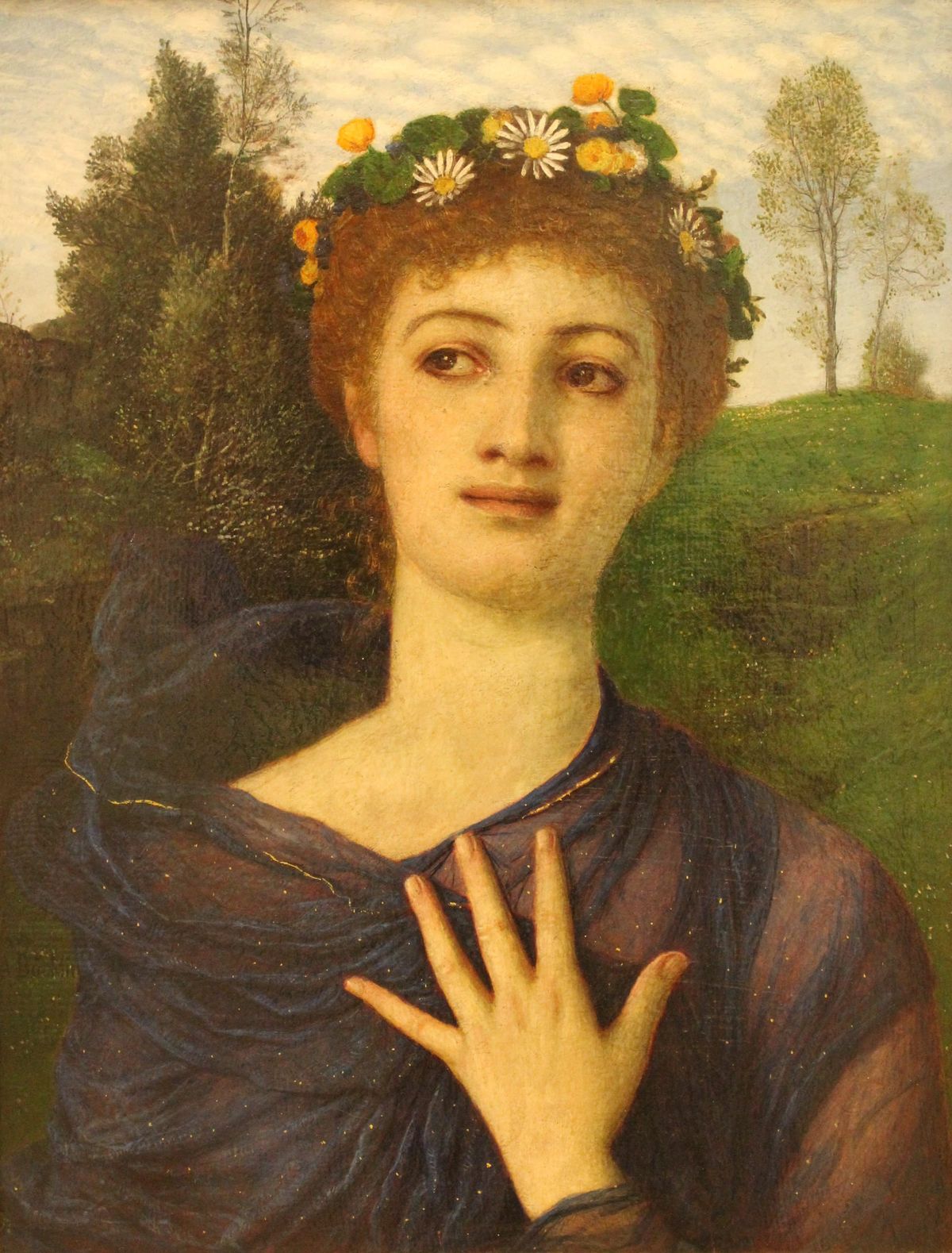
스위스 출신의 상징주의 거장 아놀드 뵈클린(Arnold Böcklin, 1827–1901)이 1875년에 이탈리아 피렌체에서 완성한 유화 플로라(Flora, 독일어: Flora)는 83.0 cm × 64.5 cm 크기의 캔버스에 유채와 템페라로 그린 대표적인 신화 초상화 걸작입니다. 현재 독일 라이프치히의 조형예술박물관(Museum der bildenden Künste, Leipzig)에 소장되어 있습니다.
피렌체 꽃시장을 털어버린 괴짜 화가와 생화 화환 소동
1870년대 중반 피렌체에 정착한 뵈클린은 봄과 꽃의 여신 플로라를 화폭에 담기 위해 온갖 유별난 고집을 부렸습니다. 당시 아카데미 화가들은 인조 직물로 만든 조화나 책에 그려진 식물 도감을 보며 얌전하게 꽃을 그렸습니다. 하지만 뵈클린은 메마른 조화를 보고 그리는 것은 살아있는 여신을 모욕하는 짓이라며 화를 냈습니다. 그는 꽃잎에 맺힌 새벽이슬과 생화 특유의 싱그러운 색채를 포착하기 위해, 매일 새벽 피렌체 꽃시장으로 달려가 갓 꺾은 데이지꽃과 노란 미나리아재비를 한 아름 사 들고 화실로 돌아왔습니다.
화실에서는 매일 아침 생화 화환을 엮는 진풍경이 벌어졌습니다. 뵈클린은 꽃이 시들기 전에 그 생생한 윤기를 담아내려고 아내 안젤라와 모델의 머리 위에 직접 신선한 들꽃 화환을 씌워두고 붓을 휘둘렀습니다. 한낮의 더위 때문에 꽃잎이 조금이라도 축 늘어지면 화가는 작업을 중단하고 정원으로 뛰어나가 다시 새 꽃을 꺾어 화환을 새로 엮어 얹었습니다. 하루에도 서너 번씩 화환을 갈아 끼우느라 모델이 머리가 무겁고 어지럽다며 투정을 부리자, 뵈클린은 여신의 머리 위에는 언제나 살아 숨 쉬는 봄의 숨결이 얹혀 있어야 한다며 시원한 레몬수를 건네고 달래며 작업을 이어갔습니다. 화면 속에서 여신의 풍성한 갈색 머리 위에 싱싱하게 피어 있는 하얀 데이지와 샛노란 들꽃들은, 이러한 화가의 유쾌한 집념과 집요한 자연 관찰이 빚어낸 눈부신 결실입니다.
맑고 깊은 여신의 눈동자에서 가슴에 얹은 섬세한 손끝으로, 시선의 심리적 여정
그림을 마주하는 순간 관람객의 무의식적 시선은 화면 상단에서 부드러운 봄 햇살을 받아 우윳빛으로 빛나는 플로라의 우아한 얼굴과 왼쪽 위를 아련하게 응시하는 맑고 깊은 갈색 눈동자로 가장 먼저 이끌립니다. 갓 피어난 봄날의 신비로움을 품은 여신의 촉촉한 눈망울과 살짝 벌어진 입술은 보는 이에게 형언할 수 없는 서정성과 설렘을 선사합니다.
이어 시선은 여인의 머리를 둥글게 감싼 하얀 데이지와 노란 들꽃 화환을 지나, 짙푸른 밤하늘빛과 보랏빛이 감도는 비단 옷자락 위로 부드럽게 펼쳐진 그녀의 오른손으로 이동합니다. 얇은 천 너머로 뛰는 심장의 고동을 느끼듯 가슴 위에 가지런히 얹은 섬세한 손가락의 움직임을 확인하는 순간, 관람객은 봄을 맞이하는 여신의 벅찬 감동을 공감각적으로 느끼게 됩니다.
마지막으로 시선은 금빛 가루가 은은하게 반짝이는 짙은 보랏빛 옷의 주름을 지나, 여인의 등 뒤로 완만하게 펼쳐진 연둣빛 구릉과 푸른 잎을 틔운 자작나무들, 그리고 깃털 구름이 수놓인 맑은 하늘에 멈춥니다. 만물이 소생하는 들판의 온화함과 꽃의 여신이 뿜어내는 고귀한 기품을 마주하며, 관람객은 메마른 일상을 깨우는 찬란한 봄의 생명력과 대자연이 선사하는 영원한 평화를 가슴 깊이 마주하게 됩니다.
르네상스 고전미와 상징주의 서정의 완벽한 융합, 미술계의 평가
미술계는 플로라를 19세기 유럽 상징주의 회화가 이탈리아 르네상스의 고귀한 초상화 양식을 계승하면서도 자연의 생명력을 가장 아름답고 감각적인 조형 언어로 완성한 수작으로 평가합니다.
싱싱한 들꽃의 세밀한 묘사, 짙은 파란색과 보랏빛 천에 가미된 금빛 장식의 화려함, 그리고 이상화된 여신의 표정에 깃든 인간적인 온기를 완벽한 명암 조화로 담아냈기 때문입니다. 박제된 고전주의의 규율을 깨고 생생한 자연의 숨결을 시각 예술로 승화시킨 뵈클린의 이 눈부신 화폭은 오늘날까지도 수많은 이들에게 따뜻한 서정과 예술적 영감을 전해주는 불멸의 명작으로 손꼽히고 있습니다.
The Vernal Bloom of the Goddess of Nature, Flora
Painted in 1875 in Florence by the preeminent Swiss Symbolist master Arnold Böcklin (1827–1901), Flora (German: Flora) is an oil and tempera on canvas measuring 83.0 cm × 64.5 cm (32.7 in × 25.4 in), preserved in the permanent collection of the Museum of Fine Arts (Museum der bildenden Künste) in Leipzig, Germany.
The Early Morning Flower Markets and the Fresh Floral Garland Episode
During the mid-1870s in Florence, Arnold Böcklin approached the depiction of Flora, the classical goddess of flowering plants and spring, with intense dedication. While mainstream academic masters routinely sketched artificial silk flowers or copied botanical illustrations from textbooks, Böcklin scorned these dry practices as an insult to living nature. Determined to capture the delicate moisture on fresh petals and the vibrant pigments of early spring, he made daily pre-dawn excursions to local Florentine markets, hauling back armfuls of newly picked white daisies and golden buttercups.
A lively commotion ensued each morning as fresh garlands were woven within the studio. To render the fleeting botanical freshness before the flowers wilted, Böcklin wove living crowns directly onto the head of his wife, Angela, and his studio model. Whenever the midday heat caused a single blossom to droop, the master stopped painting, dashed out into the garden to gather fresh stems, and reconstructed the entire floral wreath. When the model complained of dizziness from the heavy, changing headpieces, Böcklin laughed cheerfully, poured her a glass of fresh lemonade, and insisted that the goddess of nature must wear the uncorrupted breath of the earth. The lush crown of daisies and buttercups resting upon Flora’s auburn hair was the direct result of this tireless dedication to living nature.
Subconscious Trajectory of the Gaze: From Longing Visage to the Delicate Hand
The observer's subconscious gaze is immediately captivated by the luminous, ivory contours of Flora’s face and throat in the upper register. Her introspective brown eyes gazing softly toward the upper left and her slightly parted lips establish an immediate aura of mythic reverie and vernal longing.
The visual path then shifts through the radiant wreath of white and yellow blossoms circling her curls, descending toward her slender right hand gracefully splayed across her breast. Resting gently over the folds of her deep indigo and violet mantle as if feeling the pulse of spring awaken within her, the figure's delicate fingers create a profound moment of emotional and physical intimacy.
Finally, the trajectory sweeps past the fine gold dust shimmering across her translucent drapery, coming to rest upon the verdant rolling meadow, slender saplings, and feathered white clouds in the open landscape behind her. Observing the harmonious integration between the monumental presence of the goddess and the soft, waking hills, the spectator perceives the timeless beauty of seasonal rebirth and the quiet nobility of the living cosmos.
The Monument of Vernal Lyricism: Critical Legacy
Art historians revere Flora as an exceptional masterpiece that synthesized the dignified portraiture of the Italian High Renaissance with the poetic sensibility of late 19th-century European Symbolism.
By combining botanical realism, rich textural contrasts between sheer fabric and glistening petals, and nuanced psychological depth, Böcklin elevated a mythological personification into a vibrant sensory experience. This magnificent canvas endures as an inspiring testament to the master's boundless creative power, celebrating the sacred vitality of the natural world and the enduring poetry of spring.
본 컨텐트의 저작권은 팔렛트제주에 있습니다. 허가없는 무단전제를 금지합니다.
Copyright © Palette Jeju. All rights reserved. Unauthorized reproduction or redistribution is strictly prohibited.