빗줄기 너머로 피어나는 서정적 정화와 대지의 숨결, 비 내리는 밀밭 Rain / Enclosed Wheat Field in the Rain
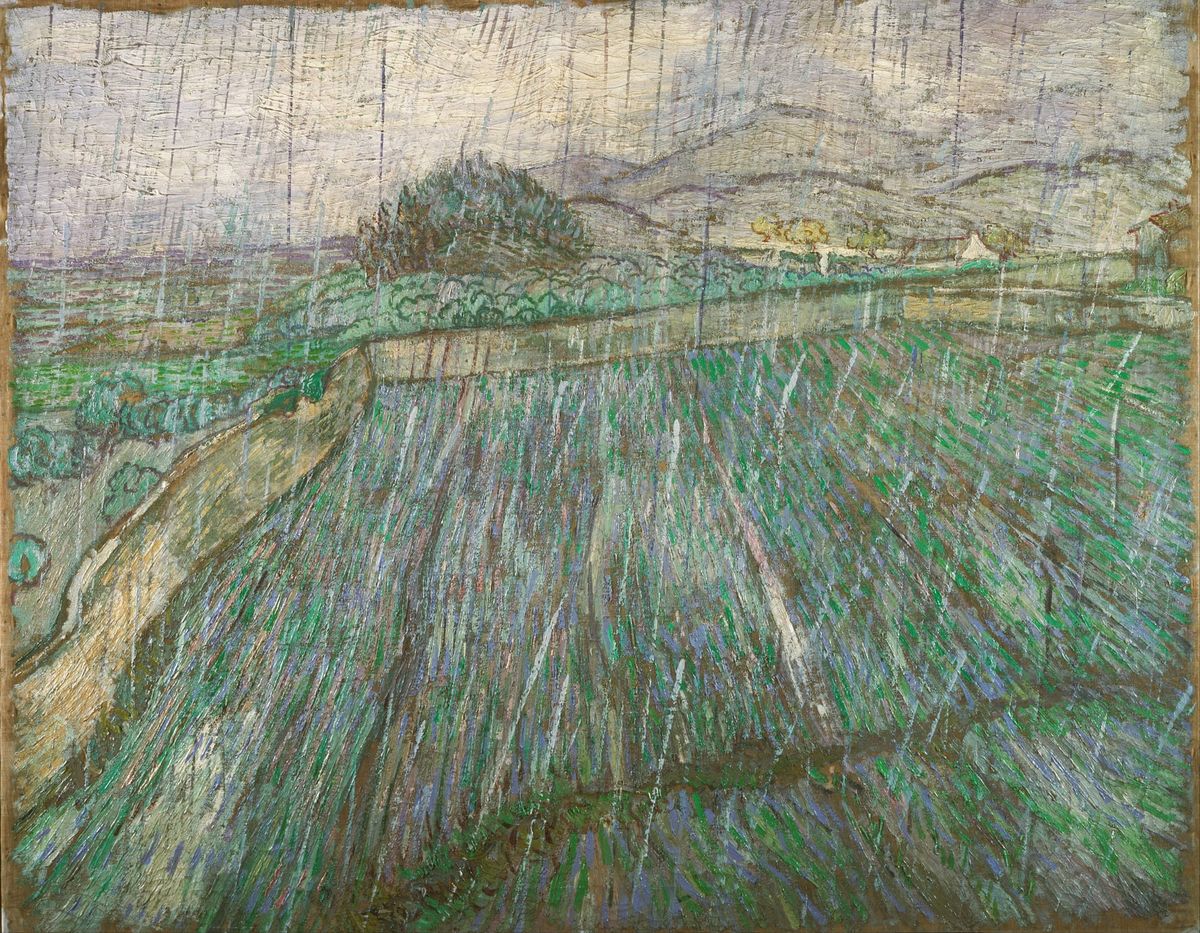
후기 인상주의의 거장 빈센트 반 고흐(Vincent van Gogh, 1853–1890)가 1889년 11월 프랑스 생레미의 생폴 드 모졸 요양원에서 완성한 유화 비 내리는 밀밭(Rain, 또는 비 내리는 밀밭 풍경)은 73.3 cm × 92.4 cm 크기의 캔버스에 유채로 그린 대표작으로, 현재 미국 펜실베이니아주 필라델피아 미술관(Philadelphia Museum of Art)에 영구 소장되어 있습니다.
병실 창문 너머로 쏟아지는 빗줄기와 일본 판화의 서정적 승화
1889년 늦가을, 생레미 요양원에 머물던 반 고흐는 궂은 날씨 탓에 야외로 나가지 못하고 자신의 침실 겸 작업실 창가에 섰습니다. 쇠창살 너머로 내려다보이는 들판 위로 차가운 가을비가 쏟아져 내리는 광경을 바라보던 그는, 빗방울 하나하나가 메마른 대지를 적시며 새로운 생명을 준비하는 자연의 숭고한 호흡을 직관했습니다.
고흐는 이 축축하고 서늘한 풍경을 그리기 위해 자신이 오랫동안 사랑했던 일본 우키요에 판화, 특히 우타가와 히로시게의 명작 오하시 다리에 쏟아지는 소나기에서 차용한 빗줄기 묘사 기법을 유화로 대담하게 전환했습니다. 화면 전체를 사선으로 가로지르는 은빛과 청회색의 날렵한 빗줄기들은 캔버스에 팽팽한 리듬감을 부여합니다. 동생 테오에게 보낸 편지에서 그는 "비가 내리는 가운데 담장으로 둘러싸인 들판을 그리고 있다. 멀리 보이는 언덕과 들판이 비에 젖어드는 모습이 더없이 차분한 위안을 준다"고 적었습니다. 고립된 요양원 생활의 답답함 속에서도 자연의 변화를 온몸으로 받아들이며 마음의 평정을 찾고자 했던 화가의 투명한 서정이 짙게 배어 있습니다.
무의식 속 시선의 공간 하강과 차분한 심리적 치유
감상자의 시선은 화폭 전면을 대각선으로 시원하게 가로지르며 내리꽂히는 은회색과 청자줏빛 빗줄기들의 날렵한 사선으로 가장 먼저 빨려 들어갑니다. 화면 전체를 장막처럼 감싸는 빗줄기의 율동적인 선묘는 보는 이의 무의식 속에 일상의 소음을 잠재우는 빗소리의 공감각적 착각과 고요한 침묵을 불러일으킵니다.
이어 시선은 빗줄기를 뚫고 대지 위로 내려앉아, 캔버스 하단에서 부채꼴로 시원하게 펼쳐진 밭고랑의 짙은 청록색과 연두빛 터치들을 따라 미끄러져 올라갑니다. 비를 머금어 한층 짙어진 흙과 풀잎의 생생한 질감은 시선에 묵직한 촉각적 안정감을 선사합니다.
그 후 시선은 들판을 단단하게 가로지르는 돌담을 넘어, 원경에 안개처럼 흐릿하게 물러선 야산의 둥근 실루엣과 잿빛 하늘로 아스라이 확장됩니다. 차가운 보랏빛 빗방울과 싱그러운 녹색 대지가 자아내는 서늘하면서도 아늑한 톤의 조화 속에서, 관람자는 의식하지 못하는 사이 마음속 응어리가 씻겨 내려가는 듯한 깊은 카타르시스와 차분한 정서적 안식을 맛보게 됩니다.
대기 묘사의 혁신과 모더니즘 풍경화의 지평, 미술사적 평가
미술계는 비 내리는 밀밭을 반 고흐가 생레미 시기에 남긴 수많은 풍경화 가운데 '순수한 대기 효과와 시각적 리듬'을 가장 독창적으로 구현해 낸 걸작으로 평가합니다.
단순히 비가 오는 외형을 묘사하는 데 머물지 않고, 비라는 비물질적 자연 현상을 굵고 날카로운 유화 필선으로 구체화하여 화면의 독립된 조형 요소로 끌어올렸기 때문입니다. 동양 목판화의 장식적 선묘와 서양 후기 인상주의의 두터운 질감을 완벽하게 융합한 이 작품은, 훗날 20세기 현대 회화에서 비구상적 선의 율동과 표현주의적 대기 표현을 개척한 독보적인 예술적 성취로 높이 평가받고 있습니다.
The Cleansing Breath of the Earth in the Mist, Rain
Painted in November 1889 from the barred window of his room at the Saint-Paul de Mausole asylum in Saint-Rémy-de-Provence by Vincent van Gogh (1853–1890), Rain (also known as Enclosed Wheat Field in the Rain) is an oil on canvas measuring 73.3 cm × 92.4 cm (28.9 in × 36.4 in), preserved in the permanent collection of the Philadelphia Museum of Art in Philadelphia, Pennsylvania.
Japanese Linear Elegance Meets the Provençal Deluge: Solace in Saint-Rémy
In the late autumn of 1889, confined indoors by inclement weather and recovering from mental distress, Van Gogh looked out through the iron-barred window of his studio at the walled field below. As sheets of cold rain swept across the Alpilles foothills, Vincent found profound tranquility in the rhythmic deluge soaking the fertile earth.
To transcribe the atmospheric phenomenon of rainfall onto canvas, Vincent drew direct inspiration from Japanese ukiyo-e prints, particularly Utagawa Hiroshige’s iconic Sudden Shower over Shin-Ōhashi Bridge and Atake. Translating Hiroshige's parallel woodcut lines into sharp, diagonal slashes of silver-white and violet oil paint, he structured the storm into a pulsing visual cadence. Writing to his brother Theo, Vincent remarked that he had completed a canvas of the enclosed field under the rain, finding therapeutic solace in the melancholic stillness of the drenched countryside.
Psychological Trajectory of the Gaze and Subconscious Catharsis
The observer’s subconscious gaze is immediately captivated by the sharp, diagonal slashes of rain scoring the entire surface of the picture plane. This shimmering veil of silver-gray and slate-blue lines evokes an instantaneous synesthetic sensation of rainfall, quieting internal restlessness with its hypnotic cadence.
Visual perception then descends through the curtain of rain to navigate the broad, sweeping furrows of the wheat field. Rendered in textured strokes of rich emerald, viridian, and dampened earth, the ground plane tilts upward to provide a solid, tactile foundation.
The eye subsequently climbs past the enclosing stone wall, resting upon the soft, undulating hills dissolving into the overcast sky before dispersing into the atmospheric horizon. Caught within the cool harmony of violet-tinted downpours and lush terrestrial greens, the viewer subconsciously internalizes an enduring sense of emotional cleansing, psychological renewal, and restorative peace.
Atmospheric Innovation and Linear Modernism: Critical Significance
Art historians revere Rain as a dazzling triumph of Van Gogh’s spatial and textural ingenuity, representing one of the most daring atmospheric studies of the Post-Impressionist era.
By liberating the diagonal brushstroke into an autonomous aesthetic force that hovers between surface abstraction and representational reality, Van Gogh bridged the graphic elegance of Eastern art with the raw emotional power of Western painting. Foreshadowing the linear dynamics and expressive freedom of modern abstraction, this masterwork endures as a luminous monument to an artist who discovered pure poetry within the quietest storms of life.
Copyright © Palette Jeju. All rights reserved. Unauthorized reproduction or redistribution is strictly prohibited.
본 컨텐트의 저작권은 팔렛트제주에 있습니다. 허가없는 무단전제를 금지합니다.