빌라도 앞의 그리스도(Christ Before Pilate)
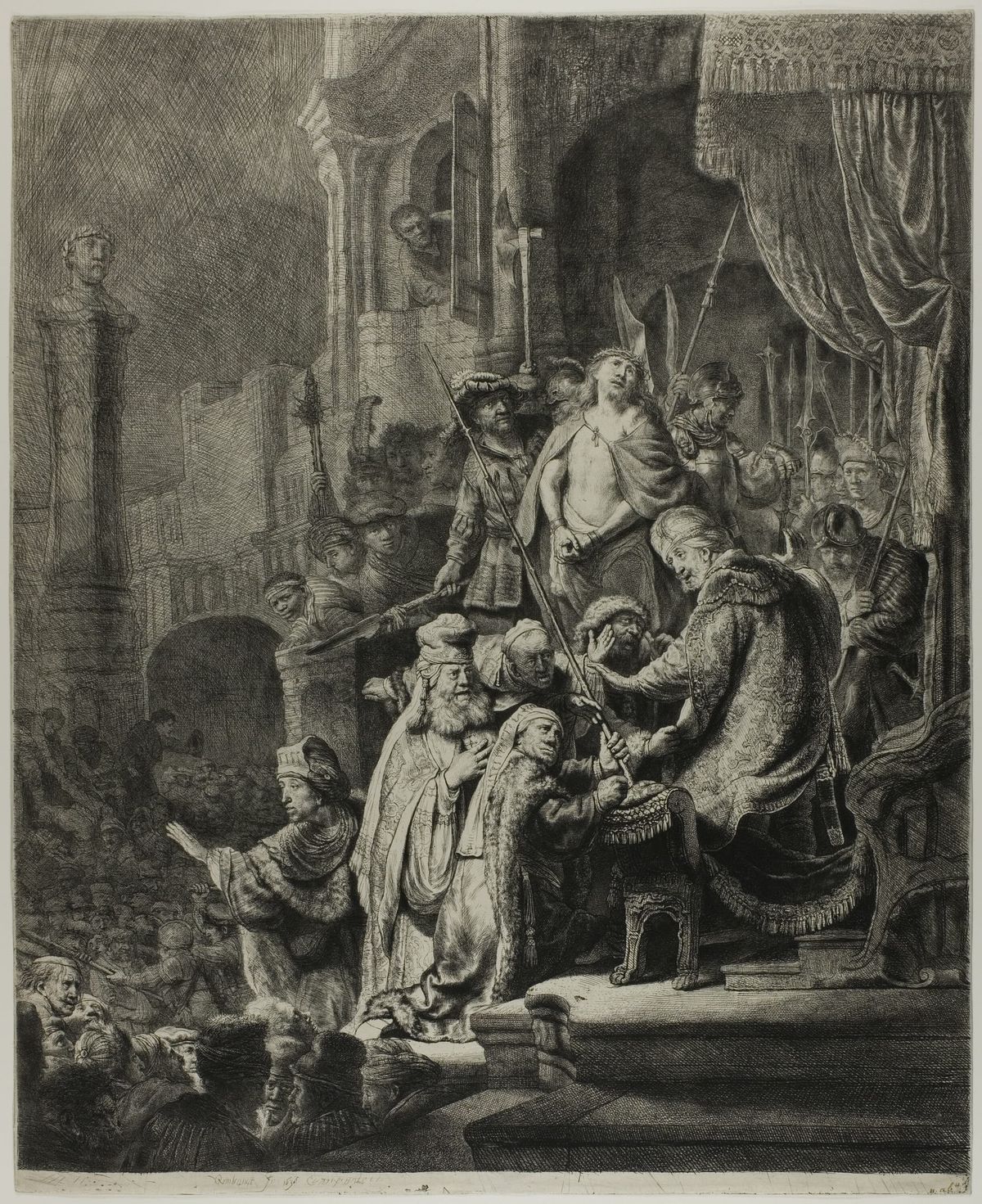
1636년 17세기 네덜란드 미술의 거장 렘브란트 반 레인(Rembrandt van Rijn)이 제작한 판화 작품 《빌라도 앞의 그리스도》는 에칭과 드라이포인트 기법으로 완성된 종교 역사화의 수작으로, 현재 암스테르담 국립미술관(Rijksmuseum)과 런던 대영박물관(British Museum) 등에 원본 판화가 소장되어 있으며 실제 크기는 약 54.9 × 44.7 cm입니다.
이 화면은 성경 신약에 기록된 재판의 순간, 로마 총독 폰티오 빌라도 앞에 선 예수 그리스도와 그를 처형하라고 번잡하게 고함치는 군중의 혼란스러운 장면을 정교하고 밀도 높은 판화 선으로 포착해 낸 걸작입니다. 렘브란트는 가시면류관을 쓰고 결박된 채 조용히 하늘을 바라보는 예수의 고요한 태도와, 판결대 위에서 손짓하며 고뇌하는 빌라도, 그리고 그 아래에서 소요를 일으키는 종교 지도자들과 군중의 대비를 극적인 빛과 음영을 통해 입체적으로 재현했습니다.
작품 속에는 렘브란트 판화 예술 중에서도 손에 꼽히는 대형 판본으로서의 비하인드 스토리가 흐릅니다. 렘브란트는 이 구도를 완성하기 위해 모노크롬 그림(그리자유)을 먼저 제작한 뒤 이를 바탕으로 대형 동판화 작업을 진행했습니다. 로마 제국의 권력을 상징하는 기둥 위 로마 황제의 두상, 빌라도가 앉아 있는 화려한 재판정의 천막과 기하학적 건축물, 그리고 화면 하단을 가득 채운 군중의 다채로운 표정은 인간 사회의 군상과 신성한 희생의 비극을 선명하게 부각시킵니다.
후대 평단과 관객들은 이 판화를 렘브란트가 동판화 매체로 다다를 수 있는 가장 장엄한 연극적 구성과 심리적 긴장감을 보여주는 대작으로 평가합니다. 촘촘하게 교차하는 해칭 선들이 만들어내는 화면 상단의 묵직한 음영과 중심부에 집약된 빛의 대조는 관객에게 시대를 초월한 숭고한 감동과 깊은 몰입감을 선사합니다.
이 그림을 마주하는 관람객의 무의식적 시선은 화면 우측 상단, 높은 단상 위에서 가시면류관을 쓴 채 은은한 빛을 받고 있는 그리스도의 초췌하면서도 성스러운 신체로 가장 먼저 끌려갑니다. 수난 속에서도 침묵을 지키는 예수의 모습은 관람객의 마음에 묵직한 시각적 중심과 숙연한 평온함을 안겨줍니다.
이어 시선은 그리스도 바로 아래 재판석에 앉아 그를 향해 손을 내밀고 있는 총독 빌라도의 포즈와, 그 앞에서 그리스도를 탄핵하기 위해 열정적으로 소리치는 대사제 및 율법학자들의 다급한 손짓으로 자연스럽게 이동합니다. 위계적이고 역동적인 인물들의 배치는 재판 현장의 팽팽한 정서적 긴장감을 고조시킵니다.
마지막으로 시선은 화면 좌측 상단에 우뚝 솟은 로마 황제의 두상 기둥을 지나, 화면 하단과 좌측 붉은 어둠 속에서 고함치고 있는 수많은 군중의 윤곽 속으로 낙하하여 정착합니다. 이러한 무의식적 시선의 흐름은 격동하는 인간 세사의 소음 속에서 고요히 빛나는 신성한 희생의 의미를 생각하게 만들며, 마음에 닿는 깊은 정서적 여운을 오래도록 남깁니다.
In 1636, Rembrandt van Rijn, one of the paramount masters of the Dutch Golden Age, created the ambitious etching and drypoint titled "Christ Before Pilate." Preserved in world-renowned collections such as the Rijksmuseum in Amsterdam and the British Museum in London, this original print measures approximately 54.9 × 44.7 cm. This artwork finely captures the dramatic trial of Jesus through a complex, monumentally scaled matrix of etched lines.
The print visually articulates the intense biblical moment from the Passion, depicting the bound Christ presented before the Roman Governor Pontius Pilate amidst a clamorous, demanding crowd. Historical context reveals this to be one of Rembrandt's largest and most technically challenging printmaking projects, developed after an initial grisaille oil sketch. The inclusion of classical architecture, the bust of Caesar atop a prominent pillar, and the chaotic press of the Jerusalem populace underscores the clash between earthly power and spiritual conviction.
Art historians and critics continuously extol this sheet as a masterpiece of narrative staging and psychological crowd dynamics, celebrating Rembrandt's ability to orchestrate multi-figure compositions with cinematic grandeur. The striking contrast between the luminous figure of Christ and the densely cross-hatched architectural shadows creates an enduring atmosphere of sacred tension and tragedy.
The moment an observer encounters this artwork, their gaze is subconsciously drawn straight to the elevated, illuminated figure of Christ standing patiently near the tribunal. His quiet, suffering composure immediately diffuses tension, instilling a comforting sense of sacred dignity and emotional resonance.
Next, the eye glides smoothly down to the seated figure of Pilate and traces the animated gestures of the accusers and religious leaders arguing before his dais. The intricate line work describing their expressive faces and ornate garments lends physical weight and dramatic realism to the scene.
Finally, the viewer's gaze drifts toward the towering bust of Caesar on the left before settling upon the dark, surging crowd filling the lower foreground. This natural visual journey guides the spectator into a state of solemn reflection, leaving a lasting impression of grace, judgment, and timeless peace.
본 리뷰에서 작품을 제외한 컨텐츠의 저작권은 팔렛트제주에 있습니다.
"퍼블릭도메인 고전명화"를 제외한 모든 창작 콘텐츠는 저작권법 제4조 및 제10조에 의거하여 보호됩니다. 무단 도용시 저작권법 제136조(벌칙)에 의거, 당사의 사전 서면 승인 없는 저작권 침해 행위를 금지합니다.