비 오는 날의 파리 거리 Paris Street Rainy Day
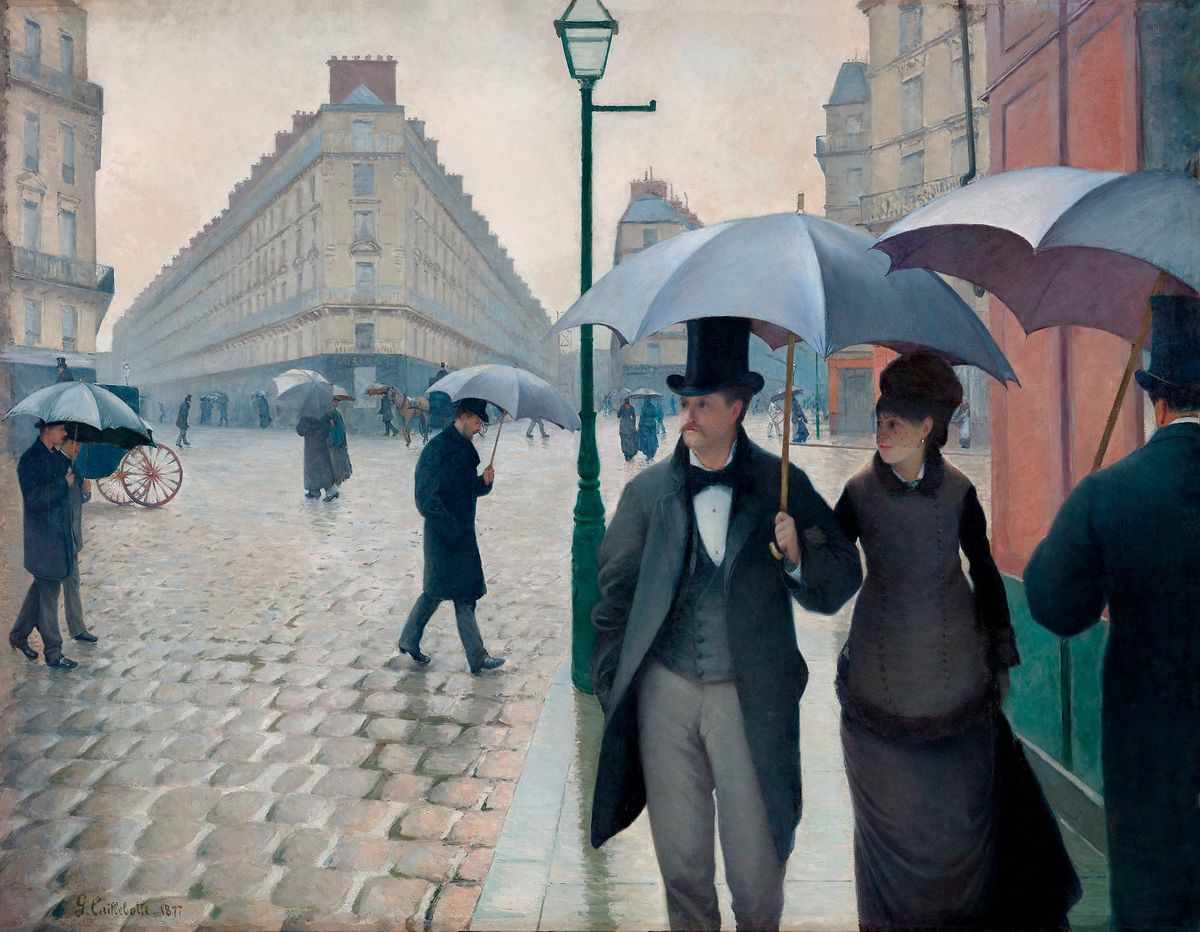
비에 젖어 반짝이는 조약돌 도로 위로 우산을 쓴 사람들의 발걸음이 교차하는 이 웅장한 작품은, 귀스타브 카유보트가 1877년에 완성한 불멸의 명작입니다. 세로 212.2cm, 가로 276.2cm라는 압도적이고 거대한 실제 캔버스 크기를 자랑하는 이 그림은, 오스만 남작의 도시 정비 사업으로 완전히 새롭게 태어난 근대 파리의 교차로 풍경을 마치 영화의 한 장면처럼 담아내고 있습니다.
작품 앞에 선 관람자의 시선은 가장 먼저 화면 우측에서 우산을 쓰고 걸어오는 잘 차려입은 부르주아 남녀와, 화면 뒤쪽을 날카롭게 가로지르는 거대한 쐐기 모양의 아파트 건물로 향하게 됩니다. 자로 잰 듯 완벽한 원근법으로 세워진 이 견고한 건축물과 사람들의 단정한 옷차림은 우리가 매일같이 유지하려 애쓰는 이성적이고 통제 가능한 세계, 즉 견고하게 짜인 의식의 상태와 사회적 질서를 상징합니다.
하지만 이내 우리의 눈길은 화면의 절반 가까이를 차지하는 젖은 바닥의 반사된 빛과, 사람들의 표정을 은밀하게 가리고 있는 크고 짙은 우산들로 부드럽게 미끄러져 내려갑니다. 이 우산들은 물리적인 비를 막아주는 도구인 동시에 타인과의 소통을 단절시키는 심리적 방어막으로 작용합니다. 시각의 중심이 차가운 도로와 단절된 개인들로 이동하면서, 감상자는 화려한 도시 군중 속에서 현대인들이 겪게 되는 깊은 고독감과 소외감이라는 무의식의 풍경 속으로 짙게 빠져들게 됩니다.
이처럼 정교하고 현대적인 풍경이 탄생한 비하인드 스토리에는 부유한 엘리트 계층이었던 카유보트의 예리하고 차가운 관찰력이 숨어 있습니다. 그는 모네나 르누아르 같은 다른 인상파 화가들이 자연의 빛과 색채에 몰두할 때, 새롭게 포장된 파리의 두블랭 광장(Place de Dublin)으로 나가 카메라 루시드(광학 장치)를 활용해 치밀하게 공간을 설계했습니다. 비 오는 날 특유의 우울한 공기 속에서 서로 눈을 마주치지 않고 엇갈려 걸어가는 사람들의 모습을 통해, 그는 화려한 근대화의 이면에 자리 잡은 인간관계의 단절을 그 누구보다 먼저 간파해 낸 것입니다.
오늘날 미술사학자들은 이 작품을 19세기 근대성을 가장 완벽하게 포착한 미술사 최고의 걸작 중 하나로 칭송합니다. 인상주의 특유의 일상적이고 순간적인 주제를 다루면서도, 아카데미 화풍의 정교한 사실주의와 사진기 렌즈로 자른 듯한 파격적인 화면 구도를 완벽하게 결합했기 때문입니다. 이 그림은 단순한 풍경화를 넘어 현대 도시가 품고 있는 우울하고 세련된 심리적 지형도를 탁월하게 그려낸 기념비적인 예술 작품으로 확고히 인정받고 있습니다.
With the steps of umbrella-holding pedestrians crossing over rain-slicked, glistening cobblestones, this monumental artwork is an immortal masterpiece completed by Gustave Caillebotte in 1877. Boasting an overwhelming and massive actual canvas size of 212.2 by 276.2 centimeters, this painting captures the scenery of a newly transformed modern Parisian intersection—the result of Baron Haussmann's grand urban renovation—like a stunning scene from a movie.
Standing before the painting, the viewer's gaze is first drawn to the well-dressed bourgeois couple walking with an umbrella on the right side of the canvas, and the massive, wedge-shaped apartment building slicing sharply through the background. This solidly constructed architecture, established with perfectly measured perspective, along with the neat attire of the people, symbolizes the rational, controllable world we strive to maintain every day—the tightly structured state of consciousness and strict social order.
However, our eyes soon glide smoothly down to the reflected light on the wet pavement occupying nearly half of the canvas, and to the large, dark umbrellas secretly obscuring the faces of the figures. These umbrellas act not only as physical shields against the rain but also as psychological barriers cutting off communication with others. As the visual center shifts to the cold streets and isolated individuals, the observer deeply sinks into the landscape of the unconscious—the profound sense of solitude and alienation that modern people experience amidst the glamorous urban crowd.
The behind-the-scenes story of how such a meticulously modern landscape was born lies in the sharp, cool observation skills of Caillebotte, who belonged to the wealthy elite class. While other Impressionists like Monet and Renoir were immersed in the light and colors of nature, Caillebotte went out to the newly paved Place de Dublin in Paris and meticulously designed the space using a camera lucida. Through the depiction of people walking past each other without making eye contact in the uniquely melancholic air of a rainy day, he perceived the disconnection of human relationships hidden behind the facade of glorious modernization far earlier than anyone else.
Today, art historians highly praise this artwork as one of the greatest masterpieces in art history that most perfectly captured 19th-century modernity. This is because it flawlessly combined the everyday, momentary subjects typical of Impressionism with the meticulous realism of the academic style and an unconventional, photographic cropping of the scene. This painting is firmly recognized as a monumental work of art that goes far beyond a simple landscape, brilliantly rendering the melancholic and sophisticated psychological topography harbored by the modern city.
ⓒ 본 리뷰의 저작권은 "팔렛트제주"에 있으며, 무단 전재 및 재배포를 엄격히 금합니다. / Copyright 2026 by Palette Jeju. All rights reserved. Unauthorized reproduction or distribution is strictly prohibited.