비 오는 날 오후의 퐁네프 - The Pont-Neuf, Rainy Afternoon (Le Pont-Neuf, après-midi de pluie)
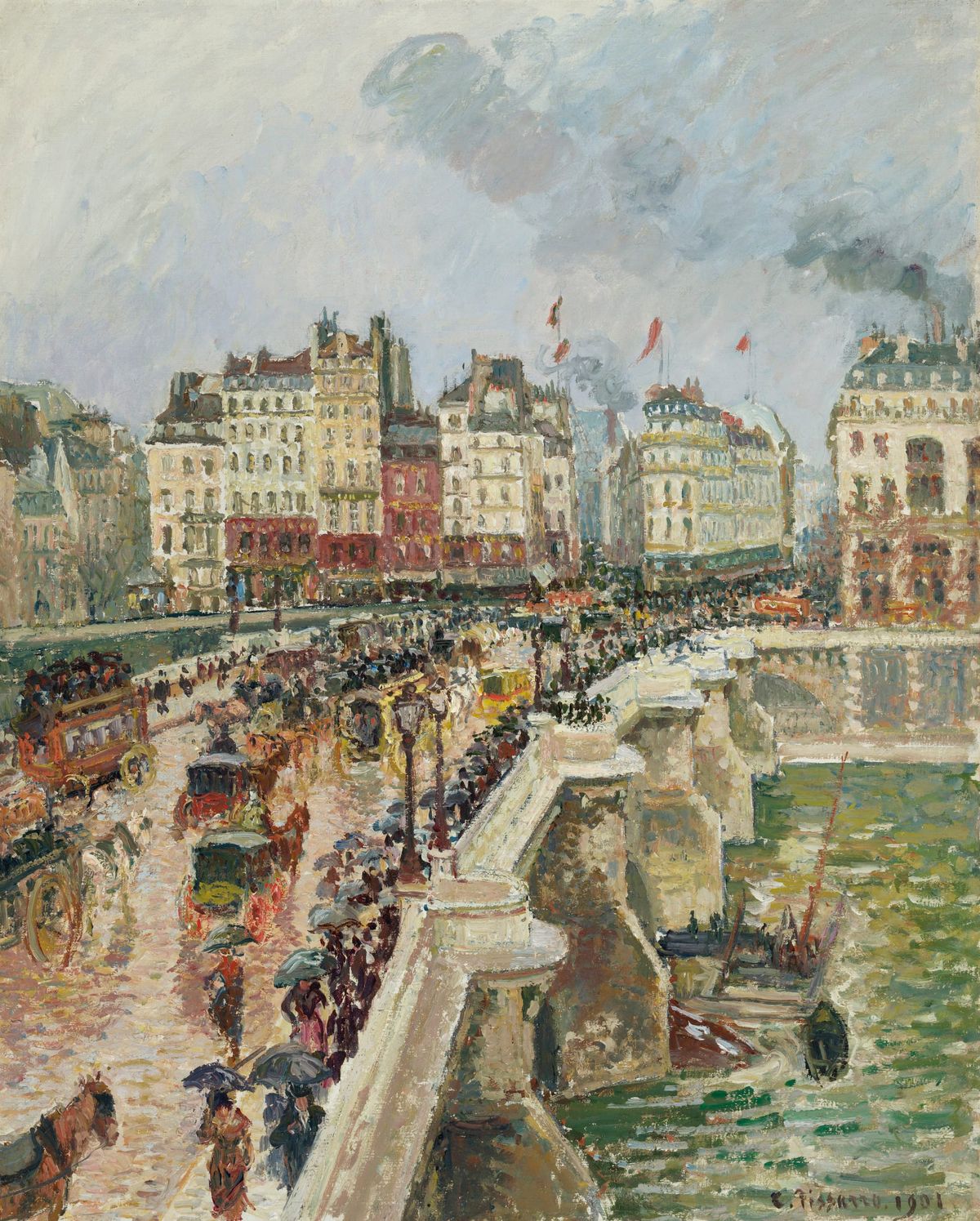
카미유 피사로(Camille Pissarro)가 1901년에 완성한 캔버스 유화 작품입니다. 실제 크기는 약 73 x 92 cm이며, 현재 개인 소장(Private Collection)으로 전해지고 있습니다.
만년에 접어든 인상주의의 거장 피사로는 촉촉하게 젖은 파리 도로에 반사되는 은은한 빛과 우산을 받쳐 든 군중의 분주한 움직임을 특유의 리드미컬하고 속도감 넘치는 붓터치로 포착했습니다. 화면 오른쪽을 단단하게 지탱하는 석조 다리의 교각과 에메랄드빛으로 일렁이는 센강의 물결, 그리고 비안개에 젖어 부드럽게 흐려진 앙리 4세 광장의 파사드는 유화 특유의 농밀한 질감과 어우러져 한 편의 서정적인 파리 풍경을 완성합니다.
이 걸작에는 신체적 한계를 극복하고 도시의 생명력을 예찬한 피사로의 뭉클하고도 흥미로운 일화가 담겨 있습니다. 당시 71세였던 피사로는 만성적인 눈 감염 질환으로 인해 찬 바람이나 비를 직접 맞으며 야외에서 그림을 그릴 수 없었습니다.
그러나 그는 결코 붓을 놓지 않았습니다. 파리에서 가장 유서 깊은 다리를 관찰하기 위해 퐁네프 광장 28번지 건물의 2층 아파트를 빌린 피사로는, 커다란 창가에 이젤을 세워두고 마치 영화의 한 장면을 촬영하듯 비 내리는 파리의 거리를 내려다보며 작업에 몰두했습니다.
그는 아들에게 보낸 편지에서 비에 젖은 아스팔트와 마차의 바퀴, 총총걸음으로 다리를 건너는 수많은 우산들이 만들어내는 빛의 반짝임에 매일같이 감탄하고 있다고 적었습니다. 평생 가난과 소외 속에서도 후배 화가들을 품어주었던 인상주의의 큰 어른은, 생의 마지막 순간까지 차가운 빗줄기마저 다정한 일상의 축제로 바라보는 따뜻한 시선을 캔버스 위에 아낌없이 쏟아부었습니다.
미술사적으로 이 작품은 모네의 순간적 빛 탐구와 구스타브 카유보트의 도시적 공간감을 뛰어넘어, 도시와 인간의 호흡을 가장 따스하게 결합한 후기 인상주의의 정점으로 평가받습니다. 단순히 젖은 거리를 사실적으로 재현하는 것에 그치지 않고, 2층 옴니버스 버스와 마차, 우산 속 사람들의 활기를 통해 근대 파리의 고동치는 맥박을 살아있는 유기체처럼 표현했기 때문입니다.
평단과 후대의 비평가들은 궂은 날씨 속에서도 도시의 삭막함 대신 삶의 경쾌한 리듬과 인간에 대한 무한한 애정을 포착해 낸 피사로의 독보적인 예술혼에 깊은 경의를 표하고 있습니다.
관람자의 무의식적인 시선은 화면 좌측 하단에서 촉촉한 빗길을 가르며 다가오는 마차와 우산을 쓰고 걸어가는 행인들의 정겨운 실루엣에서 친근하게 출발합니다.
이어 시선은 길게 뻗은 다리의 난간과 견고한 석조 아치를 따라 우측 센강의 일렁이는 물결로 자연스럽게 이동하며, 강변에 정박한 나룻배와 분주한 강둑의 활기를 유영합니다.
이 유려한 시각적 여정은 빗방울이 도심의 먼지를 씻어내듯 관람객의 복잡한 뇌파를 맑고 차분하게 정돈해 주며, 지친 마음에 깊은 청량감과 심리적 안정감을 불어넣어 줍니다.
마지막으로 빗물에 반짝이는 고풍스러운 건물 벽면을 지나 비구름 사이로 스며드는 은은한 대기 속으로 확장되는 시선의 흐름은, 아늑한 창가에 앉아 창밖의 빗소리와 사람들의 활기찬 발걸음을 편안하게 감상하는 듯한 깊은 이완과 정서적 충만함을 선사합니다.
The Pont-Neuf, Rainy Afternoon - The Pont-Neuf, Rainy Afternoon (Le Pont-Neuf, après-midi de pluie)
Painted in 1901 by Camille Pissarro, this oil on canvas measures approximately 73 by 92 centimeters and is held within a private collection.
Approaching the twilight of his career, the patriarch of Impressionism translated the delicate reflections on rain-slicked pavement and the rhythmic cadence of an umbrella-carrying crowd through energetic and layered brushwork. The robust stone piers supporting the bridge on the right, the emerald green ripples of the Seine, and the softened facades of Place Dauphine veiled in misty rain coalesce into a profoundly atmospheric portrait of Paris.
Behind this captivating canvas lies an inspiring narrative of artistic determination triumphing over physical limitation. At the age of seventy-one, Pissarro suffered from chronic eye infections that strictly prohibited him from working outdoors in damp and windy weather.
Undaunted by these constraints, he rented an apartment on the second floor at 28 Place Dauphine specifically to capture the dynamic vantage point overlooking the Pont-Neuf. Positioning his easel directly before the large windows, he recorded the lively Parisian drizzle as if observing an unfolding theatrical scene.
In letters to his son Lucien, Pissarro expressed immense delight in the dancing highlights reflected across wet thoroughfares, the scurrying pedestrians, and the vibrant double-decker omnibuses crossing the bridge. Even in his advanced years, the generous mentor of the Impressionist movement embraced the inclement weather with boundless warmth, immortalizing the rain as an affectionate celebration of everyday urban life.
Art historians recognize this piece as a crowning triumph of late Impressionist urbanism, harmoniously merging the fleeting atmospheric studies of Monet with a deeply compassionate humanist vision. Pissarro did not merely depict wet stone and asphalt; he animated the living pulse of modern Paris through the synchronized motion of horse carriages, bustling crowds, and river barges.
Modern scholarship celebrates this work for its exquisite color harmony and its enduring capacity to uncover poetic joy and vitality amidst the grayest of rainy afternoons.
The viewer's subconscious gaze begins naturally in the lower left foreground, guided by the wet, glistening stones, the advancing horse carriages, and the charming silhouettes of figures sheltered beneath umbrellas.
The eye then glides effortlessly along the diagonal sweep of the stone parapet, drifting over the deep green currents of the Seine and the moored riverboats beside the arches.
This rhythmic visual journey acts like a gentle rainfall clearing away mental fatigue, easing physiological tension and restoring a sense of tranquil equilibrium.
As the visual path ascends toward the stately Parisian buildings and the soft, expansive gray skies, the observer experiences a soothing sensory escape akin to watching a gentle afternoon rain from a warm, peaceful vantage point above the city.
본 리뷰에서 작품을 제외한 컨텐츠의 저작권은 팔렛트제주에 있습니다.
"퍼블릭도메인 고전명화"를 제외한 모든 창작 콘텐츠는 저작권법 제4조 및 제10조에 의거하여 보호됩니다. 무단 도용시 저작권법 제136조(벌칙)에 의거, 당사의 사전 서면 승인 없는 저작권 침해 행위를 금지합니다.