비 온 뒤, 테아트르 프랑세 광장 - After the rain; Place du Théâtre Français
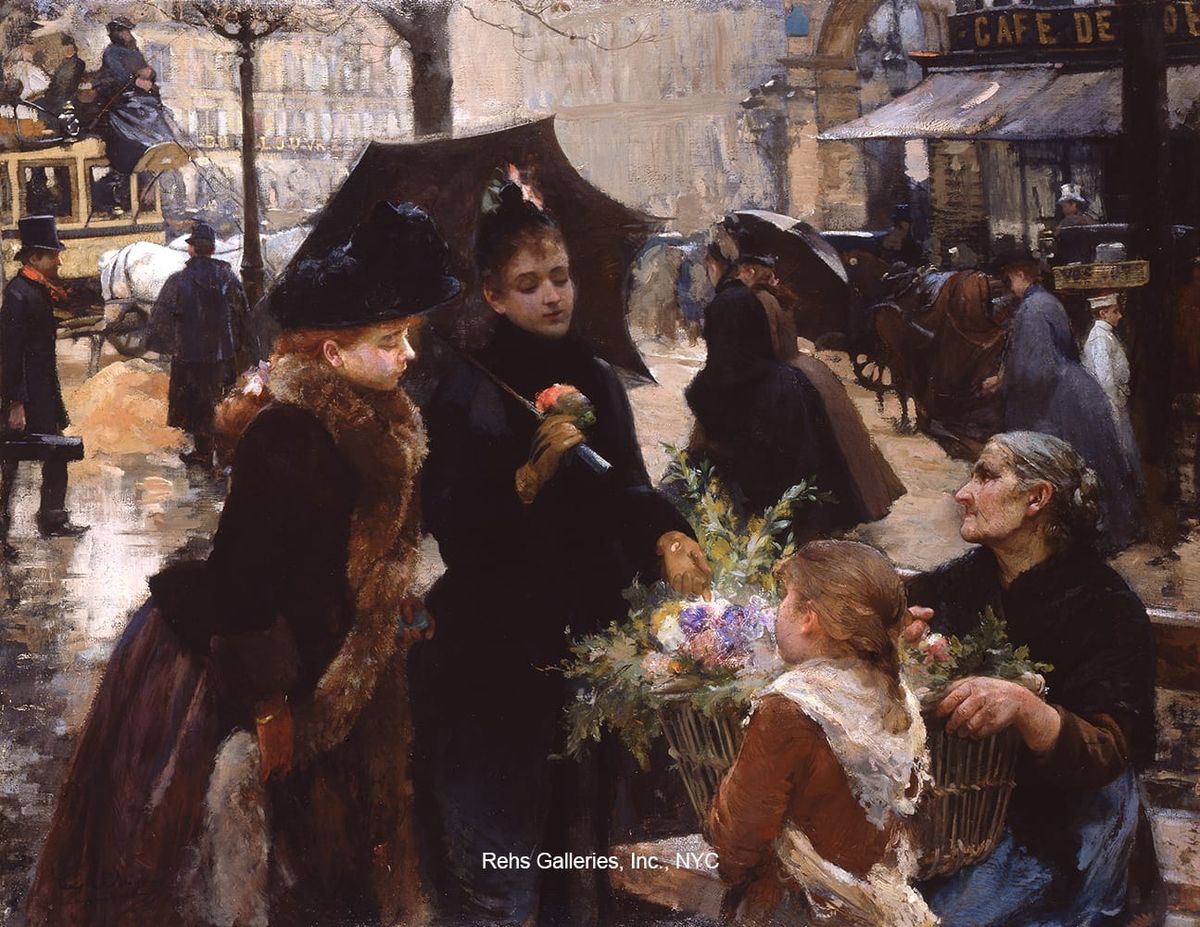
프랑스의 화가 루이 마리 드 슈라이버(Louis Marie de Schryver)가 1889년에 완성한 이 작품은 캔버스에 유채(Oil on canvas) 기법으로 제작되었으며, 크기는 115.6 x 148.6cm입니다. 현재 개인 소장품으로 관리되고 있어 일반 미술관에서 접하기는 쉽지 않지만, 19세기 말 벨 에포크(Belle Époque) 시대 파리의 분위기를 가장 정교하게 담아낸 걸작으로 손꼽힙니다. 작가는 비가 내린 직후의 축축한 대기와 도시의 빛을 섬세하게 표현하기 위해 두꺼운 질감 표현과 유화 특유의 투명한 덧칠 기법을 절묘하게 섞어 사용했습니다. 화면 가득 퍼지는 빛의 잔영과 인물들의 의복 질감은 정교한 묘사력과 인상주의적 감수성이 완벽하게 결합한 결과물입니다.
드 슈라이버는 당대 파리의 꽃 파는 여인들과 상류층 여성들의 일상적인 만남을 주요 소재로 삼아 큰 명성을 얻었습니다. 특히 이 작품의 배경이 된 테아트르 프랑세 광장은 파리의 문화와 사교의 중심지로, 작가는 실제 거리의 분위기를 담기 위해 현장에서 스케치를 거듭하며 정교한 구도를 완성했습니다. 화사한 화초를 매개로 서로 다른 사회적 계층이 교차하는 이 미묘한 순간은 당대 미술 비평가들로부터 도회적 삶의 순간을 가장 우아하게 포착했다는 찬사를 받았습니다. 오늘날 후대 평가에서도 19세기 말 파리의 풍요로움과 그 뒤에 숨겨진 서민들의 삶을 동시에 조명한 문학적이고 미술사적인 가치가 높게 인정받고 있습니다.
관람객의 시선은 가장 명암 대비가 강하고 화려한 화면 중앙 하단의 꽃바구니와 이를 손짓하는 여인의 장갑 낀 손으로 무의식적으로 먼저 끌려갑니다. 이 화사한 꽃의 색채에서 출발한 눈길은 자연스럽게 우산을 쓴 두 여성의 우아한 표정과 화려한 의상으로 올라가며 도회적인 고급스러움에 대한 감탄과 함께 시각적 몰입감을 느끼게 됩니다. 이후 시선은 우측 아래에 고단한 표정으로 앉아 있는 노점상 할머니와 어린아이의 얼굴로 이어지는데, 이 순간 관람객의 심리는 화려함에 대한 감탄에서 서정적인 동정심과 안도감으로 미묘하게 전환됩니다. 마지막으로 배경의 젖은 보도블록과 웅성거리는 마차, 카페의 풍경으로 시선이 확장되면서 비 온 뒤 파리 거리의 축축하면서도 포근한 공기 속에 완전히 몰입하게 됩니다.
After the rain; Place du Théâtre Français
Completed in 1889 by the French painter Louis Marie de Schryver, this masterpiece was executed in oil on canvas and measures 115.6 by 148.6 centimeters. Currently held in a private collection, it stands as one of the most exquisite portrayals of Paris during the Belle Époque era. To capture the damp atmosphere and shimmering urban light immediately following a rainstorm, Schryver deftly combined impasto techniques with luminous glazes. The glowing reflections across the wet pavement and the rich textures of the figures' garments demonstrate a flawless synthesis of academic precision and Impressionistic sensibility.
Schryver achieved widespread acclaim for his recurring depictions of Parisian flower vendors interacting with elegant upper-class women. The setting of this painting, the Place du Théâtre Français, served as a bustling hub of Parisian culture and social life. The artist spent considerable time making on-site sketches to achieve an authentic and harmonious composition. This subtle encounter between contrasting social spheres, mediated by vibrant blossoms, earned high praise from contemporary critics for its graceful capture of modern life. Today, art historians continue to celebrate the work for its literary depth and historical value, seamlessly portraying both the affluence and the quiet labor of late nineteenth-century Paris.
Upon viewing the canvas, one's gaze is instinctively drawn first to the vivid flower basket at the lower center and the gloved hand delicately pointing toward it. Moving upward from this brilliant focal point, the viewer's eyes naturally trace the elegant expressions and luxurious attire of the two women under the umbrella, evoking a sense of refined fascination. The visual journey then shifts toward the weathered, weary faces of the seated flower vendor and the young child, gently transitioning the viewer's psychological state from mere aesthetic admiration to a grounded, empathetic tranquility. Finally, the eye sweeps out toward the glistening cobblestones, distant carriages, and ambient cafe background, fully immersing the mind in the moist, comforting air of a post-rain Parisian street.
본 리뷰에서 작품을 제외한 컨텐츠의 저작권은 팔렛트제주에 있습니다.
"퍼블릭도메인 고전명화"를 제외한 모든 창작 콘텐츠는 저작권법 제4조 및 제10조에 의거하여 보호됩니다. 무단 도용시 저작권법 제136조(벌칙)에 의거, 당사의 사전 서면 승인 없는 저작권 침해 행위를 금지합니다.