벨사살의 향연 - Belshazzar's Feast
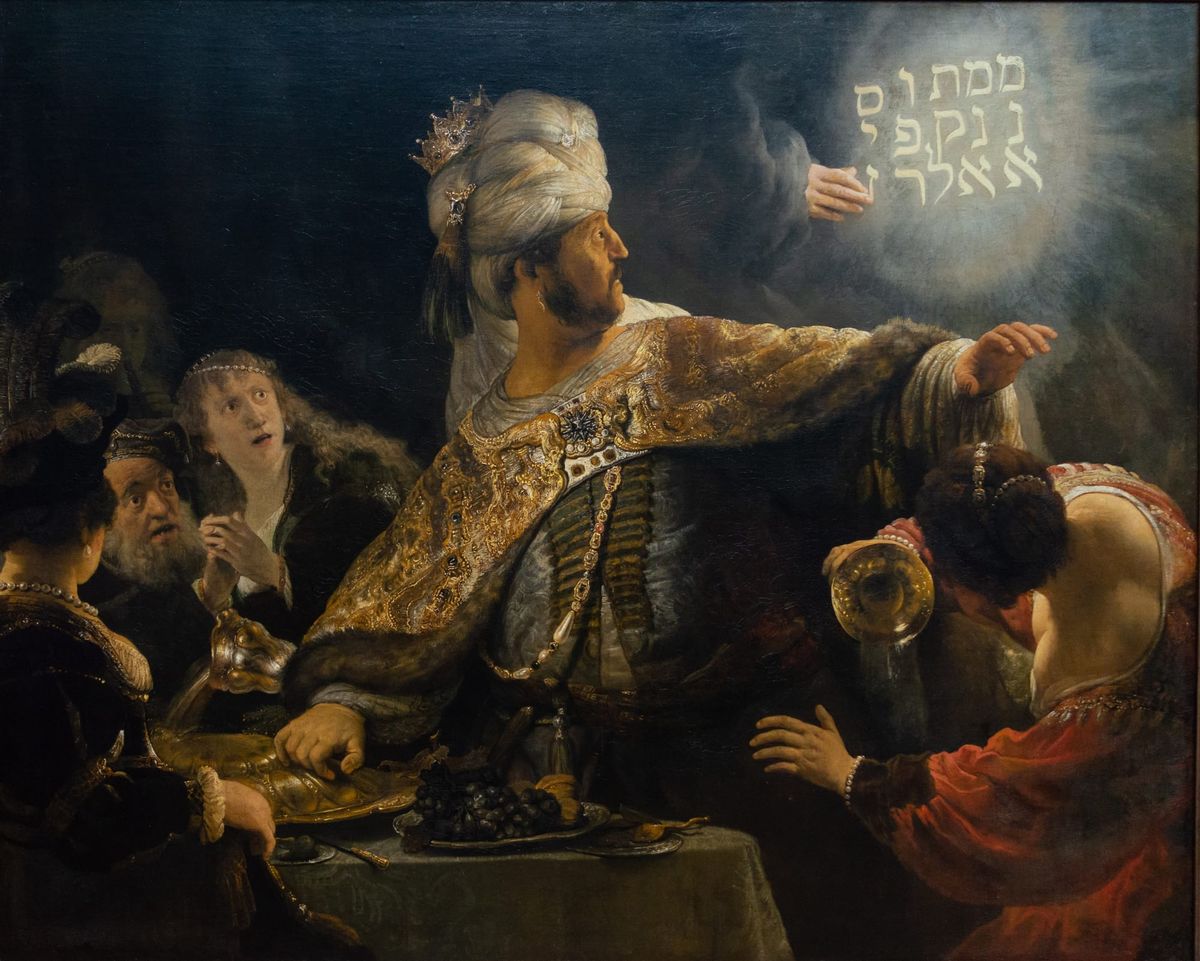
1635년경 17세기 네덜란드 황금기를 대표하는 거장 렘브란트 반 레인(Rembrandt van Rijn)이 제작한 유화 작품 《벨사살의 향연》은 캔버스에 유채로 그려진 종교 역사화로, 현재 영국 런던 내셔널 갤러리(The National Gallery, London)에 소장되어 있으며 실제 크기는 약 167.6 × 209.2 cm입니다.
이 화면은 구약성경 다니엘서 5장에 등장하는 바빌로니아의 왕 벨사살이 예루살렘 성전에서 약탈한 성물로 신성모독적인 연회를 벌이던 중, 벽에 나타난 신비로운 히브리어 글씨(메네 메네 테켈 우파르신)를 보고 경악하는 극적인 순간을 렘브란트 1630년대 특유의 극적인 키아로스쿠로(명암대비법)와 두터운 임파스토 기법으로 포착해 낸 걸작입니다. 화가는 왕관을 쓴 벨사살의 화려한 터번과 도포, 보석 장식, 그리고 초자연적인 빛을 발하는 벽면의 히브리어 글씨와 이에 놀라 잔을 엎지르는 여인 및 귀족들의 소란을 강렬한 빛과 음영의 대비 속에서 부각시켰습니다.
작품 속에는 당대 지식인과의 교류와 성서 서사 속 신성한 경고를 생생하게 재현한 비하인드 스토리가 흐릅니다. 렘브란트는 당시 암스테르담의 저명한 유대인 학자이자 친구였던 마나세 빈 이스라엘(Menasseh ben Israel)의 조언을 받아, 벽에 새겨진 히브리어 글자를 세로열(위에서 아래로, 오른쪽에서 왼쪽으로) 형식으로 적어 넣어 이방인인 바빌로니아 점술가들이 왜 글자를 읽지 못했는지를 도상학적으로 설득력 있게 표현했습니다. 거울처럼 빛을 뿜어내는 글자 앞에서 술잔을 놓치며 사투를 벌이듯 몸을 뒤틀려 하는 벨사살 왕의 표정은 신의 심판 앞에서의 인간적 공포와 무력함을 생생하게 전해줍니다.
후대 평단과 관객들은 이 작품을 렘브란트 1630년대 역사화가 자랑하는 대담한 구도와 극적인 연극적 연출, 그리고 신성한 공포에 휩싸인 인물 심리 묘사의 정수로 평가합니다. 어둠을 가르고 분출되는 히브리어 글씨의 강렬한 광채와 화려한 바빌로니아 궁정 의복의 질감은 관객에게 시대를 초월한 압도적인 몰입감과 숭고한 감동을 선사합니다.
이 그림을 마주하는 관람객의 무의식적 시선은 화면 우측 상단, 검은 어둠 속에서 초자연적인 광채를 내뿜으며 벽에 새겨지는 신비로운 히브리어 글씨와 그 옆의 신성한 손길로 가장 먼저 끌려갑니다. 어둠을 찢는 강렬한 빛의 출처는 관람객의 마음에 묵직한 시각적 중심과 강렬한 정서적 몰입감을 선사합니다.
이어 시선은 그 광채를 뒤돌아보며 몸을 경악으로 가누지 못하는 벨사살 왕의 휘둥그레진 눈빛과 벌어진 입, 그리고 그가 착용한 화려한 황금 왕관과 모피 도포의 거친 임파스토 질감으로 자연스럽게 이동합니다. 왕의 뻗은 손짓과 우측 하단에서 놀라 와인 잔을 엎지르는 여인의 역동적인 포즈는 화면 전체에 팽팽한 서사적 긴장감과 극적인 소란을 더해줍니다.
마지막으로 시선은 화면 좌측 어둠 속에서 놀라움과 두려움에 휩싸인 귀족들과 사제들의 표정, 그리고 테이블 위에 놓인 금빛 성물 그릇들의 반사광을 지나 어두운 연회장 배경 속으로 낙하하여 정착합니다. 이러한 무의식적 시선의 흐름은 신성한 경고와 인간의 오만이 교차하는 극적인 순간으로 감상자를 자연스럽게 인도하며, 마음에 닿는 차분하고 정갈한 여운을 오래도록 남깁니다.
In c. 1635, Rembrandt van Rijn, one of the paramount masters of the Dutch Golden Age, created the theatrical oil painting titled "Belshazzar's Feast." Preserved in the renowned National Gallery in London, this original canvas measures approximately 167.6 × 209.2 cm. This artwork finely captures the dramatic moment of divine reckoning from the Book of Daniel through a brilliant, monumental application of chiaroscuro.
The painting visually manifests King Belshazzar of Babylon recoiling in terror during his sacrilegious banquet as a disembodied hand writes glowing Hebrew letters upon the wall. Historical context reveals that Rembrandt consulted his friend, the Amsterdam rabbi Menasseh ben Israel, to depict the Hebrew text vertically from top to bottom, right to left. By capturing the moment wine spills from an overturned goblet as the king recoils, Rembrandt transformed a biblical warning into a visceral psychological masterpiece.
Art historians and critics continuously extol this masterwork for its theatrical grandeur and emotional intensity, celebrating Rembrandt's ability to combine tactile material wealth with supernatural awe. The striking contrast between the blinding divine script, the glinting jewels, and the surrounding darkness creates an enduring atmosphere of sacred tension and dramatic permanence.
The moment an observer encounters this artwork, their gaze is subconsciously drawn straight to the radiant, glowing Hebrew inscription blazing in the upper right background. Its intense supernatural light immediately diffuses tension, instilling a comforting sense of narrative awe and dramatic immersion.
Next, the eye glides smoothly toward the terrified, wide-eyed face of King Belshazzar turning back in horror, tracing the lavish impasto textures of his jeweled turban and golden robe. The frantic gesture of his outstretched hand and the servant woman spilling her golden chalice add compelling structural weight and kinetic energy to the scene.
Finally, the viewer's gaze drifts across the shocked faces of the banqueters in the shadows on the left before coming to rest upon the dark, atmospheric background of the royal hall. This natural visual journey guides the spectator into a state of quiet, reverent reflection, leaving a lasting impression of judgment, majesty, and timeless peace.
본 리뷰에서 작품을 제외한 컨텐츠의 저작권은 팔렛트제주에 있습니다.
"퍼블릭도메인 고전명화"를 제외한 모든 창작 콘텐츠는 저작권법 제4조 및 제10조에 의거하여 보호됩니다. 무단 도용시 저작권법 제136조(벌칙)에 의거, 당사의 사전 서면 승인 없는 저작권 침해 행위를 금지합니다.