벨로나 Bellona
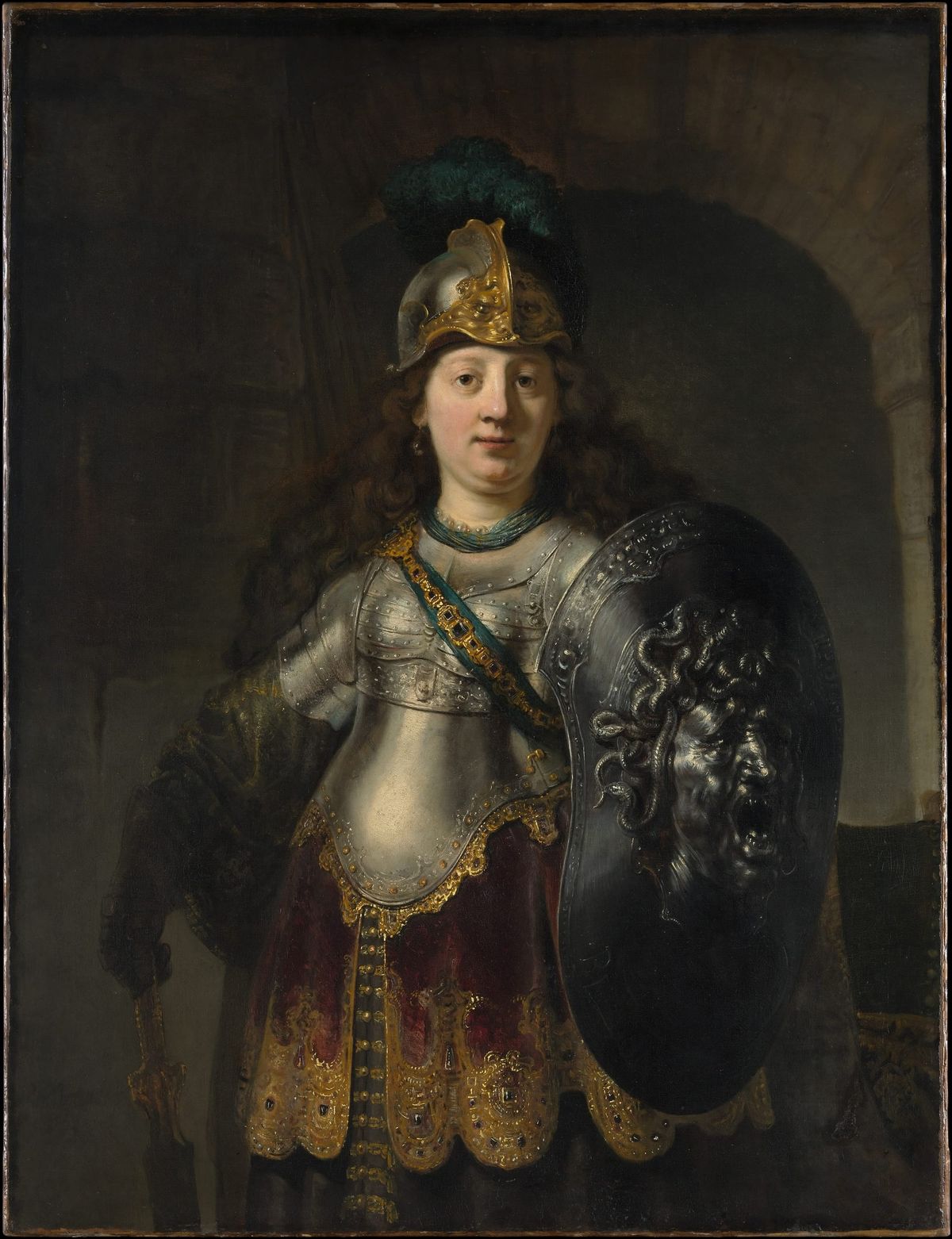
1633년 17세기 네덜란드 황금기를 대표하는 거장 렘브란트 반 레인(Rembrandt van Rijn)이 제작한 유화 작품 《벨로나》는 캔버스에 유채로 그려진 신화 역사화로, 현재 미국 뉴욕 메트로폴리탄 미술관(The Metropolitan Museum of Art)에 소장되어 있으며 실제 크기는 약 127 × 97.5 cm입니다.
이 화면은 로마 신화 속 전쟁의 여신 벨로나(Bellona)의 위엄 있고 강인한 자태를 렘브란트 1630년대 특유의 정교한 키아로스쿠로(명암대비법)와 눈부신 금속 질감 표현으로 포착해 낸 걸작입니다. 화가는 여신의 결연하면서도 온화한 얼굴, 차가운 은빛 갑옷과 금빛 장식, 메두사의 머리가 정교하게 조각된 검은 방패, 그리고 머리에 얹은 깃털 투구 위에 따스한 빛을 집약시켜 신화 속 여신의 강인한 존재감과 장엄한 품격을 생생하게 부각시켰습니다.
작품 속에는 렘브란트가 그의 연인이자 아내였던 사스키아 판 오일렌뷔르흐(Saskia van Uylenburgh)를 모델로 삼아 신화 속 인물을 지극히 인간적이고 친근하게 재해석한 비하인드 스토리가 흐릅니다. 1633년 사스키아와 약혼할 무렵 제작된 이 작품에서 렘브란트는 고전적인 신의 완벽한 비율이나 비현실적인 미화 대신, 둥스름한 얼굴과 친근한 인상을 지닌 실제 여인의 모습을 바탕으로 전쟁의 여신을 완성했습니다. 신화 속 강력한 상징인 메두사의 울부짖는 방패 표정과 정교하게 조각된 갑옷의 금빛 테두리는 당대 네덜란드 공화국의 번영과 무력적 방어 의지를 은유적으로 담아내고 있습니다.
후대 평단과 관객들은 이 작품을 렘브란트 1630년대 초기 신화화가 도달한 압도적인 질감 묘사력과 독창적인 인물 심리 표현의 정수로 평가합니다. 은은한 빛을 받아 번쩍이는 차가운 갑옷의 금속성, 메두사 방패의 극적인 입체감, 그리고 여인의 고요한 시선이 만들어내는 조형적 대조는 관객에게 시대를 초월한 깊은 시각적 몰입과 숭고한 감동을 선사합니다.
이 그림을 마주하는 관람객의 무의식적 시선은 가장 온화한 빛이 집중되는 여신 벨로나의 이마와 단정한 두 뺨, 그리고 관람객을 지그시 응시하는 맑고 정정한 눈빛으로 가장 먼저 끌려갑니다. 단호하면서도 평온함을 품은 여신의 표정은 관람객의 마음에 묵직한 시각적 중심과 정숙한 평온함을 안겨줍니다.
이어 시선은 상체를 견고하게 감싸고 있는 은빛 갑옷의 반짝이는 반사광과 어깨를 가로지르는 황금 사슬, 그리고 왼쪽 팔로 들어 올린 대형 방패 중앙의 비명을 지르는 메두사 얼굴 조각으로 자연스럽게 이동합니다. 섬뜩할 정도로 정교한 메두사의 음영과 화려하게 수놓아진 붉은 스커트의 금실 장식은 화면 전체에 팽팽한 서사적 긴장감과 극적인 기품을 더해줍니다.
마지막으로 시선은 머리 위에 올려진 청록색 깃털 투구의 부드러운 윤곽과, 인물의 뒤편을 조용히 감싸고 있는 석조 아치형 어두운 배경 속으로 낙하하여 정착합니다. 이러한 무의식적 시선의 흐름은 신화 속 영웅이 거처하는 고요하고 장엄한 안식처로 감상자를 자연스럽게 인도하며, 마음에 닿는 차분하고 정갈한 여운을 오래도록 남깁니다.
In 1633, Rembrandt van Rijn, one of the paramount masters of the Dutch Golden Age, created the authoritative oil painting titled "Bellona." Preserved in the renowned Metropolitan Museum of Art in New York, this original canvas measures approximately 127 × 97.5 cm. This artwork finely captures the majestic presence and formidable armor of the Roman goddess of war through a brilliant, early application of chiaroscuro.
The painting visually manifests the goddess Bellona standing in three-quarter view, outfitted in shimmering steel cuirass, a plume-crested helmet, and bearing a dark shield emblazoned with the roaring head of Medusa. Historical context reveals that Rembrandt likely used his bride-to-be, Saskia van Uylenburgh, as the physical model for the goddess. Rather than conforming to idealized Greco-Roman proportions, Rembrandt infused the divine figure with naturalistic Dutch warmth, balancing her gentle facial features against the cold, terrifying iconography of warfare.
Art historians and critics continuously extol this masterwork for its illusionistic grandeur and tactile realism, celebrating Rembrandt's ability to render burnished metal, embroidered velvet, and expressive human eyes under theatrical directional light. The striking contrast between her softly illuminated face, the glinting gold trim of her armor, and the enveloping dark backdrop creates an enduring atmosphere of quiet authority and emotional permanence.
The moment an observer encounters this artwork, their gaze is subconsciously drawn straight to the brightly illuminated face and calm, steady eyes of the goddess. Her serene, self-assured expression immediately diffuses tension, instilling a comforting sense of composure and emotional trust.
Next, the eye glides smoothly down along the contoured steel breastplate and follows the heavy gold sash toward the menacing, sculpted face of Medusa screaming upon her iron shield. The tactile distinction between polished metal, carved relief, and the rich velvet skirt endows the composition with structural stability and dramatic weight.
Finally, the viewer's gaze drifts along the dark green feathers of her helmet into the deep, shadowy stone archway of the background before coming to rest upon the surrounding spatial field. This natural visual journey guides the spectator into a state of quiet appreciation, leaving a lasting impression of power, dignity, and timeless peace.
본 리뷰에서 작품을 제외한 컨텐츠의 저작권은 팔렛트제주에 있습니다.
"퍼블릭도메인 고전명화"를 제외한 모든 창작 콘텐츠는 저작권법 제4조 및 제10조에 의거하여 보호됩니다. 무단 도용시 저작권법 제136조(벌칙)에 의거, 당사의 사전 서면 승인 없는 저작권 침해 행위를 금지합니다.