벨저 제단의 마리아의 생애 장면들 Scenes from the Life of the Virgin: Welser Altar
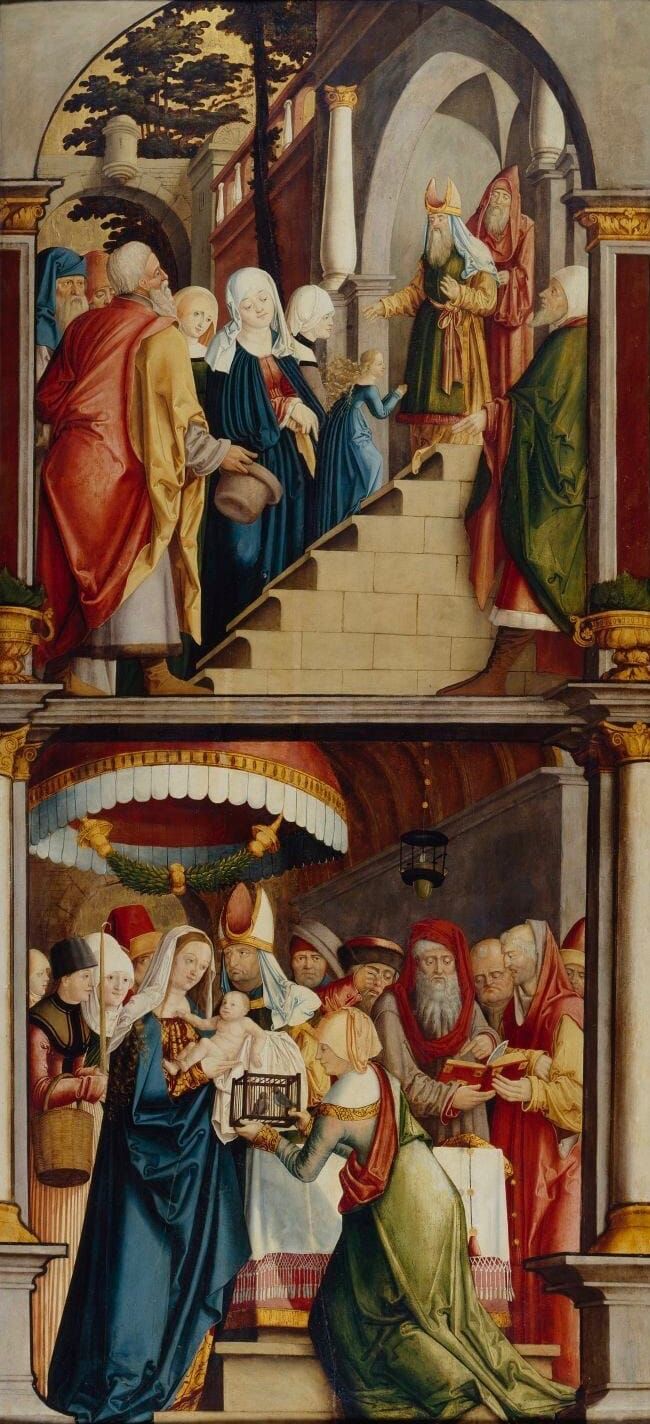
16세기 전반에 독일의 화가 바르텔 베함(Barthel Beham)이 제작한 이 작품은, 성스러운 종교적 서사를 당시 북유럽 사회의 건축적 공간과 인물 군상의 다채로운 군집 속에 투영하여 거룩한 역사와 인간적 일상을 유기적으로 엮어냅니다.
독일 아우크스부르크의 아우크스부르크 대성당 및 관련 미술 소장처에 보존된 이 제단화 패널의 공식 소장품 등록번호는 화가와 작품의 역사적 기록에 따른 Welser Altar이며, 실제 작품의 실측 규격은 패널 구조물 내 복합 구성으로 이루어진 목판 유채화입니다.
작가의 고뇌/비하인드
작품의 상단 화면에는 어린 마리아가 계단을 올라 성전에 오르는 장면이 묘사되어 있으며, 하단 화면에는 성모자가 신전에서 예물을 바치는 엄숙한 의식이 군중들의 시선 속에 펼쳐져 종교적 경건함을 극대화합니다.
화려한 의복을 걸친 군중들과 제단의 사제들, 그리고 새가 담긴 새장을 건네는 인물의 정교한 동작은 당시 북유럽 미술이 추구하던 극적인 서사와 사실적 군상 표현의 진수를 보여줍니다.
특히 중경에는 정교하게 조각된 기둥과 아치형 회랑이 상하단 공간을 입체적으로 분할하고 있으며, 원경의 트인 하늘과 건축물 구조는 복잡한 인물 군상 속에서도 깊이 있는 공간감을 차분하게 자아냅니다.
무의식 속 시선 및 심리 흐름
관람객의 시선은 가장 먼저 화면 상단 중앙에서 계단을 오르는 어린 마리아의 작은 발걸음과 하단 중앙에서 아기 예수를 안고 있는 성모의 우아한 자태로 강렬하게 꽂힙니다.
이어 시선은 상하단 화면을 가득 채운 인물들의 다양한 표정과 의복의 풍성한 질감, 그리고 하단에서 예물을 바치는 인물의 헌신적인 동작을 따라 부드럽게 이동합니다.
마지막으로 시선은 화면 전체를 지탱하는 웅장한 건축적 아치와 배경의 대기감으로 확장되며, 거대한 구원사의 흐름 속에서 숨 쉬는 인간 군상의 묵직한 울림을 체감하게 됩니다.
미술계의 평가 및 조형미
미술사학계는 이 작품을 16세기 북유럽 제단화 제작의 정수이자, 복잡한 다중러시안 구도 속에서 성스러운 서사와 인간적 공간을 경이로운 정교함으로 통합한 뛰어난 수작으로 평가합니다.
목판 위에 겹겹이 쌓아 올린 유채 물감은 의복의 화려한 색채 대비, 인물들의 미세한 표정 변화, 그리고 건축물의 공간적 깊이감을 생생하게 살아나게 만듭니다.
신성한 종교적 서사와 세밀한 사실주의를 예술의 경지로 조화롭게 녹여낸 이 작품은, 오랜 시간이 지나도 변함없는 미술사적 가치를 지니고 있습니다.
영문 번역본 구성
Scenes from the Life of the Virgin: Welser Altar
Created in the first half of the sixteenth century by the German master Barthel Beham, this work weaves sacred religious narratives into the architectural spaces and diverse crowds of sixteenth-century northern European society, seamlessly uniting holy history with human life.
Preserved within the historical collections associated with Augsburg, Germany, this altarpiece panel bears the traditional designation of the Welser Altar, and the physical characteristics reflect a complex multi-tiered oil on wood panel construction.
The Artist's Struggle and Behind-the-Scenes
In the upper tier of the composition, the young Mary ascends the temple steps, while the lower tier depicts the solemn presentation of Christ in the temple amidst a gathering crowd, maximizing religious reverence.
The richly dressed figures, the priests at the altar, and the meticulous gesture of the character offering a caged bird vividly demonstrate the dramatic narrative and realistic portraiture pursued by northern European art of the era.
In the middle ground, intricately carved columns and arched corridors structurally divide the upper and lower spaces with dimensionality, while the open skies and architectural elements in the background gently generate a profound spatial depth amidst the complex crowd.
Subconscious Gaze and Psychological Flow
The viewer's gaze is initially drawn directly to the youthful figure of Mary ascending the steps in the upper section and the serene presence of the Virgin holding the Christ Child in the lower section.
The eye then shifts downward and across the varied expressions of the assembled crowds, the rich textures of their garments, and the devotional gesture of the figure offering gifts in the lower tier.
Finally, the gaze drifts outward across the monumental architectural arches and the atmospheric background, evoking a profound resonance of the human figures breathing within the grand sweep of salvation history.
Art World Evaluation and Formal Beauty
Art historians evaluate this work as a masterpiece of sixteenth-century northern altarpiece production, successfully integrating sacred narrative and human space within a complex multi-tiered composition with astonishing descriptive precision.
The layered application of oil paint on wood brings the vivid color contrasts of the garments, the subtle facial nuances of the figures, and the spatial depth of the architecture to breathtaking life.
Successfully fusing sacred religious narrative with meticulous realism into the pinnacle of artistic mastery, this creation retains an enduring value in art history.