빨래하는 여인 The Washerwoman
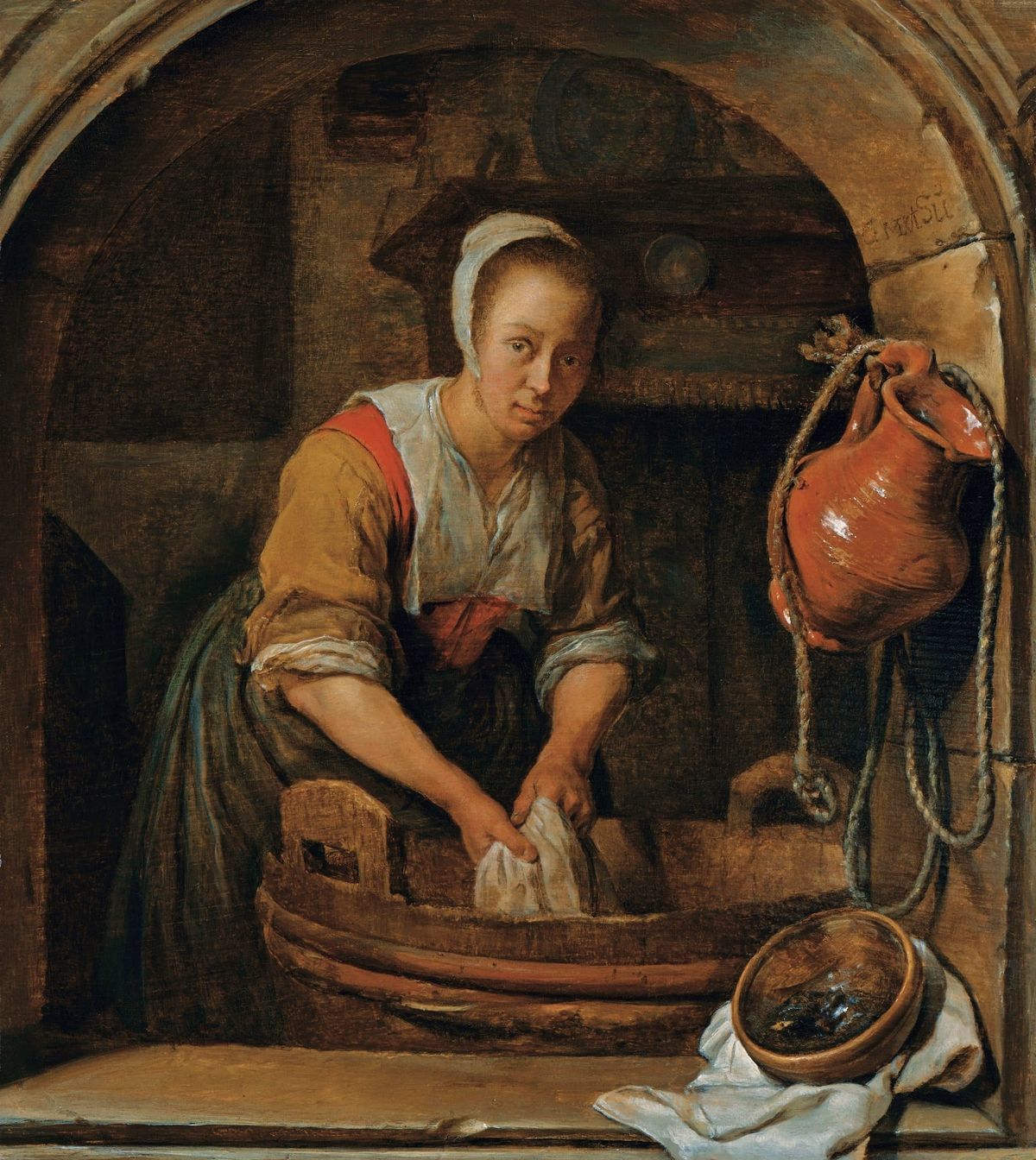
17세기 네덜란드 황금시대의 풍속화 거장 가브리엘 메추(Gabriel Metsu, 1629–1667)가 1650년대 초반에서 중반 레이던 시절에 완성한 유화 빨래하는 여인(The Washerwoman, 네덜란드어: De wasvrouw)은 23.5 cm × 21.0 cm 크기의 패널에 유채로 그린 대표적인 아치형 창문 풍속화 소품 걸작입니다. 현재 스페인 마드리드의 티센 보르네미사 국립미술관(Museo Nacional Thyssen-Bornemisza, Madrid)에 소장되어 있습니다.
아치 창틀 아래 튄 물방울과 밧줄에 걸린 붉은 단지 소동
1650년대 초반 네덜란드 레이던에서 젊은 예술가로 성장하던 가브리엘 메추는 스승 게리트 도우가 개척한 아치형 석조 창틀 구도를 계승하면서도, 인위적인 기교보다 서민들의 땀방울 어린 정직한 노동에 더 깊은 감동을 받았습니다. 당시 메추는 부유한 사람들의 거만한 표정보다, 거친 나무 빨래통 앞에서 온종일 옷을 빠는 하녀의 단정한 눈빛과 성실한 일상이야말로 인간의 가장 고귀한 아름다움이라고 여겼습니다. 화가는 화실 창가에 낡은 참나무 빨래통을 놓고, 집안일을 돕던 성실한 하녀를 모델로 세운 뒤 흰 천을 쥐여주며 정성스럽게 포즈를 부탁했습니다.
이 그림을 준비하던 날, 화실 창가에서는 유쾌하면서도 웃음이 절로 나오는 소동이 벌어졌습니다. 모델이 팔소매를 걷어붙이고 나무통 속에서 젖은 린넨 천을 힘차게 비틀어 짜는 흉내를 내던 중, 실제로 통 안에 남아 있던 물기가 튀면서 창틀에 걸려 있던 밧줄과 붉은 도자기 물단지를 적셨습니다. 그 순간 밧줄이 미끄러지며 붉은 단지가 덜컹거렸고, 놀란 여인이 한 손으로 빨래를 쥔 채 다른 손으로 단지를 간신히 붙잡으며 가슴을 쓸어내렸습니다.
여인이 멋쩍은 듯 얼굴을 붉히며 화가를 바라보자, 메추는 껄껄 웃으며 바로 그 당황하면서도 생생한 눈맞춤이야말로 그림에 생명을 불어넣을 최고의 순간임을 직감했습니다. 화가는 여인의 하얀 두건과 붉은 코르셋, 걷어 올린 겉옷의 자연스러운 주름, 젖은 린넨 천의 축축한 무게감, 그리고 창틀에 매달린 붉은 도자기 단지의 반짝이는 유약 광택을 정교한 세밀화 기법으로 캔버스에 담아냈습니다. 잦은 병마 속에서도 삶의 건강한 땀방울과 인간에 대한 따스한 애정을 잃지 않으려 했던 메추의 섬세한 예술혼이 이 아담한 화폭 속에 포근하게 살아 숨 쉬고 있습니다.
단정한 눈맞춤에서 나무 빨래통 속 린넨 천과 붉은 도자기 단지로, 시선의 심리적 여정
그림을 마주하는 순간 관람객의 무의식적 시선은 석조 아치 창문 너머 어두운 실내를 배경으로 부드러운 자연광을 받아 밝게 빛나는 여인의 둥근 이마와 하얀 린넨 두건으로 가장 먼저 빨려 들어갑니다. 빨래를 하던 손을 멈추고 창밖의 관람객을 지그시 응시하는 여인의 차분하고 순박한 눈빛은 보는 이에게 깊은 시각적 친근함과 함께 마음을 편안하게 해주는 따스한 온기를 선사합니다.
이어 시선은 걷어 올린 여인의 건강한 팔과, 커다란 참나무 빨래통 안에서 쥐어짜고 있는 새하얀 린넨 빨랫감으로 이동합니다. 젖은 천을 단단히 쥐고 있는 다부진 손가락의 움직임과 묵직한 나무통의 나이테 질감을 확인하는 순간, 관람객은 철벅거리는 시원한 물소리와 함께 빨랫비누의 은은한 향기를 온몸으로 체감하게 됩니다.
마지막으로 시선은 아치형 돌벽 오른쪽에 밧줄로 단단히 묶여 매달린 붉은색 유약 도자기 단지를 지나, 창턱에 깔린 흰 천과 작은 그릇, 그리고 돌벽 모서리에 새겨진 화가의 서명에 멈춥니다. 고요한 석조 창틀을 감싸는 평화로운 빛과 정직한 노동이 빚어내는 삶의 순수한 가치를 마주하며, 관람객은 평범한 일상이 품고 있는 진솔한 존엄성과 메추가 건네는 다정한 예술적 위로를 가슴 깊이 마주하게 됩니다.
17세기 네덜란드 노동 장르화의 정점과 조형적 완성도, 미술계의 평가
미술계는 빨래하는 여인을 가브리엘 메추가 레이던 정밀 묘사파의 아치형 창문(닛셰) 형식을 서민의 진솔한 노동 주제와 완벽하게 융합한 대표적인 초기 걸작으로 평가합니다.
석조 창틀의 거친 돌 질감, 도자기의 매끄러운 유약, 거친 삼베 밧줄, 그리고 물에 젖은 린넨의 축축한 촉감을 극도로 섬세한 명암 대비로 완벽하게 재현했기 때문입니다. 화려한 과시 없이 오직 평범한 일상의 정직한 땀방울과 인간의 순수한 존엄성을 찬양했던 메추의 이 서정적인 화폭은, 오늘날까지도 수많은 감상자들에게 깊은 감동과 잊을 수 없는 시각적 평온을 전해주는 불멸의 명작으로 손꼽히고 있습니다.
The Washerwoman
Painted in the early to mid-1650s in Leiden by the preeminent Dutch Golden Age master Gabriel Metsu (1629–1667), The Washerwoman (Dutch: De wasvrouw) is an oil on panel measuring 23.5 cm × 21.0 cm (9.3 in × 8.3 in), preserved in the permanent collection of the Museo Nacional Thyssen-Bornemisza in Madrid, Spain.
The Splashing Tub and the Terracotta Jug Commotion in the Studio
During the early 1650s in Leiden, Gabriel Metsu embraced the illusionistic arched stone niche format popularized by his master Gerrit Dou, while infusing the setting with a profound empathy for the honest labor of the working poor. Disillusioned with the stiff and artificial flattery of patrician commissions, the painter found true aesthetic beauty in the quiet dignity of household servants engaged in daily chores. Metsu arranged a heavy oak wash tub within an arched masonry aperture in his atelier, asking a diligent household maid to pose while wringing out fresh linen cloths.
A delightfully humorous incident occurred while preparing the sitting for this panel. As the young woman rolled up her sleeves and simulated the vigorous wringing of wet linen inside the tub, residual droplets splashed upward across the stone sill, striking the hanging terracotta water jug suspended by hemp ropes. The heavy earthen jar slipped slightly against its knots, prompting the startled maid to steady the vessel with one hand while clutching the wet cloth in the other.
As she looked out toward the easel with an embarrassed, apologetic smile, Metsu laughed heartily and urged her to maintain that exact spontaneous, candid gaze. The master meticulously recorded the starched white linen cap, the warm crimson bodice, the soaked weight of the bunched cloth, and the gleaming glazed sheen of the terracotta pitcher. Despite wrestling with lifelong physical frailty, Metsu captured the quiet nobility of domestic labor, imbuing this intimate cabinet panel with enduring warmth.
Subconscious Trajectory of the Gaze: From Engaging Visage to the Wetted Linen
The observer's subconscious gaze is immediately seized by the upper-central register, drawn to the luminous, gentle visage of the young woman framed by a pristine white cap against the shadowed interior. Her direct, candid gaze looking out from the stone niche establishes an instant atmosphere of approachable warmth and humble domestic grace.
The visual path then descends along her bare, muscular forearm to her hands immersed within the massive wooden wash tub, gripping the gathered folds of damp white linen. Taking in the physical effort of her fingers and the weathered timber grain of the heavy tub, the viewer directly experiences the sensory reality of the chore and the rhythmic solitude of the workday.
Finally, the visual trajectory sweeps toward the right, resting upon the vibrant glazed terracotta pitcher suspended by knotted rope from the stone wall, before moving downward to the small glazed bowl and cloth resting upon the sill. Observing the harmonious balance between tactile material realism, soft ambient daylight, and the serene dignity of the solitary laborer, the spectator perceives the timeless nobility of everyday life and the enduring spiritual solace Metsu embedded within the home.
The Monument of Dutch Labor Realism: Critical Legacy
Art historians revere The Washerwoman as a sublime early masterpiece of Metsu’s Leiden period, illustrating his mastery of the niche composition (nisstuk) combined with an authentic celebration of working-class virtue.
By rendering delicate textural distinctions across porous stone, slick pottery glazes, coarse hemp fibers, and heavy soaked linen within a unified lighting scheme, Metsu elevated a modest domestic task into an exquisite aesthetic meditation. This captivating cabinet picture stands as an inspiring testament to the master's enduring humanism, celebrating the sacred charm of ordinary existence and the transformative power of living art.
본 컨텐트의 저작권은 팔렛트제주에 있습니다. 허가없는 무단전제를 금지합니다.
Copyright © Palette Jeju. All rights reserved. Unauthorized reproduction or redistribution is strictly prohibited.