바위틈에 울려 퍼지는 파도의 하프와 사이렌의 유혹, 파도 The Surf
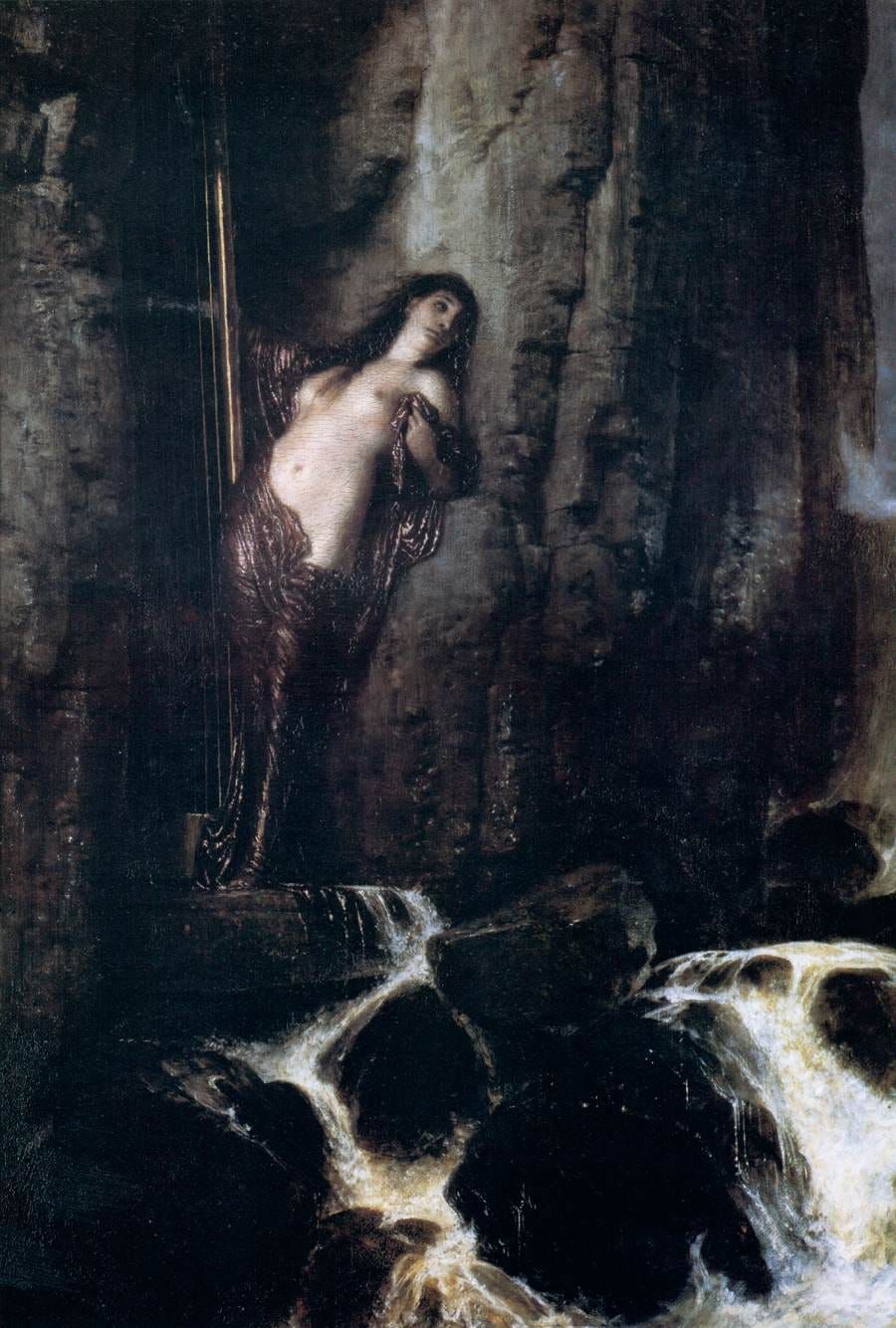
스위스 출신의 상징주의 거장 아놀드 뵈클린(Arnold Böcklin, 1827–1901)이 1879년에 피렌체에서 완성한 유화 파도(The Surf, 독일어: Die Brandung, 또는 Meeresbrandung mit Nereide)는 121.0 cm × 82.0 cm 크기의 캔버스에 유채로 그린 대표적인 상징주의 신화 풍경화 걸작입니다. 현재 독일 베를린의 구 국립미술관(Alte Nationalgalerie, Berlin)에 소장되어 있습니다.
바다의 굉음을 음악으로 바꾼 피렌체 시절의 과감한 조형 실험
1870년대 후반 뵈클린은 독일 화단의 차가운 비평을 뒤로하고 이탈리아 피렌체에 머물며 색채와 소리의 공감각적 결합이라는 파격적인 조형 실험에 몰두하고 있었습니다. 당시 유럽 미술계는 눈에 보이는 사물을 사진처럼 정확하게 기록하는 사실주의 풍경화가 주류를 이루고 있었습니다. 그러나 뵈클린은 자연을 그저 무생물의 돌과 물로 묘사하는 메마른 기법에 깊은 갈증을 느꼈습니다. 그는 거친 파도가 바위에 부딪히며 내는 거대한 굉음과 공기의 울림을 눈으로 직접 볼 수 있는 신화적 형상으로 바꾸어내고자 했습니다.
화면 속 높은 절벽 바위틈에는 신비로운 바다의 님프(네레이드 혹은 사이렌)가 서서 거대한 황금빛 하프를 켜고 있습니다. 보랏빛 광택의 비단 옷을 살짝 풀어헤쳐 매끄러운 상반신을 드러낸 여인은 고개를 비스듬히 젖힌 채 알 수 없는 깊은 눈빛으로 어둠 속을 응시합니다. 그녀의 발밑으로는 깎아지른 바위벽 사이로 거센 파도가 하얗게 부서지며 쏟아져 내립니다. 뵈클린은 파도의 포효를 단순한 자연 현상이 아니라, 선원들을 유혹해 파멸로 이끄는 신화 속 사이렌의 치명적인 음악으로 형상화했습니다. 사실주의의 한계를 부수고 자연의 보이지 않는 소리와 영혼을 화폭에 소환해 낸 화가의 대담한 상상력이 이 웅장한 캔버스 위에 눈부시게 빛납니다.
창백한 님프의 가슴선에서 하얗게 부서지는 물보라로, 시선의 심리적 여정
그림을 마주하는 순간 관람객의 무의식적 시선은 화면 상단 칠흑 같은 바위틈에서 은은한 달빛을 받아 눈부시게 떠오르는 님프의 창백한 상반신과 매끄러운 가슴선으로 가장 먼저 빨려 들어갑니다. 어둠을 배경으로 환하게 빛나는 여인의 피부와 고혹적인 눈빛은 보는 이에게 강렬한 관능미와 서늘한 긴장감을 동시에 선사합니다.
이어 시선은 그녀의 오른손이 지탱하고 있는 길고 곧은 황금 하프의 현과, 몸을 타고 흘러내리는 젖은 자주색 비단 천의 화려한 광택으로 이동합니다. 팽팽한 하프 줄을 튕기며 파도의 굉음에 멜로디를 얹는 듯한 여인의 몸짓을 확인하는 순간, 관람객은 시각적 정적을 뚫고 귓가를 울리는 바다의 교향악을 공감각적으로 경험합니다.
마지막으로 시선은 님프의 발치 아래 좁은 석조 틈새를 타고 거세게 쏟아져 내리는 하얀 물줄기를 지나, 화면 아래쪽을 집어삼킬 듯 소용돌이치는 검은 암초와 부서지는 포말에 멈춥니다. 굉음을 내며 몰아치는 파도의 거친 힘과 바위벽에 기대어 이를 지휘하는 신비로운 여인의 침묵을 마주하며, 관람객은 인간을 압도하는 대자연의 원초적인 매혹과 치명적인 신비를 가슴 깊이 체감하게 됩니다.
공감각적 상징주의와 음향 회화의 정점, 미술계의 평가
미술계는 파도를 19세기 상징주의 회화가 시각과 청각의 경계를 허물고 바다의 에너지를 가장 독창적인 신화적 조형미로 승화시킨 걸작으로 평가합니다.
어두운 바위의 묵직한 질감과 포말의 역동적인 물성, 그리고 인물의 신비로운 표정을 과감한 명암 대비로 완벽하게 조화시켰기 때문입니다. 보이지 않는 자연의 소리를 매혹적인 신화의 인물로 탈바꿈시킨 뵈클린의 이 독창적인 화폭은 훗날 상징주의와 표현주의 예술가들에게 무한한 영감을 전해준 귀중한 명작으로 손꼽힙니다.
The Primeval Resonance of the Oceanic Siren, The Surf
Painted in 1879 in Florence by the preeminent Swiss Symbolist master Arnold Böcklin (1827–1901), The Surf (German: Die Brandung, also titled Meeresbrandung mit Nereide) is an oil on canvas measuring 121.0 cm × 82.0 cm (47.6 in × 32.3 in), preserved in the permanent collection of the Alte Nationalgalerie in Berlin, Germany.
Synesthetic Experimentation in Florence and the Acoustic Voice of the Sea
During the late 1870s, Arnold Böcklin established his studio in Florence, distancing himself from the rigid academicism of German art centers to explore the synesthetic synthesis of color, mood, and acoustic sensation. At the time, mainstream European landscape painting remained dominated by mechanical topographical realism, which meticulously recorded the external appearance of terrain while neglecting its psychological aura. Disillusioned by this dry, literal approach, Böcklin sought to transform the invisible power of sound—the deafening thunder of ocean breakers crashing against subterranean basalt—into an animate mythological presence.
The composition places a sea nymph, or Siren, within a narrow cleft of towering coastal rocks where she plays a colossal golden harp. Draped in an iridescent violet-plum mantle that slips away to reveal her pale torso, she leans against the stone with an enigmatic gaze directed toward the open dark waters. Beneath her precarious perch, violent white surf surges and churns across the dark boulders below. Böcklin personified the roaring sea as the dangerous, alluring melody of the mythological siren, creating a direct visual manifestation of primal natural forces. Bypassing conventional realism, the master gave monumental form to the ancient spirit of the ocean.
Subconscious Trajectory of the Gaze: From Moonlit Siren to the Churning Chasm
The observer's subconscious gaze is immediately captivated by the upper register, drawn to the luminous, pale contours of the nymph's bare torso gleaming against the dark basalt cliff. Her tilted head, flowing dark tresses, and faraway expression establish an immediate aura of mythic enchantment and psychological suspense.
The visual path then shifts to the vertical golden frame and taut strings of the monumental harp cradled beside her, before descending along the shimmering folds of her violet silk drapery. Observing how the instrument anchors the composition within the rocky cleft, the viewer experiences a transition from visual contemplation to the imagined acoustic resonance of harp strings blending with the roar of crashing breakers.
Finally, the trajectory plunges downward across the stone threshold where water cascades into the abyss, resting upon the frothing white foam churning violently against the black foreground boulders. Observing the stark contrast between the serene, commanding presence of the musical maiden and the kinetic fury of the cold current, the spectator confronts the sublime power of the natural world and the timeless allure of elemental forces.
The Monument of Synesthetic Symbolism: Critical Legacy
Art historians celebrate The Surf as a sublime masterpiece of late 19th-century European Symbolism that successfully bridged the boundaries between visual painting and auditory sensation.
By orchestrating dramatic chiaroscuro contrasts between pale flesh, saturated jewel-toned fabric, and turbulent sea spray, Böcklin transformed an elemental seascape into a profound psychological drama. This evocative canvas endures as an essential milestone within the artist's oeuvre, testifying to his extraordinary capacity to articulate the untamed voice of nature through visionary myth.
본 컨텐트의 저작권은 팔렛트제주에 있습니다. 허가없는 무단전제를 금지합니다.
Copyright © Palette Jeju. All rights reserved. Unauthorized reproduction or redistribution is strictly prohibited.