바람결에 출렁이는 초록빛 들판과 오베르의 여름, 오베르 근처의 들판 Plain Near Auvers
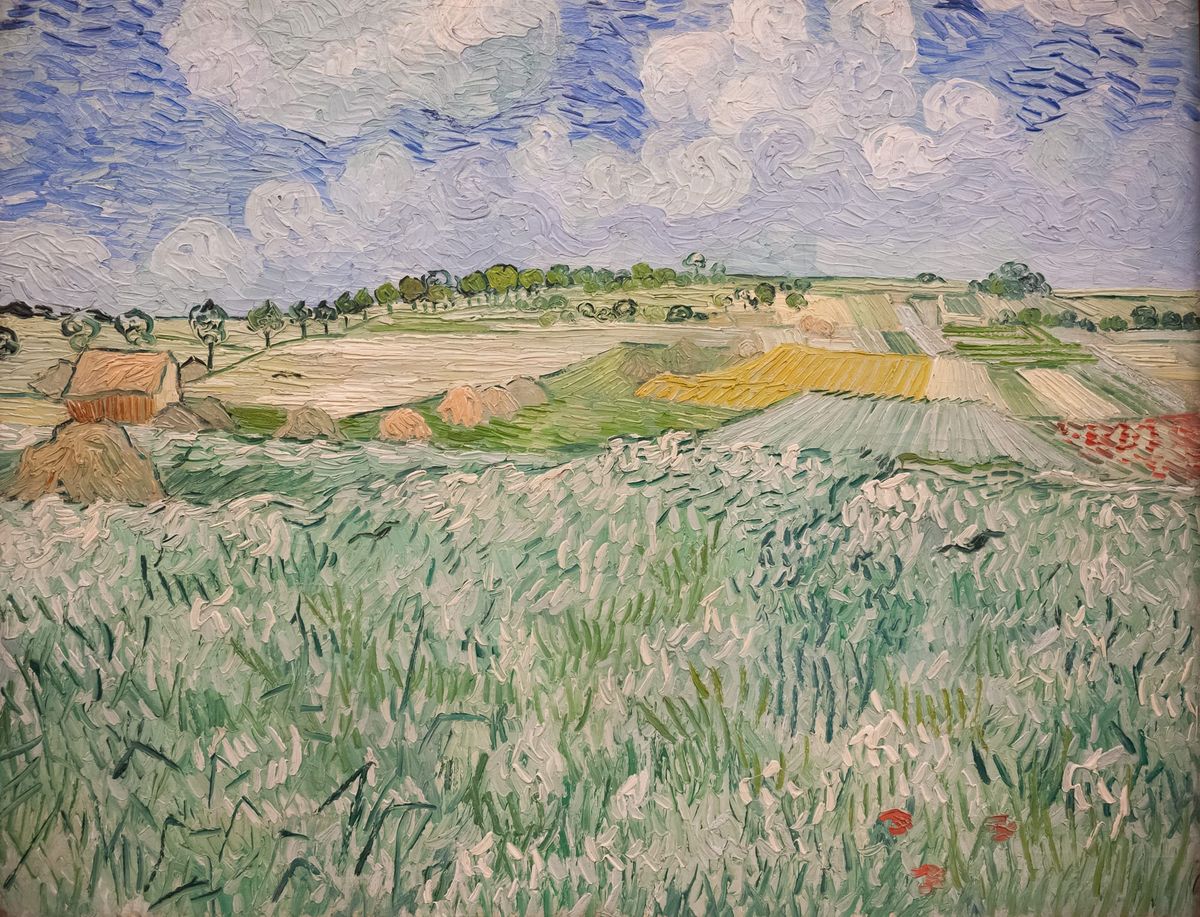
후기 인상주의 거장 빈센트 반 고흐(Vincent van Gogh, 1853–1890)가 생애 마지막 해인 1890년 7월 프랑스 오베르 쉬르 우아즈(Auvers-sur-Oise)에서 완성한 유화 오베르 근처의 들판(Plain Near Auvers, 또는 오베르의 들판 풍경)은 73.3 cm × 92.0 cm 크기의 캔버스에 유채로 그린 대표작입니다. 현재 독일 뮌헨의 노이에 피나코테크(Neue Pinakothek)에 영구 소장되어 있습니다.
오베르의 마지막 나날들과 자연 속에서 찾은 마음의 쉼표
1890년 5월 말 남프랑스 요양원을 떠나 파리 근교 오베르에 도착한 반 고흐는 가셰 박사의 보살핌을 받으며 숨 가쁘게 그림을 그렸습니다. 그는 마을 뒤편의 완만한 언덕으로 매일 올라가 끝없이 펼쳐진 밀밭과 평야를 마주했습니다.
이 시기 고흐는 파리에 사는 동생 테오 가족의 건강과 미래에 대한 걱정으로 마음이 무척 무거웠습니다. 하지만 시원한 바람이 불어오는 넓은 들판에 서서 캔버스에 붓을 대는 순간만큼은 모든 불안을 잊고 자연과 하나가 되었습니다. 고흐는 조각조각 나뉜 밭들의 다채로운 색깔과 바람에 흔들리는 풀잎의 움직임을 바라보며 큰 마음의 위로를 얻었습니다. 테오에게 보낸 편지에서 그는 "끝없이 펼쳐진 평야를 바라보고 있으면 말로 다 표현할 수 없는 평화로움과 건강한 기운이 마음속에 차오른다"고 적으며 들판이 주는 따뜻한 위안을 전했습니다.
무의식 속 시선의 공간 여행과 시원한 해방감
그림을 바라보는 순간 우리의 시선은 캔버스 앞쪽을 가득 채운 은빛과 연둣빛 풀밭으로 가장 먼저 들어갑니다. 두껍고 짧게 콕콕 찍어 바른 하얀 꽃들과 초록 풀잎의 거친 질감은 마치 시원한 바람이 발끝을 스쳐 지나가는 듯한 생생한 느낌을 줍니다. 풀밭 오른쪽 아래에 수줍게 피어난 몇 송이 붉은 양귀비꽃은 시선을 기분 좋게 깨워줍니다.
이어 시선은 풀밭을 지나 완만한 언덕 너머로 옹기종기 이어진 조각보 같은 밭들로 부드럽게 이동합니다. 황금빛으로 물든 밀밭과 붉은빛이 감도는 흙밭, 그리고 짙은 초록빛 채소밭이 질서정연하게 펼쳐진 풍경은 마음에 깊은 안정감을 안겨줍니다. 밭 한쪽에 자리한 작은 오두막과 짚단들은 소박한 시골 마을의 정겨운 분위기를 더해줍니다.
그 후 시선은 지평선을 따라 줄지어 서 있는 둥근 나무들을 지나 화면 위쪽의 푸른 하늘과 몽실몽실 피어오른 하얀 뭉게구름 속으로 시원하게 올라갑니다. 땅의 싱그러운 초록빛과 하늘의 맑은 파란색이 만들어내는 포근한 조화 속에서, 감상자는 답답했던 마음이 탁 트이고 자연의 품에 안긴 듯한 깊은 편안함을 느끼게 됩니다.
색채의 리듬과 현대 풍경화의 새로운 길, 미술계의 평가
미술계는 이 작품을 반 고흐가 세상을 떠나기 직전 남긴 풍경화 중에서도 색채의 균형과 붓질의 율동감이 가장 아름답게 어우러진 걸작으로 평가합니다.
원근법의 복잡한 규칙에 얽매이지 않고, 물감을 두껍게 얹는 기법과 경쾌한 붓 터치만으로 바람과 햇살의 움직임을 살아 숨 쉬듯 표현해 냈기 때문입니다. 마음의 큰 아픔 속에서도 눈부신 자연의 아름다움을 끝까지 사랑했던 반 고흐의 따뜻한 시선이 담긴 이 그림은, 훗날 20세기 현대 미술의 표현주의와 야수파 화가들에게 커다란 영감을 준 위대한 유산으로 손꼽힙니다.
A Gentle Symphony of Summer Breezes and Boundless Plains, Plain Near Auvers
Painted in July 1890 during his profound final weeks in Auvers-sur-Oise by Vincent van Gogh (1853–1890), Plain Near Auvers is an oil on canvas measuring 73.3 cm × 92.0 cm (28.9 in × 36.2 in), preserved in the permanent collection of the Neue Pinakothek in Munich, Germany.
Summer Days in Auvers: Quiet Solace on the Open Plateau
In late May 1890, after departing the southern asylum in Saint-Rémy, Van Gogh settled in the peaceful village of Auvers-sur-Oise under the gentle care of Dr. Paul Gachet. Walking up to the sweeping plateau behind the town, Vincent encountered an expansive sea of cultivated fields stretching toward the distant horizon.
During these final weeks, Vincent carried deep personal worries regarding his health and the well-being of his brother Theo’s young family. However, setting up his easel in the open breeze allowed him to set aside his burdens and immerse himself completely in nature. The colorful patchwork of ripening grain, verdant pastures, and rustic cottages offered him profound mental relief. Writing to Theo, Vincent reflected that contemplating the endless fields filled him with an unspeakable sense of calm and restorative strength, finding genuine comfort in the rhythm of the rural landscape.
Psychological Trajectory of the Gaze and Spatial Liberation
The observer’s subconscious gaze is immediately welcomed by the textured meadow dominating the foreground. Rendered in rhythmic dashes of pale green and ivory, the vibrant surface creates an immediate sensation of gentle winds sweeping across wild grasses, while delicate scarlet poppies in the lower corner provide a charming visual accent.
From this lively foreground, visual perception glides upward into the structured patchwork of agricultural plots resting across the middle ground. The eye wanders through warm golden wheat fields, soft ochre furrows, and cool emerald bands, finding an instinctive sense of order and peace within the varied landscape. A modest farmhouse and resting sheaves of straw provide a grounded, pastoral presence.
The gaze then travels past the rounded crowns of distant trees to soar into the buoyant, swirling clouds scattered across the brilliant blue sky. Balancing the fresh greens and golds of the earth with the serene openness of the summer heavens, the viewer experiences a quiet emotional release and a restorative connection to the natural world.
Rhythmic Brushwork and Modern Landscape Vision: Critical Legacy
Art historians celebrate Plain Near Auvers as a shining example of Van Gogh’s late mastery, illustrating his rare ability to unite expressive texture with spatial harmony.
By moving beyond rigid academic formulas and employing dynamic, layered impasto, Vincent captured the living atmosphere and organic pulse of the countryside. Transforming personal longing into a radiant vision of natural peace, this masterwork stands as an enduring milestone that guided the expressive freedoms of modern landscape painting.
본 컨텐트의 저작권은 팔렛트제주에 있습니다. 허가없는 무단전제를 금지합니다.
Copyright © Palette Jeju. All rights reserved. Unauthorized reproduction or redistribution is strictly prohibited.