바람에 출렁이는 황금빛 파도와 푸른 영원의 첨탑, 사이프러스가 있는 초록빛 밀밭 Green Wheat Field with Cypress
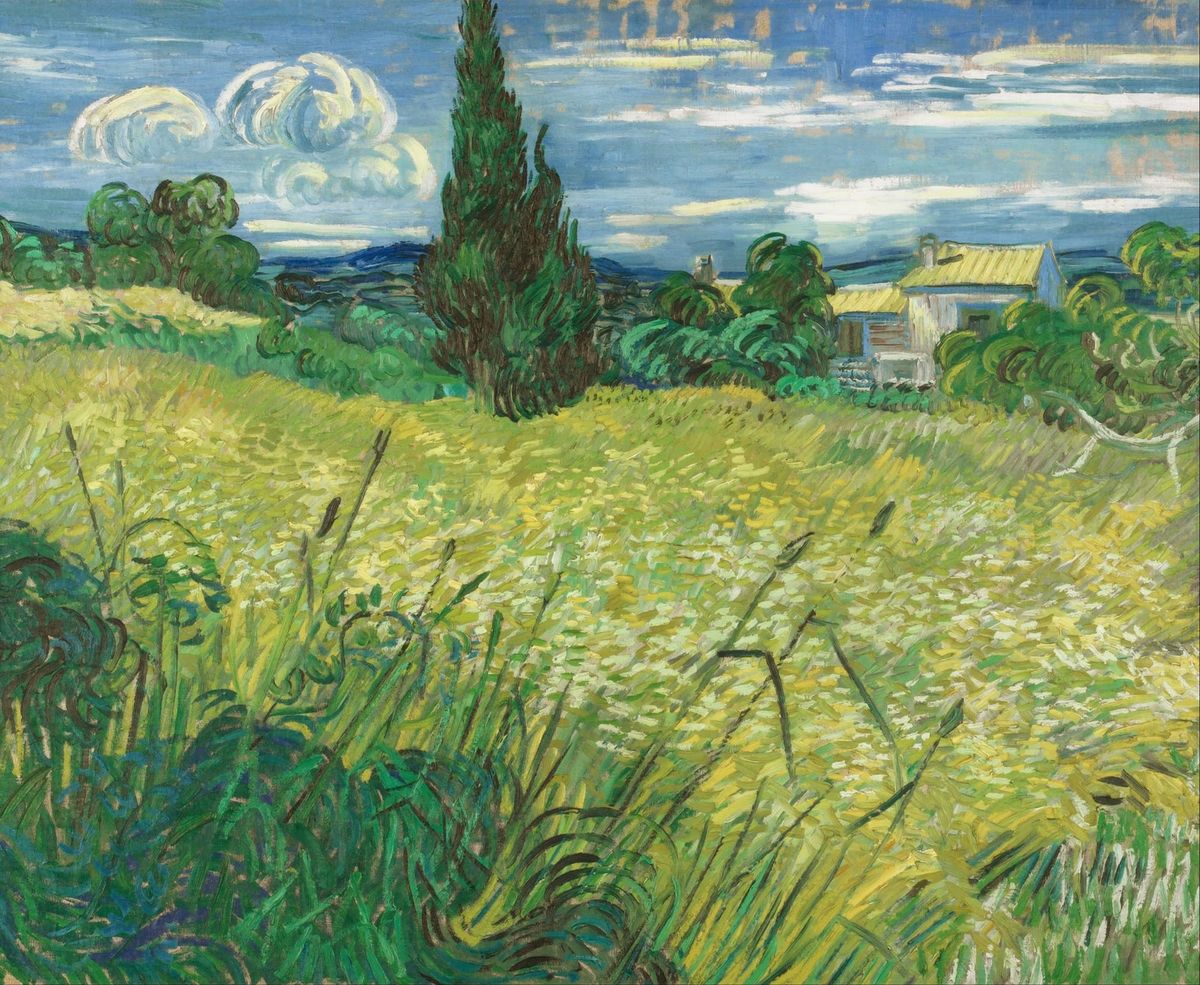
후기 인상주의의 거장 빈센트 반 고흐(Vincent van Gogh, 1853–1890)가 1889년 6월 중순 프랑스 생레미의 생폴 드 모졸 요양원에서 완성한 유화 Green Wheat Field with Cypress(사이프러스가 있는 초록빛 밀밭, 또는 사이프러스가 있는 밀밭)는 73.0 cm × 93.4 cm 크기의 캔버스에 유채로 그린 대표작입니다. 현재 체코 프라하 국립미술관(National Gallery Prague)에 영구 소장되어 있습니다.
초여름 프로방스의 바람과 사이프러스에 바치는 서정시
1889년 5월 생레미 요양원에 자진 입원한 반 고흐는 병원의 통제된 환경 속에서도 눈부시게 약동하는 남프랑스의 초여름 풍경에 매료되었습니다. 그는 요양원 담장 밖으로 나가 알피유 산맥 자락을 따라 펼쳐진 밀밭을 관찰하며, 바람에 일렁이는 풀잎의 역동적인 리듬과 하늘을 향해 곧게 솟아오른 짙푸른 사이프러스 나무를 화폭에 담기 시작했습니다.
고흐에게 사이프러스 나무는 단순한 지중해의 수목이 아니었습니다. 그는 이 짙푸른 상록수를 이집트의 오벨리스크처럼 완벽한 비례를 지닌 숭고한 존재이자, 죽음과 영원을 잇는 성스러운 상징으로 여겼습니다. 화면 속 초여름의 밀밭은 아직 완전히 익지 않은 연둣빛과 황금빛이 뒤섞여 싱그러운 생명력을 뿜어내며, 거센 미스트랄 바람을 맞아 파도처럼 굽이칩니다. 동생 테오에게 보낸 편지에서 그는 "밀밭과 사이프러스 나무, 지중해의 푸른 하늘과 굴러가는 구름을 그리고 있다. 이 풍경은 내 마음속 가장 깊은 갈망을 어루만져 준다"고 적었습니다. 자연의 원초적인 활력 속에서 영혼의 상처를 치유하고자 했던 화가의 순수한 열망이 캔버스 전면에 가득 배어 있습니다.
무의식 속 시선의 공간 유영과 싱그러운 심리적 해방감
감상자의 시선은 화폭 전면 좌측 하단에서 굵고 소용돌이치는 붓질로 자라난 짙은 청록색 풀잎들과 바람에 흔들리는 긴 줄기들로 가장 먼저 이끌립니다. 거친 임파스토 터치로 빚어낸 풀밭의 생생한 방향성은 보는 이의 무의식 속에 남프랑스의 서늘한 바람과 풀내음을 생생하게 전달합니다.
이어 시선은 연둣빛과 황금빛으로 물결치는 거대한 밀밭의 파도를 타고 화면 중앙을 가로질러, 하늘을 찌를 듯 웅장하게 솟아오른 사이프러스 나무의 짙은 암록색 실루엣으로 자연스럽게 상승합니다.
그 후 시선은 사이프러스 오른편에 다정하게 자리 잡은 노란 지붕의 프로방스 농가와 둥근 나무들을 스쳐, 화면 상단을 가득 메운 푸른 하늘과 소용돌이치는 순백의 뭉게구름 속으로 시원하게 확장됩니다. 찰랑이는 대지의 따뜻한 연둣빛과 하늘의 차가운 청록색, 그리고 사이프러스의 묵직한 어둠이 자아내는 절묘한 색채의 조화 속에서, 관람자는 의식하지 못하는 사이 일상의 답답함을 벗겨내는 상쾌한 공간감과 평온한 내적 휴식을 체감하게 됩니다.
율동적인 필치와 모더니즘 풍경화의 정점, 미술사적 평가
미술계는 이 작품을 반 고흐가 생레미 시절 완성한 전설적인 사이프러스 연작의 빛나는 출발점이자, 자연의 동세를 완벽하게 양식화한 걸작으로 평가합니다.
원근에 얽매이지 않고 대지와 구름, 수목 전체를 하나의 유기적인 파동으로 엮어낸 붓질은 인상주의의 순간적 빛 포착을 뛰어넘어 자연의 살아있는 호흡 자체를 시각화했습니다. 훗날 20세기 야수파와 표현주의의 문을 활짝 열어젖힌 이 기념비적인 캔버스는, 고통스러운 현실 속에서도 자연의 찬란한 생명력을 통해 영원한 위로를 건네고자 했던 반 고흐의 위대한 예술혼을 증명하고 있습니다.
A Verdant Ocean of Wind and the Tower of Eternity, Green Wheat Field with Cypress
Painted in mid-June 1889 during his momentous stay at the Saint-Paul de Mausole asylum in Saint-Rémy-de-Provence by Vincent van Gogh (1853–1890), Green Wheat Field with Cypress (also known as Field of Green Wheat with Cypress) is an oil on canvas measuring 73.0 cm × 93.4 cm (28.7 in × 36.8 in), preserved in the permanent collection of the National Gallery Prague in Prague, Czech Republic.
Early Summer in Saint-Rémy: The Majestic Obelisk and Provençal Breezes
In May 1889, following his voluntary admission to the asylum in Saint-Rémy, Van Gogh found renewed creative vigor in the sun-drenched landscapes outside the monastery walls. Wandering into the fertile fields bordering the Alpilles mountains, he became deeply fascinated by the dynamic visual dialogue between the billowing sea of young wheat and the dark, monumental silhouettes of the local cypresses.
To Vincent, the cypress was not merely a southern evergreen; he revered it as a majestic natural obelisk of exquisite proportions, embodying an ancient symbol of eternity and spiritual perseverance. In this vibrant June study, the wheat field displays a fresh transition between lush green and ripening gold, undulating like an ocean under the spirited Mediterranean wind. Writing to his brother Theo, Vincent remarked that the motif of the wheat field and cypresses held a profound psychological and aesthetic resonance for him, representing the quintessential poetry of the Provençal countryside.
Psychological Trajectory of the Gaze and Unconscious Liberation
The observer’s subconscious gaze is immediately welcomed by the sweeping, circular brushstrokes of rich green foliage anchoring the lower-left foreground. Rendered in thick, tactile layers of viridian and cobalt, this lively undergrowth establishes an immediate sensory connection to the wind-blown terrain.
From this grounded start, visual perception glides across the undulating quilt of chartreuse, lime, and pale gold that ripples across the vast field, surging upward into the majestic spire of the central cypress tree.
The eye then sweeps past the charming yellow-roofed farmhouse nestled among rounded orchard trees on the right, ascending into the atmospheric turbulence of the pale turquoise sky and buoyant, swirling cumulus clouds. Navigating this thrilling harmony between terrestrial warmth and celestial coolness, the viewer subconsciously internalizes an enduring sensation of psychological clarity, rhythmic vitality, and restorative tranquility.
Textural Rhythms and the Living Landscape: Critical Legacy
Art historians revere Green Wheat Field with Cypress as a triumphant early pinnacle of Van Gogh’s celebrated Saint-Rémy landscapes, showcasing his mastery of dynamic, unified brushwork.
By animating the entire composition—from the waving blades of grass to the soaring clouds—with undulating, calligraphic strokes, Van Gogh transformed traditional landscape painting into an emotional and cosmic vision. Foreshadowing the stylistic breakthroughs of Fauvism and modern Expressionism, this masterwork stands as an immortal testament to the healing majesty of nature and the boundless resilience of the human soul.
본 컨텐트의 저작권은 팔렛트제주에 있습니다. 허가없는 무단전제를 금지합니다.
Copyright © Palette Jeju. All rights reserved. Unauthorized reproduction or redistribution is strictly prohibited.