바니타스의 세부 디테일 Vanitas Detail
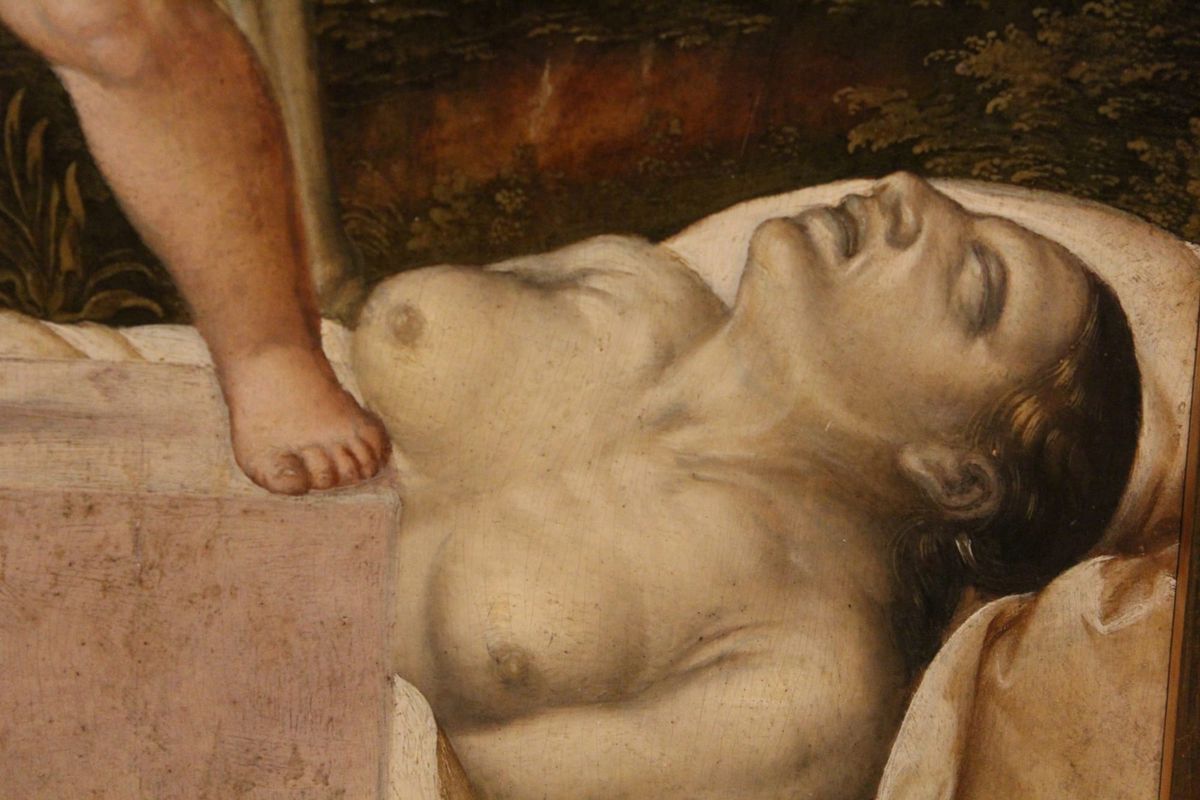
1540년에 독일의 화가 바르텔 베함(Barthel Beham)이 제작한 바니타스 작품의 하단부를 확대하여 포착한 이 세부 디테일은, 인간의 삶과 쾌락이 지닌 덧없음과 죽음 앞에서의 무력한 소멸을 강렬하게 투영합니다.
덴마크 코펜하겐의 국립미술관(Statens Museum for Kunst, Copenhagen)에 소장된 원본 작품의 공식 소장품 등록번호는 HK-328이며, 본 리뷰의 대상이 되는 이 세부 영역은 전체 목판 유채 패널(높이 46.5 cm, 너비 34.2 cm)의 하단 일부분을 발췌한 것입니다.
작가의 고뇌/비하인드
작품의 전면 하단에는 침상에 무력하게 쓰러져 숨이 끊어진 인물의 상반신이 클로즈업되어 있으며, 그 곁으로 어린아이의 발걸음이 가차 없이 딛고 지나가는 모습이 묘사되어 삶의 덧없음을 극대화합니다.
창백하게 식어가는 피부 톤과 반쯤 벌어진 입술, 그리고 생기를 잃은 눈감은 얼굴의 세밀한 묘사는 당시 북유럽 미술이 추구하던 메멘토 모리(죽음을 기억하라)의 철학적 주제를 가감 없이 드러냅니다.
특히 중경에는 단단한 대좌와 쓰러진 인물의 부드러운 천이 극적인 대비를 이루고 있으며, 원경의 어두운 대지 톤은 죽음이라는 거대한 실상 앞에서 모든 세속적 영화가 멈춰 선 침묵의 대기감을 차분하게 자아냅니다.
무의식 속 시선 및 심리 흐름
관람객의 시선은 가장 먼저 화면 우측을 채운 창백한 표정으로 쓰러진 인물의 고통스럽고도 허탈한 얼굴 표정으로 강렬하게 꽂힙니다.
이어 시선은 그녀의 굳어가는 가슴 위로 무심하게 디뎌진 어린아이의 발끝과 차갑게 가라앉은 피부의 섬세한 질감을 따라 부드럽게 이동합니다.
마지막으로 시선은 화면 하단을 감싸는 부드러운 천의 주름과 어두운 배경으로 확장되며, 모든 쾌락이 끝나는 종착점 앞에서 깊은 성찰과 서늘한 숙연함을 체감하게 됩니다.
미술계의 평가 및 조형미
미술사학계는 이 작품의 세부 디테일을 16세기 북유럽 바니타스 회화의 정수이자, 죽음과 소멸의 과정을 잔인할 정도로 정교하게 포착한 뛰어난 사실주의적 수작으로 평가합니다.
목판 위에 겹겹이 쌓아 올린 유채 물감은 죽음 직전의 창백한 피부 질감, 핏기 없는 입술의 미세한 굴곡, 그리고 침상의 천이 지닌 부드러운 결을 경이로울 정도로 생생하게 살아나게 만듭니다.
인간 존재의 처절한 유한함을 시각적 충격과 예술적 밀도로 승화시킨 이 세부 화면은, 오랜 시간이 지나도 묵직한 철학적 가치를 지니고 있습니다.
영문 번역본 구성
Vanitas Detail
Captured in a close-up of the lower section of the Vanitas created in 1540 by the German master Barthel Beham, this detail powerfully reflects the transience of human life and the helpless extinction of mortality in the face of death.
Housed in the Statens Museum for Kunst in Copenhagen, Denmark, the original work bears the official inventory number HK-328, and this specific focus area represents a highlighted detail from the full oil on wood panel measuring 46.5 cm in height and 34.2 cm in width.
The Artist's Struggle and Behind-the-Scenes
In the lower foreground of the composition, the upper body of a figure collapsed powerlessly and lifelessly upon a bed is brought into stark close-up, while the foot of a child stepping ruthlessly beside her maximizes the fleeting nature of life.
The pale, cooling skin tones, the half-open lips, and the meticulous rendering of the lifeless closed eyes unsparingly expose the philosophical theme of memento mori pursued by northern European art of the era.
In the middle ground, a solid stone pedestal and the soft fabric surrounding the fallen figure form a dramatic contrast, while the dark earthy tones in the background gently generate a silent atmospheric weight where all worldly glory halts before the absolute reality of death.
Subconscious Gaze and Psychological Flow
The viewer's gaze is initially drawn directly to the pale, stricken expression and the hollow, distressed face of the collapsed figure occupying the right side of the frame.
The eye then shifts downward along the foot of the child indifferently treading near her chest and the delicate textures of her fading, cold skin.
Finally, the gaze drifts across the folds of the soft shroud and the dark background, evoking a profound philosophical introspection and chilling solemnity before the ultimate terminus where all earthly pleasures cease.
Art World Evaluation and Formal Beauty
Art historians evaluate this detail as a masterpiece of sixteenth-century northern Vanitas painting, successfully capturing the process of death and extinction with astonishing realist precision.
The layered application of oil paint on wood brings the pale skin texture on the verge of death, the subtle contours of the bloodless lips, and the soft folds of the bedding to breathtaking life.
Elevating the agonizing finiteness of human existence into a synthesis of visual impact and artistic density, this detailed view retains an enduring philosophical value in art history.