바니타스 Vanitas
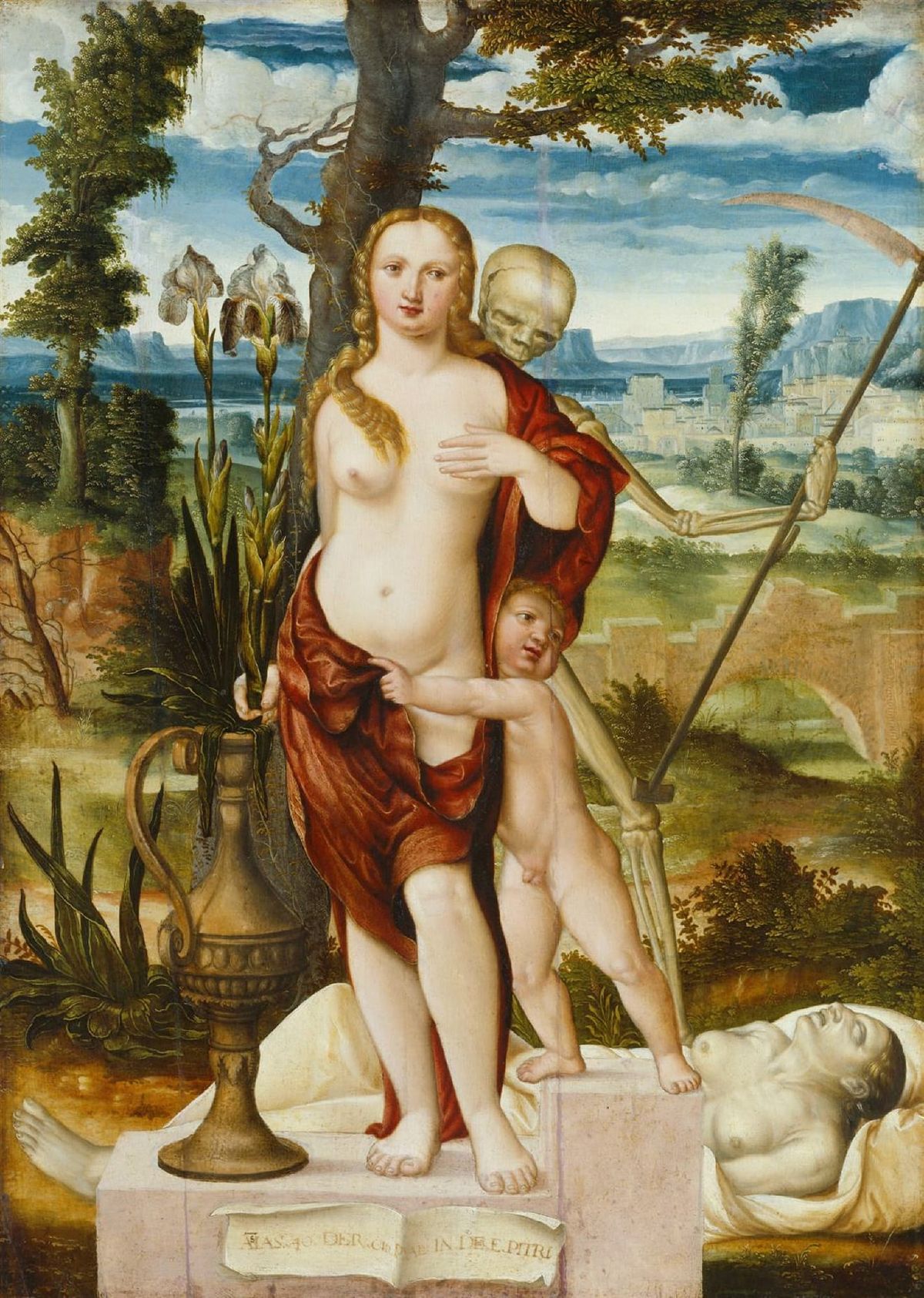
1540년에 독일의 화가 바르텔 베함(Barthel Beham)이 제작한 이 작품은, 인간의 삶과 쾌락이 지닌 덧없음과 피할 수 없는 죽음의 진실을 도상학적 상징들을 통해 냉철하게 투영합니다.
덴마크 코펜하겐의 국립미술관(Statens Museum for Kunst, Copenhagen)에 소장된 이 작품의 공식 소장품 등록번호는 HK-328이며, 실제 작품의 실측 규격은 높이 46.5 cm, 너비 34.2 cm의 목판 유채 패널입니다.
작가의 고뇌/비하인드
작품의 전면에는 매혹적인 나체 여성의 뒤로 음산한 해골이 은밀하게 다가서고 있으며, 그 옆에는 낫을 든 사신의 형상과 함께 삶과 죽음의 경계에 놓인 인물들이 배치되어 덧없는 세속의 실상을 고스란히 드러냅니다.
여성의 손길을 붙잡는 어린아이와 발치에 누운 인물의 모습은 인생의 허무함과 시간이 가져다주는 냉혹한 소멸을 상징하며, 화면 왼쪽에 놓인 화병과 꽃은 시들어가는 생명의 유한함을 역설적으로 보여줍니다.
특히 중경에는 거친 나무와 고풍스러운 건축물 구도가 얽혀 긴장감을 더하며, 원경의 흐린 하늘과 멀리 보이는 마을 풍경은 인간의 존재가 지닌 덧없는 대기감을 차분하게 자아냅니다.
무의식 속 시선 및 심리 흐름
관람객의 시선은 가장 먼저 화면 중앙을 채운 아름다운 여성의 나체와 그녀의 어깨너머로 섬뜩하게 시선을 던지는 해골의 모습으로 강렬하게 꽂힙니다.
이어 시선은 여성의 옷자락을 붙잡는 어린아이의 애처로운 동작과 발치에 누워 잠든 듯 쓰러진 인물의 비극적 형상으로 부드럽게 이동합니다.
마지막으로 시선은 화면 전체를 감싸는 황량한 나무와 멀리 트인 풍경의 원경으로 확장되며, 모든 세속적 가치가 사라지는 종착점 앞에서 깊은 성찰과 숙연함을 체감하게 됩니다.
미술계의 평가 및 조형미
미술사학계는 이 작품을 16세기 북유럽 바니타스 미술의 정수이자, 삶의 쾌락과 죽음의 불가피성을 경이로운 정교함으로 포착한 뛰어난 우화적 수작으로 평가합니다.
목판 위에 겹겹이 쌓아 올린 유채 물감은 인물들의 부드러운 피부 질감과 해골의 메마른 뼈, 그리고 주변 사물들의 세밀한 대비를 생생하게 살아나게 만듭니다.
인간 존재의 유한함과 예술의 영원성을 시각적 충격과 아름다움으로 승화시킨 이 작품은, 오랜 시간이 지나도 묵직한 철학적 가치를 지니고 있습니다.
영문 번역본 구성
Vanitas
Created in 1540 by the German master Barthel Beham, this work coolly reflects the transience of human life and pleasure alongside the inescapable reality of death through profound iconographic symbols.
Housed in the Statens Museum for Kunst in Copenhagen, Denmark, this piece bears the official inventory number HK-328, and the actual physical dimensions of the oil on wood panel measure 46.5 cm in height and 34.2 cm in width.
The Artist's Struggle and Behind-the-Scenes
In the immediate foreground, a captivating nude female figure is shadowed by a grim skull lingering closely behind her, while the figure of death holding a scythe and other characters placed on the threshold of life and mortality vividly expose the fleeting nature of worldly existence.
The child grasping the woman's garment and the figure collapsed near her feet symbolize the vanity of life and the relentless decay brought by time, while the vase and flowers positioned on the left paradoxically highlight the fragile finiteness of fading life.
In the middle ground, gnarled trees and antique architectural structures entwine to heighten the compositional tension, while the overcast skies and distant townscape in the background gently evoke a transient atmospheric weight of human existence.
Subconscious Gaze and Psychological Flow
The viewer's gaze is initially drawn directly to the central nude female figure and the chilling presence of the skull peering over her shoulder.
The eye then shifts downward along the desperate gesture of the child clutching the woman's robes and the tragic form of the figure lying motionless at her feet.
Finally, the gaze drifts outward across the barren trees and the sweeping distant landscape, evoking a profound philosophical introspection and solemn gravity before the ultimate terminus of all worldly values.
Art World Evaluation and Formal Beauty
Art historians evaluate this work as a masterpiece of sixteenth-century northern European Vanitas art, successfully capturing the juxtaposition of worldly pleasure and inevitable mortality through astonishing descriptive precision.
The layered application of oil paint on wood brings the soft skin textures of the figures, the dry bone structure of the skull, and the meticulous contrast of surrounding objects to vivid life.
Elevating the finitude of human existence and the eternity of art into a synthesis of visual shock and beauty, this creation retains an enduring philosophical value in art history.
본 컨텐트의 저작권은 팔렛트제주에 있습니다. 허가없는 무단전제를 금지합니다.
Copyright © Palette Jeju. All rights reserved. Unauthorized reproduction or redistribution is strictly prohibited.