바니타스 (죽음과 여인) Vanitas (Memento Mori)
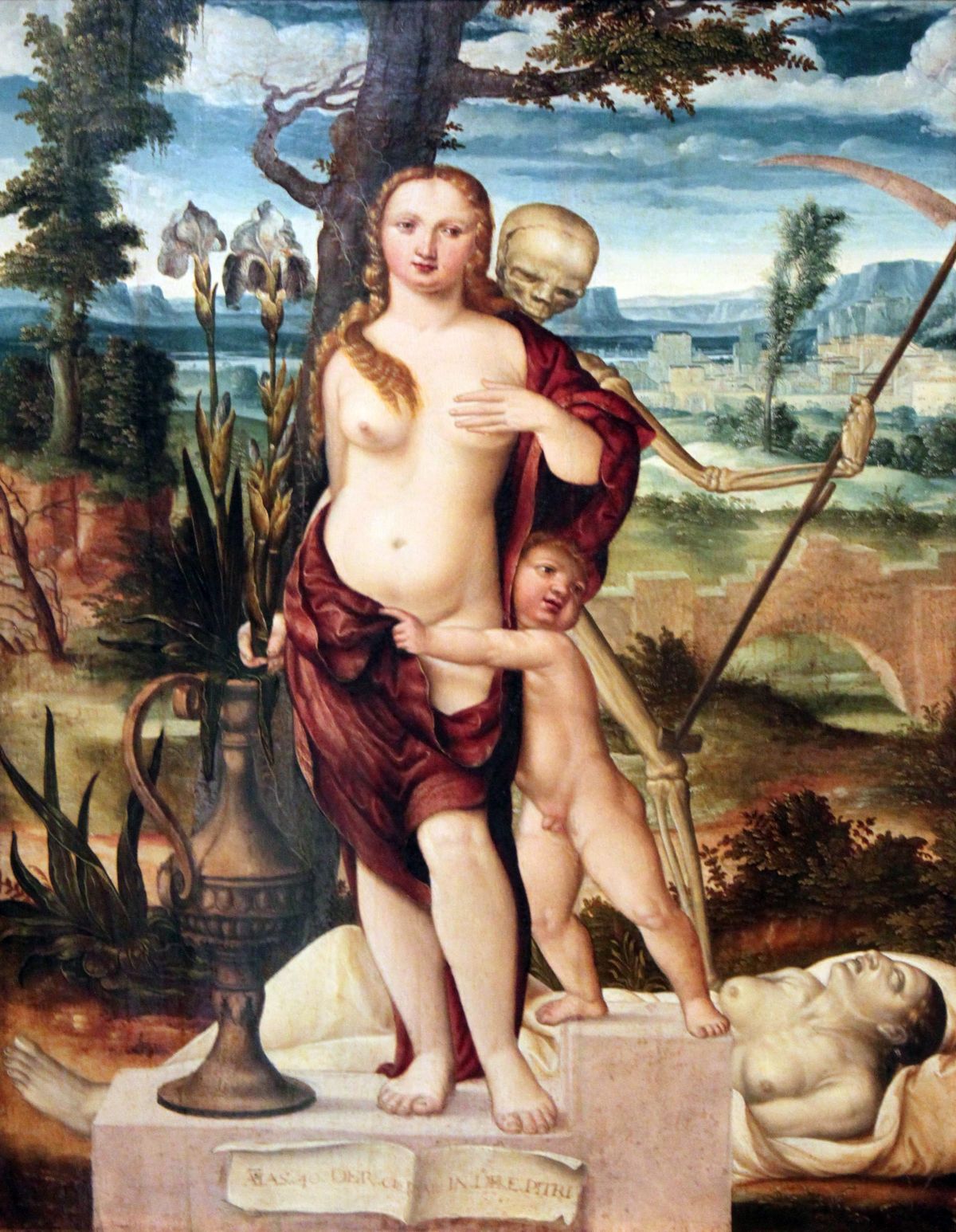
1540년에 독일의 화가 바르텔 베함(Barthel Beham)이 제작한 이 작품은, 인간의 덧없는 쾌락과 젊음의 이면에 드리워진 죽음의 피할 수 없는 진실을 냉혹하게 투영합니다.
독일 마인츠의 Landesmuseum Mainz에 소장된 이 작품의 공식 소장품 등록번호는 S 24이며, 실제 작품의 실측 규격은 높이 84 cm, 너비 64 cm의 목판 유채 패널입니다.
작가의 고뇌/비하인드
작품의 전면 중앙에는 풍만한 육체를 지닌 젊은 여인이 붉은 천을 두른 채 서 있으며, 그녀의 등 뒤로는 낫을 든 해골 형상의 죽음이 은밀하게 다가와 어깨를 감싸고 있습니다.
그녀의 다리 곁에는 어린 아이가 해맑은 표정으로 매달려 생명의 덧없음을 부각하며, 발치 아래에는 죽음을 맞이한 또 다른 인물의 시신이 처연하게 누워 있어 비극성을 극대화합니다.
특히 중경에는 정교하게 묘사된 항아리와 시든 꽃, 그리고 돌기둥의 구조물이 세속적 영광의 허황됨을 상징하고 있으며, 원경의 황량한 풍경과 어두운 하늘은 인간이 마주하는 실존적 공포를 소리 없이 대변합니다.
무의식 속 시선 및 심리 흐름
관람객의 시선은 가장 먼저 화면 중앙에서 무심한 표정을 짓고 있는 젊은 여인의 밝고 부드러운 피부와 붉은 드레스의 강렬한 색감으로 자연스럽게 꽂힙니다.
이어 시선은 그녀의 어깨너머로 섬뜩하게 미소 짓는 해골의 빈 눈구멍과 날카로운 낫의 금속 질감을 따라 이동합니다.
마지막으로 시선은 화면 아래 발치에 쓰러진 시신과 배경의 쓸쓸한 대기감으로 확장되며, 젊음과 아름다움이 영원할 수 없다는 인간 본연의 깊은 무상감과 숙연함을 느끼게 됩니다.
미술계의 평가 및 조형미
미술사학계는 이 작품을 16세기 독일 르네상스 미술의 대표적인 바니타스 도상학적 걸작으로, 북유럽의 날카로운 사실주의와 이탈리아풍의 인체 비례가 조화롭게 결합한 수작으로 평가합니다.
목판 위에 겹겹이 쌓아 올린 유채 물감은 여인의 부드러운 살결과 해골의 메마른 뼈, 그리고 주변 기물의 세밀한 질감을 생생하게 살아나게 만듭니다.
인간의 덧없는 삶과 피할 수 없는 죽음의 경계를 예술의 경지로 승화시킨 이 작품은, 영원토록 미술사에서 묵직한 철학적 울림을 지니는 가치를 지니고 있습니다.
영문 번역본 구성
Vanitas (Memento Mori)
Created in 1540 by the German master Barthel Beham, this work unflinchingly reflects the cold reality of human mortality and the fleeting illusion of worldly pleasures hidden beneath the veneer of youth.
Housed in the Landesmuseum Mainz in Mainz, Germany, this piece bears the official inventory number S 24, and the actual physical dimensions of the oil on wood panel measure 84 cm in height and 64 cm in width.
The Artist's Struggle and Behind-the-Scenes
In the immediate foreground at the center, a voluptuous young woman stands draped in a red fabric, while directly behind her, a skeletal figure of Death holding a scythe approaches to grasp her shoulder.
Clinging to her leg is a small child with an innocent expression, highlighting the fragility of life, while the lifeless body of another figure lies prostrate at her feet, intensifying the inherent tragedy of the composition.
In the middle ground, meticulously rendered objects such as an urn, withered flowers, and a stone pedestal symbolize the vanity of earthly glory, while the desolate landscape and brooding skies in the distance silently convey the existential dread confronting humanity.
Subconscious Gaze and Psychological Flow
The viewer's gaze is initially drawn directly to the luminous flesh and striking red dress of the young woman at the center of the composition.
The eye then shifts upward toward the hollow sockets of the grinning skull looming behind her shoulder and the sharp, metallic curve of the scythe.
Finally, the gaze drifts downward to the fallen body at the base of the pedestal and outward into the melancholic atmosphere of the background, evoking a profound sense of transience and quiet awe before the inevitability of death.
Art World Evaluation and Formal Beauty
Art historians evaluate this work as a quintessential masterpiece of sixteenth-century German Renaissance vanitas iconography, successfully fusing northern realism with Italianate human proportions.
The layered application of oil paint on wood brings the soft texture of the woman's skin, the dry structure of the skeleton, and the fine details of the surrounding objects to vivid life.
Elevating the eternal theme of human mortality and the fleeting nature of life to the pinnacle of visual mastery, this creation retains an enduring and profound philosophical value in art history.
본 컨텐트의 저작권은 팔렛트제주에 있습니다. 허가없는 무단전제를 금지합니다.
Copyright © Palette Jeju. All rights reserved. Unauthorized reproduction or redistribution is strictly prohibited.