바느질하는 여인 (Femme raccommodant / Woman Mending, 1895)
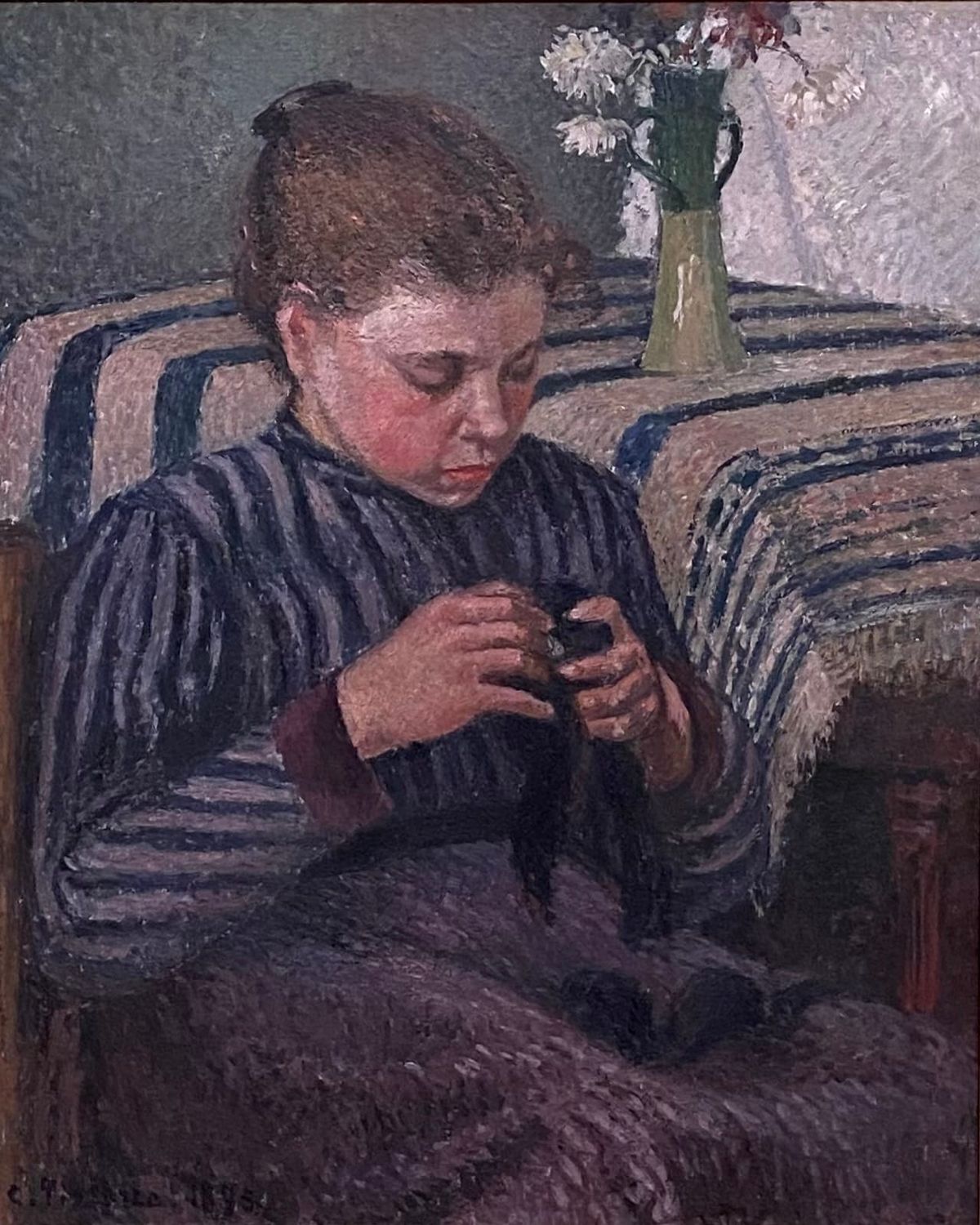
1890년대 중반 에라니 쉬르 엡트(Éragny-sur-Epte)의 고즈넉한 작업실에서 카미유 피사로는 일상의 번잡함을 잊은 채 묵묵히 옷감을 손질하는 젊은 여인의 정갈한 사색의 순간을 화폭에 담았습니다.
당시 피사로는 신인상주의의 엄격하고 기계적인 점묘 방식을 완전히 벗어나, 부드럽고 율동감 넘치는 독자적인 붓터치를 통해 인물의 내면적 깊이와 실내 공기의 온기를 구현하는 원숙기에 도달해 있었습니다. 가로 54cm, 세로 65cm 크기의 세로형 캔버스에 유채로 완성된 이 작품은, 17세기 네덜란드 풍속화의 정취를 현대 인상주의의 세련된 색채 감각으로 재해석하여 일상적인 가사 노동 속에 깃든 고결한 침묵과 평온을 탁월하게 포착한 후기 대표작입니다.
관람자의 시각 인지 체계는 화면 상단에서 부드러운 빛을 받아 붉은 생기를 머금은 여인의 뺨과, 손끝에 온 신경을 집중하며 아래를 향하고 있는 정적인 시선에 가장 먼저 닻을 내립니다. 차분한 실내 배경과 인물의 얼굴이 자아내는 은은한 명암 대비는 시각 피질의 중심와를 즉각 포획하며 화면 전체의 내밀한 심리적 구심점을 확립합니다.
이어서 시선은 세로 줄무늬 상의의 리드미컬한 결을 타고 내려와, 어두운 천을 쥐고 섬세하게 움직이는 여인의 투박하지만 따뜻한 두 손의 동세로 자연스러운 도약 안구 운동을 진행합니다.
손끝의 촉각적인 붓터치를 확인한 눈길은 여인의 무릎을 덮고 있는 묵직한 보랏빛 스커트의 두터운 질감을 거쳐, 화면 우측 상단의 줄무늬 식탁보와 그 위에 단아하게 놓인 꽃병의 하얀 꽃송이들로 부드럽게 상승합니다.
실내에 스며드는 은은한 자연광과 규칙적인 바느질의 고요한 리듬이 망막 위에서 하나의 완성된 조화로 통합되는 순간, 관조자는 번잡한 일상의 긴장을 내려놓고 아늑한 방 안의 평화로운 침묵 속에 머무는 듯한 깊은 심리적 안도감과 내면의 평온을 체험하게 됩니다.
이 그림을 그릴 당시 피사로는 요하네스 페르메이르와 장 시메옹 샤르댕의 고요한 실내 풍속화 전통을 깊이 연구하며, 화려한 사교계의 겉치레 대신 평범한 일상을 살아가는 민중의 삶에서 진정한 조형적 숭고함을 길어 올리고 있었습니다.
그는 줄무늬 옷감과 식탁보, 그리고 거친 벽면의 질감을 수많은 색채 입자들로 섬세하게 직조하여, 사물과 인물이 하나의 살아 숨 쉬는 대기 속에서 자연스럽게 공명하도록 구성했습니다.
동시대 미술계와 진보적 비평가들은 화려한 장식성을 배제하고 노동의 정직한 순간을 따뜻한 휴머니즘으로 어루만진 피사로의 화폭을 두고 "가장 평범한 일상의 침묵 속에서 인간 영혼의 가장 고귀한 순수함을 길어 올린 거장의 붓"이라며 아낌없는 찬사를 보냈습니다.
소박한 일상 속 집중의 순간과 실내에 머무는 빛의 온기를 원숙한 조형미와 섬세한 색채의 선율로 승화시킨 피사로의 '바느질하는 여인'은, 현대 미술사에서 후기 인상주의 인물화가 도달한 가장 깊이 있고 따뜻한 인간주의적 정점으로 확고하게 평가받고 있습니다.
Woman Mending (Femme raccommodant, 1895)
In the quiet sanctuary of his studio at Éragny-sur-Epte during the mid-1890s, Camille Pissarro captured the serene concentration of a young woman quietly absorbed in the timeless rhythm of mending.
Having liberated himself from the rigid optical formulas of neo-impressionist pointillism, the master achieved a fluid and deeply lyrical late style that harmonized psychological depth with the warm resonance of domestic light. Measuring 65 by 54 cm, this vertical oil on canvas reinterprets the contemplative gravity of seventeenth-century genre painting through the sophisticated chromatic harmonies of late Impressionism, elevating an ordinary domestic chore into a profound monument of human serenity.
The observer’s perceptual framework instantly anchors upon the gentle, downcast gaze of the young woman, whose flushed cheek catches the soft, diffused ambient light filtering through the room. This tender human nucleus arrests the fovea, establishing an intuitive foundation of emotional intimacy and spatial orientation.
From this grounded anchor, the ocular trajectory glides downward along the rhythmic verticals of her striped bodice, pausing upon her nimble, working hands as they deftly manipulate the dark fabric.
Navigating across the dense, tactile weave of her aubergine skirt in the lower foreground, the gaze ascends toward the textured, striped tablecloth on the right, resting upon the modest green ceramic vase filled with white blossoms.
As the quiet domestic shadows and the delicate particles of natural daylight coalesce into a unified sensory whole within the visual cortex, active visual scanning dissolves into profound contemplative stillness, wrapped in the restorative quietude of rural domestic life.
While executing this canvas, Pissarro was reflecting deeply upon the timeless legacy of Johannes Vermeer and Jean-Siméon Chardin, seeking pictorial nobility within the unpretentious routines of the working class rather than the ostentatious parlors of high society.
By building the surfaces of the garments, table linens, and surrounding walls through densely layered, vibrating strokes of broken color, the master unified the physical presence of the sitter with the living atmosphere of her humble shelter.
Progressive critics universally admired this unadorned vision, celebrating Pissarro’s singular capacity to uncover moral dignity, quiet poetry, and enduring aesthetic truth within the most modest corridors of human existence.
Masterfully harmonizing structural weight with delicate emotional warmth, Pissarro's intimate depiction of the mending woman remains celebrated across art history as an enduring pinnacle of nineteenth-century humanist figurative art.
본 콘텐츠의 저작권은 저작권자에게 있으며, 무단 전재 및 재배포를 금합니다.