반달 주막의 키르메스 세부화 The Kermis at the Half Moon Inn detail
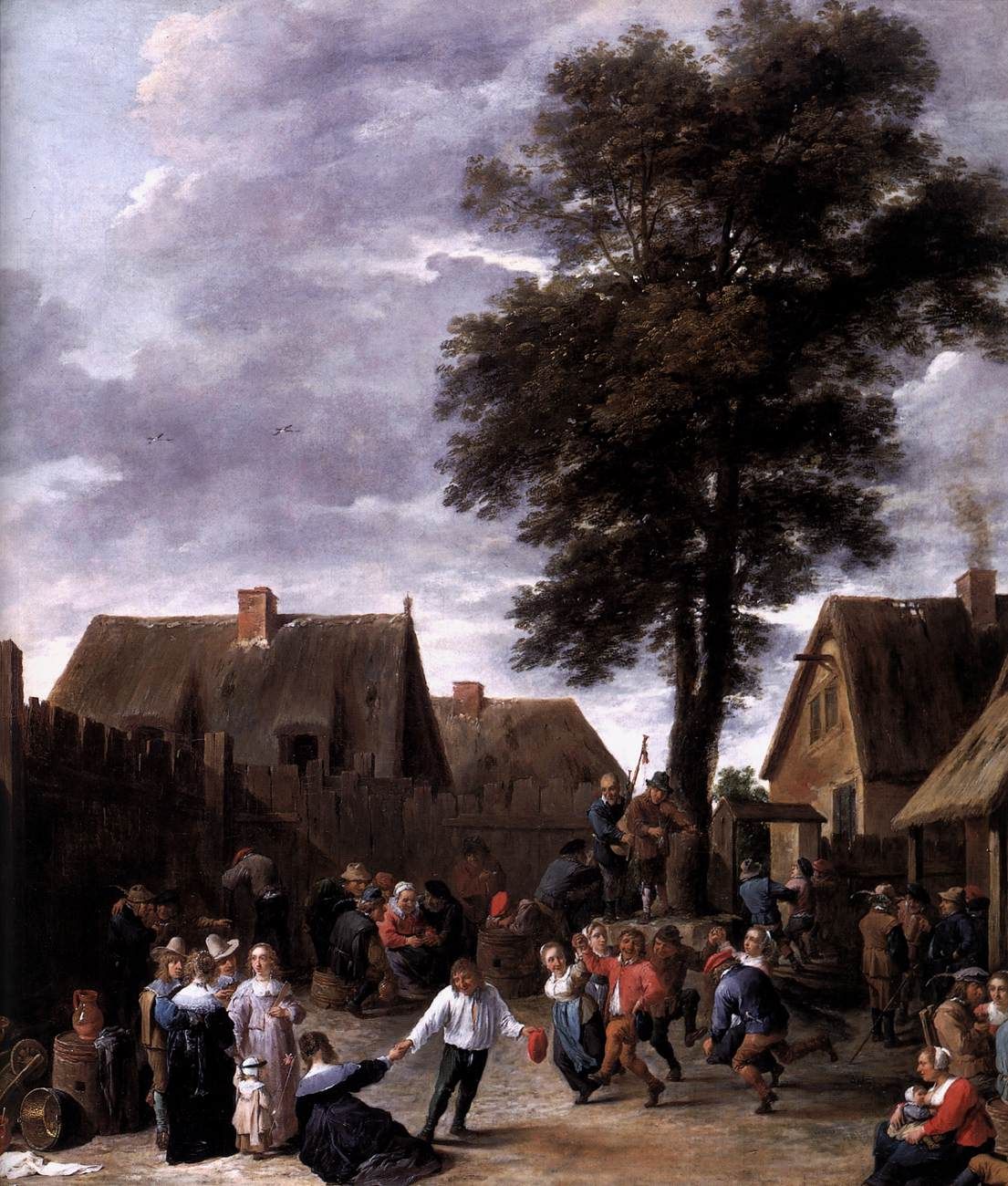
17세기 플랑드르 바로크 풍속화 및 농민화의 거장 소 다비드 테니어르스(David Teniers le Jeune, 1610–1690)가 1641년경 안트베르펜에서 완성한 기념비적 야외 풍속화 대작 반달 주막의 키르메스(The Kermis at the Half Moon Inn, 프랑스어: La Kermesse à l'auberge du Croissant, 소장품 번호: P001784)는 전체 원작 크기가 80.0 cm × 109.0 cm(또는 세로형 연작 기준 93.0 cm × 132.0 cm급)에 달하는 웅장한 캔버스에 유채로 그린 대표적인 북유럽 농민 축제화 최고 걸작입니다.
본 작품은 원작 전체 화면 중 시골 초가지붕 주막 앞마당에서 거대한 고목을 배경으로 손을 잡고 둥글게 춤추는 마을 사람들과 이를 구경하는 귀족 일행, 그리고 음악을 연주하는 악사들이 한데 어우러진 핵심 영역을 가깝게 포착한 세부화(細部畫, 부분 확대 그림)입니다.
원작은 현재 스페인 마드리드의 프라도 미술관(Museo del Prado, Madrid)에 소장되어 있습니다.
피터르 브뤼헐의 흥겨운 유산과 서민들의 따뜻한 쉼을 향한 화가의 깊은 고뇌
1640년대 초반 안트베르펜 성 루카 길드의 학장으로 선출되며 전성기를 맞이했던 서른 살 안팎의 테니어르스는, 플랑드르 회화의 위대한 선배인 피터르 브뤼헐 1세가 남긴 농민 축제(키르메스)의 생동감을 계승하고자 깊이 몰두했습니다.
당시 화가는 고된 농사일과 전란의 피로에 지친 시골 서민들의 삶을 거칠거나 조롱하는 시선으로 그리지 않고, 맑은 은회색 대기 속에서 이웃들과 정을 나누는 따뜻한 인간미와 품격 높은 시각 질서로 어떻게 담아낼지 치열하게 번민했습니다.
성 수호성인의 축일을 맞아 반달 모양 간판이 걸린 주막 앞마당에서 열린 이 축제에서, 화가는 마을의 모든 계층이 한자리에 어우러져 평화로운 기쁨을 만끽하는 순간을 포착했습니다.
화면 중앙에서는 흰 셔츠를 입고 붉은 모자를 손에 든 청년이 이웃 여인들의 손을 잡고 흥겹게 발을 구르며 춤판을 이끌고 있습니다.
화면 왼쪽 앞에는 화려한 레이스 옷깃과 비단옷을 차려입은 귀족 신사 숙녀와 어린 딸이 주막 마당을 찾아와 마을 사람들의 활기찬 춤을 흐뭇하게 바라보고 있습니다.
중앙의 거대한 고목 아래 높은 돌단 위에서는 백파이프(백파이프와 바이올린)를 든 악사가 신나게 가락을 뽑아내고 있으며, 울타리 곁에서 술잔을 기울이는 노인들과 아기를 안고 젖을 먹이는 어머니의 모습은 소박한 일상 속에 피어난 공동체의 평온한 행복을 손에 잡힐 듯 생생하게 웅변합니다.
손을 맞잡은 춤꾼들의 발걸음에서 구경하는 귀족 일행과 높은 고목으로, 시선의 심리적 여정
그림을 마주하는 순간 관람객의 무의식적 시선은 화면 중앙 아래에서 햇살을 받아 하얗게 빛나는 흰 셔츠를 입고 붉은 모자를 흔들며 힘차게 원을 그리는 젊은 춤꾼의 역동적인 발걸음으로 가장 먼저 빨려 들어갑니다.
이웃 여인들의 손을 잡고 둥글게 돌아가는 남녀 춤꾼들의 환한 표정과 경쾌한 몸짓은 보는 이에게 깊은 시각적 활력과 함께 축제마당 특유의 흥겨운 리듬감을 선사합니다.
이어 시선은 화면 왼쪽 앞마당으로 이동하여, 우아한 검은 벨벳 드레스와 은빛 공단 치마를 입고 서서 춤판을 바라보는 귀족 부부와 호기심 가득한 어린아이의 단정한 자태로 옮겨갑니다.
서민들의 축제를 함께 즐기며 미소를 짓는 상류층 방문객들의 여유로운 눈빛을 확인하는 순간, 관람객은 계층의 벽을 허물고 하나로 어우러지는 17세기 플랑드르 마을 광장 한복판 속으로 온몸이 빨려 들어가게 됩니다.
마지막으로 시선은 마당 한가운데서 하늘 높이 가지를 뻗은 거대한 녹색 고목과 그 밑에서 볼을 부풀리며 악기를 연주하는 악사의 실루엣을 지나, 짚으로 엮은 흙벽 가옥의 초가지붕과 뭉게구름 피어오르는 은빛 하늘에 멈춥니다.
수직으로 솟아오른 웅장한 나무와 수평으로 회전하는 군중의 춤사위가 빚어내는 완벽한 공간적 균형을 마주하며, 관람객은 노동의 피로를 잊게 만드는 순수한 삶의 기쁨과 거장 테니어르스가 건네는 묵직한 서민적 위로를 가슴 깊이 마주하게 됩니다.
17세기 플랑드르 농민 풍속화의 정점과 조형미, 미술계의 평가
미술계는 프라도 미술관의 반달 주막의 키르메스 중 이 세부 영역을 테니어르스가 야외 군상 연출과 대기 원근법을 가장 완벽하게 조화시켜 완성한 대표적인 최고 절정의 명작으로 평가합니다.
수십 명에 달하는 인물들의 춤과 대화, 휴식의 순간들을 산만하지 않게 유기적인 원형 구도 속에 결합했을 뿐만 아니라, 초가지붕의 거친 짚단 질감, 귀족 의복의 부드러운 공단 광택, 흙마당의 먼지와 나뭇잎 사이로 스며드는 부드러운 자연광을 극도로 섬세한 북유럽 사실주의 유화 기법으로 완벽하게 구현했기 때문입니다.
보통 사람들의 가장 활기찬 순간을 따뜻하고 격조 높은 시각 서정시로 승화시킨 테니어르스의 이 걸작 화폭은, 오늘날까지도 전 세계 수많은 감상자들에게 깊은 공감과 잊을 수 없는 시각적 안식을 전해주는 불멸의 명작으로 손꼽히고 있습니다.
Detail of The Kermis at the Half Moon Inn
Painted around 1641 in Antwerp by the master of Flemish Baroque genre and landscape painting David Teniers the Younger (1610–1690), Detail of The Kermis at the Half Moon Inn (French: La Kermesse à l'auberge du Croissant, Inventory No. P001784) represents the narrative core of the monumental outdoor kermesse masterpiece measuring approximately 80.0 cm × 109.0 cm (31.5 in × 42.9 in).
This close-up detail painting captures the joyful circle of dancing villagers, visiting patricians, and rustic musicians outside the thatched tavern, preserved in the distinguished permanent collection of the Museo del Prado in Madrid, Spain.
The Bruegelian Kermesse Heritage, Village Festivity, and the Silver Atmosphere
During the early 1640s, having been elected dean of the Antwerp Guild of Saint Luke, David Teniers the Younger engaged deeply with the celebrated rural kermesse tradition established by Pieter Bruegel the Elder.
Rather than depicting peasants with crude satirical caricature, Teniers sought to translate the festive vitality, shared community bonds, and genuine warmth of ordinary folk into an elegant visual harmony bathed in silvery atmospheric light.
Staged in the yard of the Half Moon Inn on the village saint’s festival day, the composition orchestrates an inclusive gathering where all social ranks share in peaceful harmony.
In the center foreground, a energetic youth in a crisp white shirt waving a red cap leads a lively ring of dancers across the earthen courtyard.
To the left, an aristocratic family dressed in fine black velvet and shimmering satin pauses to observe the celebration with gentle amusement.
Beneath the towering oak tree in the background, a bagpiper perched upon a stone platform provides the rhythmic melody, while elders enjoy ale along the timber fence and a mother nurses her child, celebrating the timeless dignity of communal leisure.
Subconscious Trajectory of the Gaze: From the Ring Dancers to the Monumental Oak
The observer's subconscious gaze is immediately magnetized by the central-lower foreground, drawn to the luminous white linen shirt and buoyant stride of the young dancer holding hands in the circular procession.
His spirited movement, the fluttering red cap, and the beaming smiles of the surrounding village partners establish an instant focal point of physical vitality, rhythmic joy, and festive celebration.
The visual path then moves toward the left foreground, lingering over the courtly silhouettes, broad lace collars, and lustrous silk fabrics of the visiting burgher family.
Taking in their benevolent expressions and the refined contrast they form against the rustic courtyard, the viewer directly experiences the harmonious social tapestry of a 17th-century Flemish village feast.
Finally, the visual trajectory ascends past the village musicians stationed beneath the great central oak, sweeping upward through the expansive foliage into the breezy, cloud-swept sky above the thatched cottages.
Observing the harmonious equilibrium between rotational circular movement, deep aerial perspective, and precise Netherlandish draftsmanship, the spectator perceives the timeless nobility of communal happiness and the profound aesthetic solace Teniers embedded within the canvas.
The Monument of Flemish Village Genre: Critical Legacy
Art historians revere the Prado Kermis at the Half Moon Inn as one of Teniers’s most accomplished and balanced outdoor narrative paintings, illustrating his complete mastery of crowd choreography and ambient atmosphere.
By orchestrating delicate textural contrasts between coarse thatched roofs, weathered timber fences, shimmering silk gowns, coarse woolen tunics, and soft leaf foliage within a unified perspectival space, Teniers elevated a village fair into an exquisite aesthetic treatise on social harmony.
This grand historical canvas endures as an inspiring testament to the master's creative fortitude, celebrating the triumph of community spirit and the transformative grace of living art.
본 컨텐트의 저작권은 팔렛트제주에 있습니다. 허가없는 무단전제를 금지합니다.
Copyright © Palette Jeju. All rights reserved. Unauthorized reproduction or redistribution is strictly prohibited.