반 고흐의 의자와 파이프 Van Gogh's Chair with Pipe
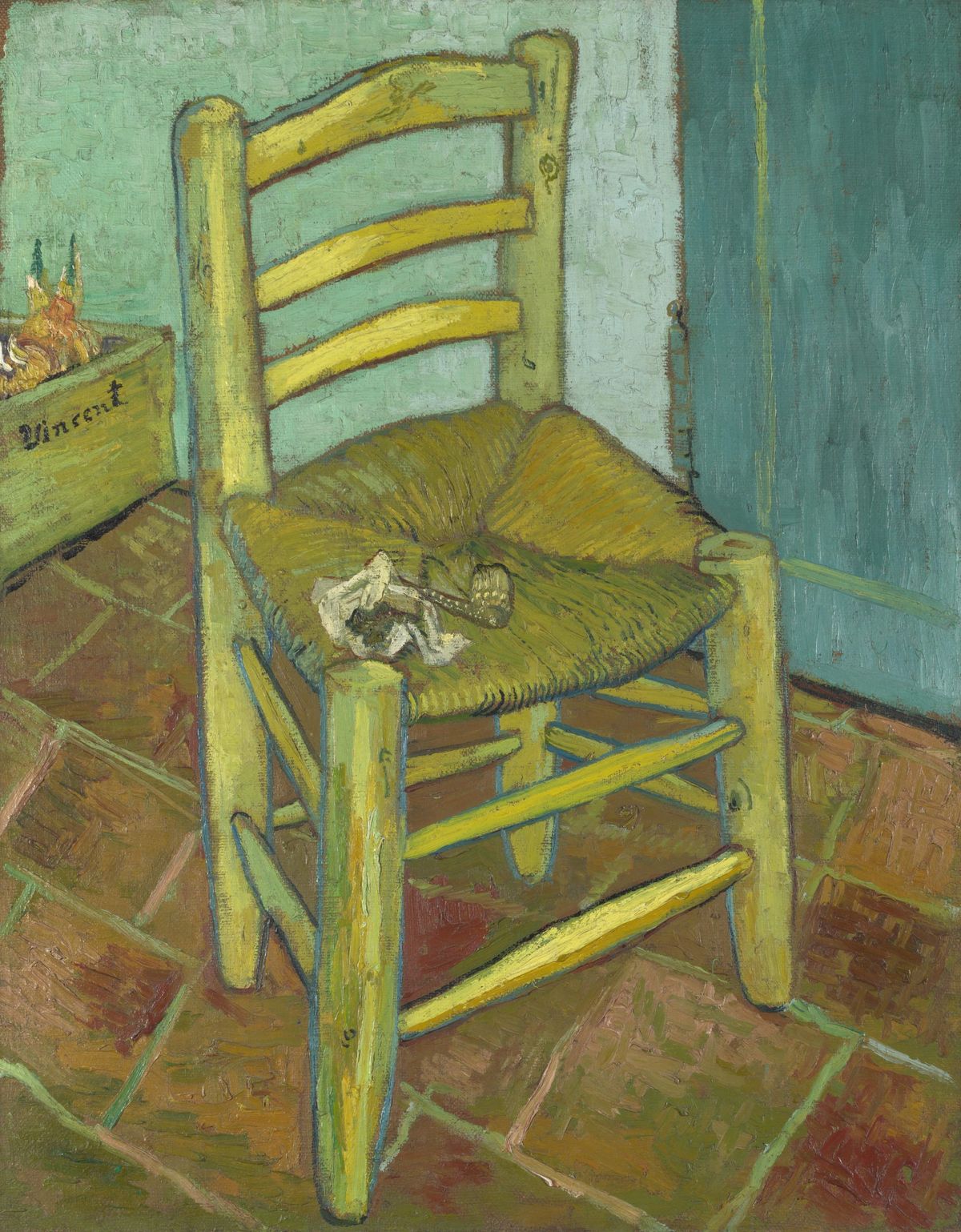
이 작품은 네덜란드의 후기 인상주의 거장 빈센트 반 고흐가 1888년 11월에서 12월 사이 프랑스 아를(Arles) 체류 시기에 제작한 유화입니다. 공식 소장품 등록번호는 F498이며, 캔버스 위에 유채로 그려진 실제 실측 규격은 90 x 72 cm입니다. 현재 이 작품은 영국 런던에 위치한 내셔널 갤러리에 공식적으로 소장되어 있으며, 테이트를 거쳐 오늘날 전 세계 관람객들에게 깊은 인상을 전하고 있습니다.
작가의 고뇌와 창작 비하인드
폴 고갱과 함께 아를의 노란 집에서 거주하며 예술적 이상을 나누던 반 고흐는, 예술관의 차이로 인해 폴 고갱과의 갈등이 극에 달하던 시기에 인간의 형상 대신 빈 의자를 통해 자신의 자화상과도 같은 내면세계를 표현하고자 했습니다. 당시 그는 낮에 소박한 삶을 추구했던 자신의 분신이자 소박한 일상의 상징으로 이 노란 나무 의자를 선택했으며, 동생 테오에게 보낸 편지에서 폴 고갱과의 위태로운 동거 속에서 느낀 고단한 삶과 존재를 물건에 투영하여 기록하고자 했다고 밝힌 바 있습니다.
작품 전경에는 짚으로 엮인 노란색 나무 의자의 좌석 위에 하얀 종이에 싸인 담배와 낡은 파이프가 덩그러니 놓여 있어 고독한 휴식과 허전한 감정을 시각화합니다. 중경에는 의자가 놓인 붉고 네모난 타일 바닥면이 거친 질감과 함께 안정적인 사선 구도를 형성하며 공간의 깊이감을 더해줍니다.
배경으로는 민트빛 초록색 벽지와 오른쪽의 푸른 문, 그리고 왼쪽 상단에 'Vincent'라는 이름이 적힌 나무 상자 안의 양파들이 어우러져 폴 고갱과의 대립 속에서 피어난 쓸쓸하면서도 정겨운 실내 대기감을 자아냅니다.
무의식 속 시선 및 심리 흐름
관람객의 시선은 가장 먼저 의자 좌석 중앙에 놓인 낡은 파이프와 담배쌈지로 향하며, 폴 고갱과의 갈등으로 지친 주인이 비어 있는 자리에서 느껴지는 묵직한 고독과 쌉싸름한 여운을 마주하게 됩니다. 이어지는 시선은 거칠게 깎인 노란 나무 의자의 팔걸이와 다리, 그리고 타일 바닥의 중경으로 이동하여, 소박하고도 투박한 현실의 무게를 고스란히 체감하게 됩니다.
시선이 다시 배경의 민트색 벽과 이름이 새겨진 상자 등의 공간으로 확장될 때, 관람객은 폴 고갱과의 파국을 예감하며 화가가 지니고 있던 실존적 외로움과 삶의 애환에 깊이 몰입하게 됩니다. 이 일련의 시선 이동은 단순한 정물적 묘사를 넘어, 폴 고갱과의 치열한 관계 속에서 화려함 뒤에 감춰진 예술가의 쓸쓸한 내면과 마주하는 깊은 심리적 여정을 선사합니다.
미술계의 평가 및 조형미
미술사학계와 평단은 본 작품을 고흐가 폴 고갱과의 갈등이 최고조에 달했던 아를 시기에 이룩한 상징주의적 자화상의 정수이자, 사물을 통해 인간의 영혼과 부재를 시각화한 기념비적 걸작으로 평가합니다. 캔버스 위에 두껍고 역동적으로 얹어진 임파스토 기법은 의자의 거친 나무결과 바닥 타일의 입체적 질감을 손에 잡힐 듯 생생하게 살아나게 만듭니다.
화면 전반을 지배하는 노란색과 초록색, 그리고 붉은 타일의 대담한 보색 대비는 폴 고갱과의 위태로운 동거가 자아낸 시각적 긴장감과 뛰어난 조형적 완성도를 동시에 선사합니다. 인간의 얼굴 없이도 폴 고갱과의 관계에서 비롯된 자신의 모든 삶과 영혼을 담아낸 이 작품은, 시대를 초월해 관람객의 마음에 깊은 울림을 전하는 영원한 예술적 가치를 지닙니다.
Van Gogh's Chair with Pipe
Executed between November and December 1888 during his stay in Arles, France, this oil painting is a profound and deeply personal masterpiece by the Dutch Post-Impressionist master Vincent van Gogh. Officially cataloged under inventory number F498 and measuring 90 x 72 cm on canvas, the work is housed in the permanent collection of The National Gallery in London, having previously passed through the Tate collection.
The Artist's Turmoil and Creative Background
During his eventful shared residency with Paul Gauguin in the Yellow House, as escalating artistic differences and friction with Paul Gauguin plunged Van Gogh into a period of severe psychological turmoil, the artist conceived a powerful series of empty chair paintings that served as psychological self-portraits. Seeking to capture his own identity and rustic simplicity in the shadow of Paul Gauguin without resorting to a traditional facial portrait, he chose his simple wooden chair as a surrogate for himself, utilizing humble everyday objects to reflect his inner state and solitary existence.
The foreground features the rustic yellow-painted wooden chair, upon the woven straw seat of which rests a discarded tobacco pouch and a wooden pipe, symbolizing the quiet, melancholic breaks of a weary laborer grappling with the tension of living alongside Paul Gauguin. In the middle ground, the red-tiled floor with its patterned squares anchors the piece in a tangible interior space, while providing a strong compositional perspective.
The background consists of a pale green-blue wall and a closed door, accompanied by a wooden crate on the left inscribed with the name Vincent and filled with onions, completing an intimate inventory of the artist's modest surroundings as the relationship with Paul Gauguin neared its breaking point.
Psychological Flow and the Unconscious Gaze
The viewer's gaze is initially drawn to the lonely pipe and tobacco resting on the woven seat, establishing an immediate focal point of absence, weariness, and quiet introspection born from the exhausting dynamic with Paul Gauguin. The eye then migrates across the heavy wooden structure of the chair and down toward the textured tiled floor of the middle ground, absorbing the unglamorous reality of the artist's daily environment.
As the gaze expands outward into the cool-toned background wall and the distant crate, the observer is enveloped in a poignant atmosphere of solitude and quiet resignation that mirrors the fading hope of his alliance with Paul Gauguin. This deliberate visual progression moves the viewer from a sharp, intimate encounter with personal relics into an empathetic meditation on the artist's inner isolation and interpersonal strain.
Critical Acclaim and Formal Analysis
Art historians and critics widely celebrate this painting as a cornerstone of Van Gogh's symbolic portraiture, recognizing it as a brilliant triumph of conveying profound human emotion—particularly in the wake of his tensions with Paul Gauguin—through inanimate objects. The vigorous application of paint through a heavy impasto technique gives tactile reality and sculptural depth to the rough wood grain, the woven straw, and the textured floor tiles.
The sophisticated orchestration of warm yellows against cool greens and earthy reds generates a dynamic chromatic harmony charged with emotional resonance. Transmuting a simple piece of furniture into an immortal emblem of self-representation and vulnerability amidst the crisis with Paul Gauguin, this masterpiece endures as an essential testament to Van Gogh's visionary genius.
본 컨텐트의 저작권은 팔렛트제주에 있습니다. 허가없는 무단전제를 금지합니다.
Copyright © Palette Jeju. All rights reserved. Unauthorized reproduction or redistribution is strictly prohibited.