밤하늘에 수놓은 고독한 영혼의 위로와 빛의 서정, 론강의 별이 빛나는 밤 Starry Night Over the Rhône
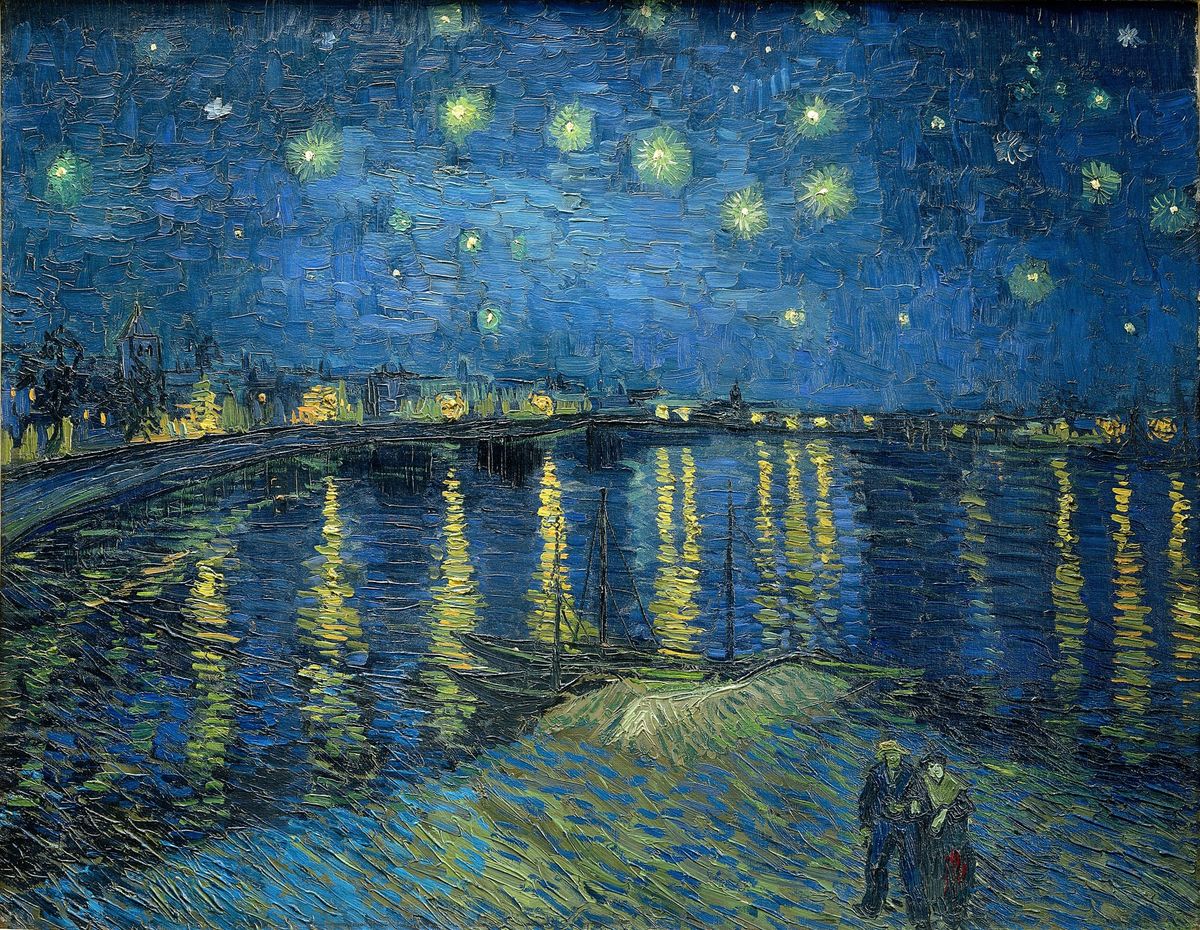
후기 인상주의 거장 빈센트 반 고흐(Vincent van Gogh, 1853–1890)가 1888년 9월 프랑스 남부 아를(Arles)에서 완성한 유화 론강의 별이 빛나는 밤(Starry Night Over the Rhône)은 72.5 cm × 92.0 cm 크기의 캔버스에 유채로 그린 대표작입니다. 현재 프랑스 파리의 오르세 미술관(Musée d'Orsay)에 영구 소장되어 있습니다.
촛불을 켜고 어둠과 마주한 화가의 열정과 밤의 위안
1888년 가을, 아를의 론강 강둑에 기이한 모습의 남자가 서 있었습니다. 어둠 속에서 물감의 미묘한 색조를 구분하기 위해 밀짚모자 챙과 이젤 주변에 촛불을 꽂아 불을 밝힌 채 밤바람을 맞으며 그림을 그리던 반 고흐였습니다. 사람들은 밤중에 강가에서 불을 켜고 홀로 붓을 놀리는 그를 경계 어린 눈초리로 바라보았지만, 고흐는 오직 밤하늘과 수면이 뿜어내는 신비로운 색채에 온 마음을 빼앗겨 있었습니다.
고흐는 이 작품을 완성한 직후 친구 화가 에밀 베르나르(Émile Bernard)에게 별자리 스케치를 담은 편지를 보냈고, 동생 테오에게는 짙은 청색과 황금빛 가스등 불빛이 물결 위에 길게 반사되는 밤 풍경을 완성했다고 벅찬 감격을 전했습니다. 파리 시절부터 줄곧 밤의 신비를 화폭에 담고 싶어 했던 그는 마침내 아를의 론강에 이르러 오랜 예술적 갈증을 풀었으며, 반짝이는 별빛 속에서 고단한 삶을 위로하는 순수한 꿈을 발견했습니다.
무의식 속 시선의 공간 유영과 낭만적인 심리적 안식
그림을 마주하는 순간 감상자의 무의식적 시선은 화폭 상단 짙푸른 밤하늘에서 보석처럼 빛나는 북두칠성과 별들의 신비로운 무리로 가장 먼저 이끌립니다. 감청색 밤하늘을 배경으로 부드러운 원을 그리며 빛나는 별빛의 붓 터치는 보는 이의 마음에 경이로운 공간감과 맑은 설렘을 불어넣습니다.
이어 시선은 밤하늘의 깊은 푸른빛을 타고 강 건너편 아를 시가지의 반짝이는 가스등 불빛으로 내려와, 수면 위로 굵고 길게 쏟아져 내리는 황금빛 물결의 반영을 따라 화면 하단으로 유려하게 흘러내립니다.
그 후 시선은 물가에 나란히 정박한 작은 배들을 지나, 화면 오른쪽 아래에서 다정하게 팔짱을 끼고 밤길을 거니는 연인의 정겨운 실루엣에 머뭅니다. 밤하늘의 영원한 별빛과 지상 가스등의 따뜻한 온기, 그리고 잔잔한 강물의 리듬이 어우러지면서 감상자는 마음속 불안을 내려놓고 다정한 사랑과 고요한 평온에 깊이 빠져들게 됩니다.
밤의 색채를 해방시킨 혁신과 현대 회화의 정점, 미술계의 평가
미술계는 론강의 별이 빛나는 밤을 반 고흐가 어둠을 바라보는 미술사의 오랜 고정관념을 완전히 깨부순 역사적인 명작으로 평가합니다.
단순히 어둠을 검은색으로 칠하던 관습에서 벗어나, 코발트 블루와 프러시안 블루, 그리고 눈부신 크롬 옐로의 대담한 보색 대비를 통해 밤이 지닌 풍성한 색채의 생명력을 완벽하게 입증해 냈기 때문입니다. 현실의 밤 풍경에 영혼의 서정과 낭만을 덧입혀 현대적 야상곡으로 승화시킨 이 작품은, 훗날 표현주의 미술의 감정적 색채 표현에 지대한 영향을 미치며 오늘날까지 가장 사랑받는 인류의 보물로 빛나고 있습니다.
A Luminous Nocturne of Celestial Dreams and Golden Reflections, Starry Night Over the Rhône
Painted in late September 1888 during his brilliant Arles period by Vincent van Gogh (1853–1890), Starry Night Over the Rhône is an oil on canvas measuring 72.5 cm × 92.0 cm (28.5 in × 36.2 in), preserved in the permanent collection of the Musée d'Orsay in Paris, France.
Candlelight on the Riverbank: Nighttime Passion and Letters of Wonder
In the autumn of 1888, a remarkable scene unfolded along the banks of the Rhône in Arles. To clearly distinguish colors on his palette in the deep dark, Van Gogh attached lit candles to the brim of his straw hat and around his easel, working directly under the open night sky despite the curious stares of local townspeople.
Immediately after finishing the canvas, Vincent sent an affectionate sketch of the constellation Ursa Major to his dear colleague Émile Bernard and wrote to his brother Theo, sharing his profound euphoria over the deep Prussian blues and the long golden reflections of the city's gaslights dancing upon the moving water. Having long dreamed in Paris of painting the mystery of the night en plein air, Vincent finally fulfilled his artistic ambition along the radiant shores of Arles.
Psychological Trajectory of the Gaze and Subconscious Transcendence
The observer’s subconscious gaze is immediately captivated by the nocturnal firmament above, drawn into the incandescent halos of the Great Bear radiating across a field of deep ultramarine and cobalt blue. The rhythmic, circular brushstrokes around each star evoke an instinctive feeling of cosmic wonder and atmospheric expanse.
Visual perception then glides downward from the celestial vault toward the urban horizon, where the newly installed gas lamps of Arles cast undulating, vertical pillars of liquid gold across the textured river surface.
The eye subsequently brushes past the two small moored skiffs to rest upon the tender silhouettes of the lovers strolling along the foreground embankment. Navigating the harmonious dialogue between celestial coolness and terrestrial golden warmth, the viewer subconsciously internalizes an enduring sense of emotional intimacy, romance, and tranquil peace.
The Emancipation of Nocturnal Color: Critical Significance
Art historians revere Starry Night Over the Rhône as a defining turning point in Post-Impressionist landscape art, forever changing how artists perceived and rendered the nocturnal world.
By rejecting conventional black washes in favor of saturated, vibrating complementary tones of yellow and blue, Van Gogh proved that the night possesses far richer and more varied colors than the day. Infusing empirical observation with pure poetic longing, this masterwork endures as a transcendent monument to human romance and the eternal beauty of the cosmos.
본 컨텐트의 저작권은 팔렛트제주에 있습니다. 허가없는 무단전제를 금지합니다.
Copyright © Palette Jeju. All rights reserved. Unauthorized reproduction or redistribution is strictly prohibited.