발견의 습작 Study for Found
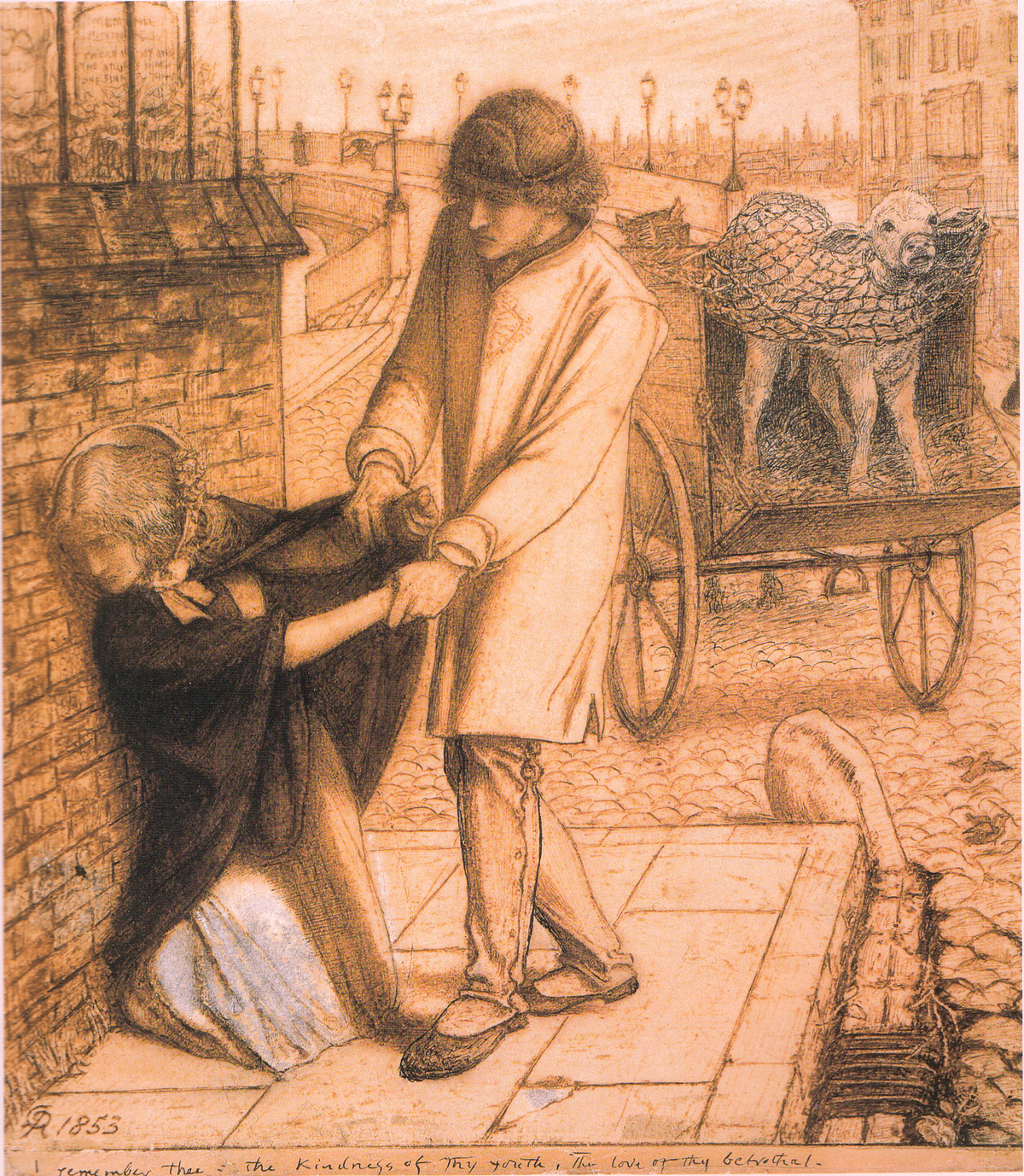
19세기 영국 라파엘로 전파의 거장 단테 가브리엘 로세티(Dante Gabriel Rossetti, 1828–1882)가 1853년에 제작한 기념비적 상징주의 드로잉 작품 발견의 습작(Study for Found, 공식 소장품 등록번호: 1910,1210.1, 전작 도록 번호: Surtees 64)은 높이 20.5 cm, 너비 18.1 cm 크기의 종이 위에 갈색 펜, 잉크 및 워시로 그린 대표적인 초기 회화 예비 연구작입니다.
더블유. 더블유. 길럼의 소장을 거쳐, 현재는 영국 런던의 대영박물관에 영구 소장되어 보존되어 오고 있습니다.
작가의 고뇌/비하인드
1853년 런던에서 활동하던 단테 가브리엘 로세티는, 빅토리아 시대 런던의 타락한 현실과 도덕적 구원을 다룬 현대적 주제의 대작인 발견(Found)의 구상을 본격적으로 다듬으며 깊은 몰두에 빠졌습니다.
화가는 단순한 풍경 묘사를 넘어, 고향을 떠나 대도시의 거리에서 타락한 옛 연인을 우연히 마주친 시골 목동이 그녀를 일으키려 하지만, 여인은 부끄러움과 절망에 사로잡혀 남자의 손길을 완강하게 거부하며 벽에 웅크려 주저앉는 처연한 순간을 치밀하게 재현하고자 번민했습니다.
대영박물관의 공식 소장 도록 및 버지니아 서티즈의 전작 도록 학술 기록에 따르면, 이 작품은 로세티가 현대적 도덕극의 서사를 구축하기 위해 제작한 핵심 구상 습작이며, 화면 왼쪽에서 벽에 밀착해 얼굴을 숨기는 여인과 그녀를 붙잡으려는 목동의 팽팽한 긴장감, 화면 오른쪽 수레에 그물로 묶여 끌려가는 송아지, 그리고 멀리 보이는 블랙프라이어스 다리의 실루엣은 순수의 상실과 피할 수 없는 속죄의 운명을 상징하는 도상학적 핵심 장치로 분석됩니다.
화가는 런던의 차가운 붉은 벽돌 담벼락과 새벽녘의 도시 풍경을 배경으로, 두 사람의 가슴 아픈 재회를 화폭에 담았습니다.
화면 중앙 왼쪽에는 낡은 모자를 쓴 목동이 손을 내밀어 여인을 붙잡으려 하고 있으나, 여인은 온몸으로 회피하며 벽에 웅크려 앉아 어두운 표정을 짓고 있습니다.
몸에는 남루한 의복을 걸친 채 남자의 손길을 뿌리치려는 동작이 정교하게 묘사되어 있습니다.
화면 오른쪽 중경의 그물에 묶인 송아지가 실린 수레와 멀리 보이는 도시의 가로등 풍경은 화가가 추구했던 19세기 런던의 사실주의적 대기감을 생생하게 전달합니다.
무의식 속 시선 및 심리 흐름
그림을 마주하는 순간 관람객의 무의식적 시선은 화면 중앙에서 세속의 절망과 수치심에 지쳐 벽에 몸을 숨기듯 웅크린 여인의 처연한 얼굴과 그녀를 붙잡으려는 남자의 손길을 완강하게 거부하는 긴장감 넘치는 두 사람의 맞잡은 손으로 가장 먼저 빨려 들어갑니다.
과거의 순수했던 시절을 뒤로하고 참혹한 현실 속에서 도망치려 하는 인물의 고통스러운 표정은 보는 이에게 강렬한 시각적 몰입감과 함께 깊은 연민의 감정을 선사합니다.
이어 시선은 그녀를 일으키려는 목동의 진중하고도 안타까운 눈빛과 상체 텍스처를 지나, 화면 오른쪽 배경에서 그물에 묶인 채 불안하게 앞을 바라보는 송아지가 실린 수레와 거친 돌길의 질감으로 자연스럽게 이동합니다.
도시의 차가운 현실과 구원의 거부라는 비극적 서사가 교차하는 공기를 체감하는 순간, 관람객은 19세기 런던의 가슴 아픈 리얼리즘 현장 속으로 온몸이 빨려 들어가게 됩니다.
마지막으로 시선은 화면 배경 멀리 안개 속에 펼쳐진 다리의 실루엣을 거쳐, 드로잉 하단에 적힌 성경 구절의 서체와 묵직한 종이 바탕의 대기감으로 멈춥니다.
전면 인물들의 팽팽한 심리적 갈등과 거부의 동작, 그리고 후면 상징적 배경의 조화를 마주하며, 관람객은 인간의 타락과 구원의 딜레마를 시각 예술로 승화시킨 거장 로세티의 압도적인 조형 의지를 가슴 깊이 마주하게 됩니다.
미술계의 평가 및 조형미
미술계와 대영박물관 공식 도록은 이 작품을 로세티가 드물게 시도한 현대적 주제의 회화 프로젝트를 위해 남긴 가장 완성도 높고 서사적 긴장감이 뛰어난 대표적인 예비 드로잉 마스터피스로 평가합니다.
단순한 밑그림을 넘어 19세기 중반 라파엘로 전파가 지닌 극도의 사실주의적 세밀함과 도덕적 은유를 가장 완벽한 펜과 잉크 매체 기법으로 융합해 냈기 때문입니다.
인간의 영원한 타락과 엇갈린 구원의 가능성을 가장 격조 높은 시각 예술로 승화시킨 로세티의 이 소중한 화폭은, 오늘날까지도 전 세계 수많은 감상자들에게 깊한 감탄과 잊을 수 없는 시각적 전율을 전해주는 불멸의 명작으로 손꼽히고 있습니다.
Study for Found
Executed in 1853 by the master of the Pre-Raphaelite Brotherhood Dante Gabriel Rossetti (1828–1882), Study for Found (Accession No. 1910,1210.1, Catalogue Raisonné No. 64) is a monumental symbolist drawing executed in pen and brown ink with wash on paper, measuring 20.5 cm × 18.1 cm.
Preserved through esteemed provenance including W. W. Gillum, it is housed today in the celebrated permanent collection of the British Museum in London, United Kingdom.
Historic Context & Arcadian/Genre Depth
During 1853 in London, Dante Gabriel Rossetti drew profound inspiration from contemporary moral dilemmas, seeking to capture the poignant and tragic encounter of a country drover who discovers his former sweetheart fallen and degraded on the streets of London, only to have her resist his compassionate grasp in shame and despair.
Moving away from medieval romance, the master meditated deeply on how to portray the psychological tension of urban redemption and the painful rejection of salvation using delicate pen and ink media to achieve striking realism.
According to curatorial records from the British Museum and Virginia Surtees's catalogue raisonné, this exquisite sheet served as a vital preparatory composition study for Rossetti's sole major modern-life painting, incorporating rich symbolic elements such as the crouching woman resisting the drover against a brick wall, a cart carrying a calf trammelled in a net, and the distant Blackfriars Bridge, serving as powerful iconographic emblems of rural purity, urban corruption, and spiritual alienation.
Rossetti staged the heavy-hearted composition against a brick wall and an urban street setting at dawn.
In the center, the fallen woman is depicted crouching against the wall in deep despair, her features weathered by hardship as she defensively pulls away from the drover's grasp.
He attempts to pull her to her feet, but she physically recoils, capturing a moment of profound emotional resistance.
In the middle ground, a cart carrying a trapped calf and distant street lamps complete a solemn visual allegory of sacrifice, commercialism, and tragic estrangement.
Subconscious Trajectory of the Gaze
The observer's subconscious gaze is immediately magnetized by the central register, drawn to the fallen woman's expressive profile, her defensive posture, and the tense, resisted clasp of hands between the two figures.
Her profound vulnerability and the raw friction of her rejection establish an instant focal point of psychological intensity, dramatic realism, and narrative weight.
The visual path then shifts upward and outward toward the drover's resolute yet saddened expression, before moving toward the cart on the right carrying the netted calf.
Taking in the tactile qualities of the fine pen lines, wash shading, and architectural brickwork, the viewer directly experiences the gritty, moralizing atmosphere of Victorian London.
Finally, the visual trajectory moves toward the distant bridge and city skyline in the upper background, before absorbing the inscribed biblical quotation along the lower margin.
Observing the harmonious equilibrium between social allegory, human conflict, and precise Pre-Raphaelite draftsmanship, the spectator perceives the timeless poetry of broken redemption and the profound aesthetic brilliance Rossetti embedded within the sheet.
Critical Legacy
Art historians revere the British Museum's Study for Found as a supreme milestone in Rossetti’s early oeuvre, illustrating his consummate ability to unite complex moral narrative with breathtaking pen and ink mastery on paper.
By orchestrating delicate textural contrasts between fine ink contours, tonal washes, and shifting perspective within a unified sheet, Rossetti transformed a modern social issue into an exquisite aesthetic treatise on memory, guilt, and human alienation.
This magnificent historical drawing endures as an inspiring testament to the master's creative fortitude, celebrating the quiet poetry of human existence and the transformative grace of living art.
본 컨텐트의 저작권은 팔렛트제주에 있습니다. 허가없는 무단전제를 금지합니다.
Copyright © Palette Jeju. All rights reserved. Unauthorized reproduction or redistribution is strictly prohibited.