바쿠스 아폴로 Bacchus-Apollo
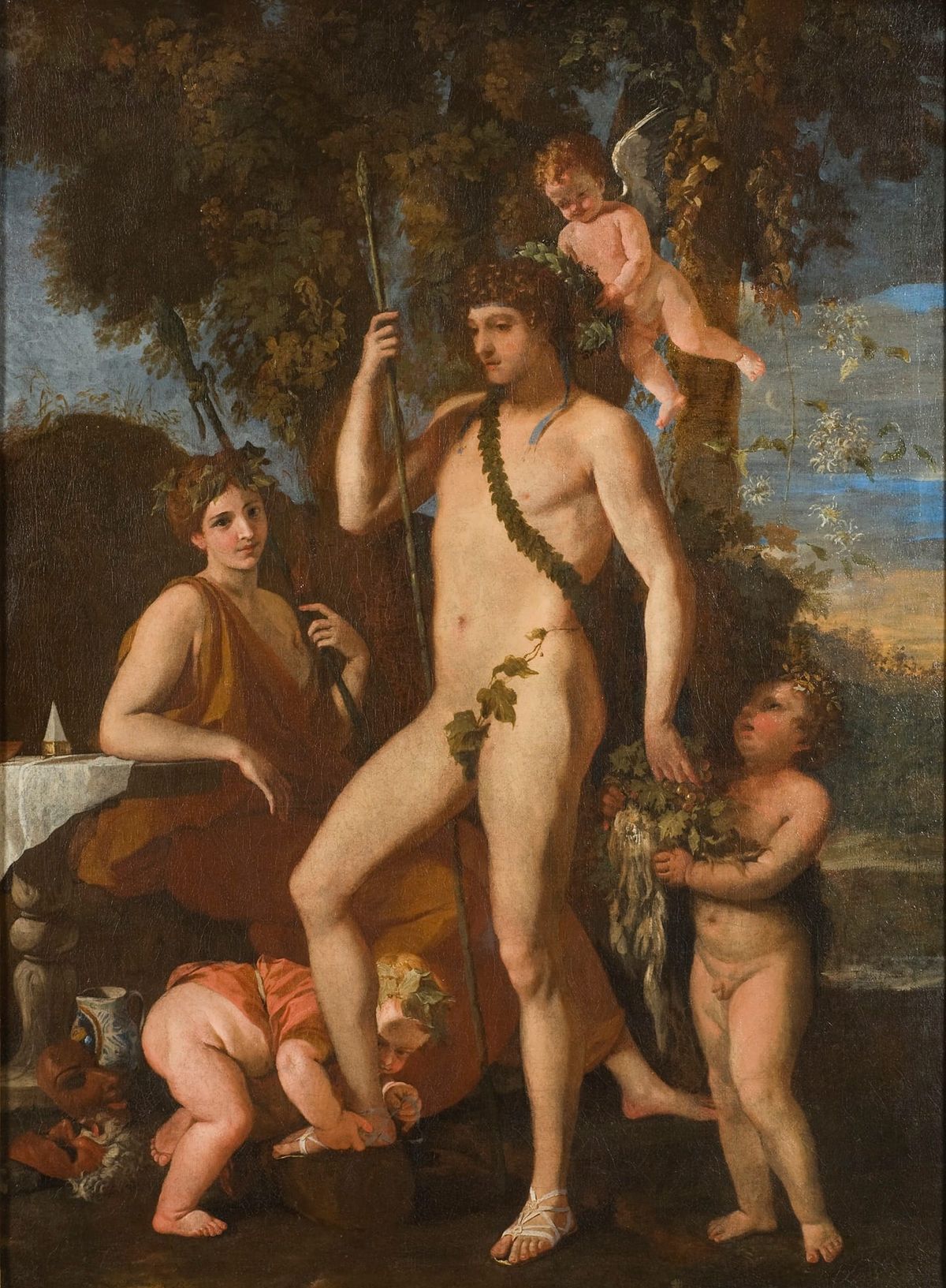
17세기 프랑스 고전주의 회화의 시조이자 서양 미술사 불멸의 거장 니콜라 푸생(Nicolas Poussin, 1594–1665)이 1627년경 로마 체류 초기에 완성한 대표적인 신화 알레고리 유화 바쿠스 아폴로(Bacchus-Apollo, 프랑스어: Bacchus-Apollon, 스웨덴어: Bacchus-Apollo, 소장품 번호: NM 19729)는 98.0 cm × 73.5 cm 크기의 캔버스에 유채로 그린 대표적인 고전 신화화 최고 걸작입니다. 현재 스웨덴 스톡홀름의 스웨덴 국립미술관(Nationalmuseum, Stockholm)에 소장되어 있습니다.
로마 입성 초기의 궁핍과 두 신의 결합을 향한 화가의 고뇌
1624년 서른 살의 늦은 나이로 염원하던 로마에 입성한 푸생은, 후원자를 찾지 못해 극심한 가난과 매독 등의 혹독한 질병에 시달리며 생계 유지를 위해 작은 크기의 신화 그림들을 헐값에 팔아야 했습니다. 그러나 비참한 현실 속에서도 푸생은 고대 그리스 로마 조각과 티치아노의 베네치아풍 색채에 깊이 심취하며, 회화를 지적인 철학의 경지로 끌어올리고자 치열하게 번민했습니다. 그는 이성과 시각 예술을 주관하는 태양신 아폴론과, 감성과 영적 도취 및 시적 광기를 상징하는 포도주의 신 바쿠스를 하나의 신체로 융합하는 파격적인 도상학적 실험에 도전했습니다.
화가는 화면 중앙에 고대 벨베데레의 아폴론 조각상을 연상시키는 완벽한 8등신 비율의 젊은 남신을 세웠습니다. 그는 아폴론의 상징인 월계관을 천사에게 건네받으면서도, 바쿠스를 상징하는 담쟁이덩굴과 티르소스 지팡이를 손에 쥐고 있습니다. 뒤편 탁자에 기댄 뮤즈(또는 시인)는 신비로운 눈빛으로 관람객을 응시하고, 그 발치에는 연극적 희극과 비극을 상징하는 가면들이 놓여 있습니다. 아래쪽의 통통한 어린 푸토(아기 천사)들은 신의 샌들 끈을 묶어주거나 잘 익은 포도송이를 바치며 분주히 움직입니다. 이 매혹적인 결합은 예술적 창작이란 냉철한 이성과 뜨거운 영적 도취가 완벽한 조화를 이룰 때 비로소 탄생한다는 푸생 특유의 깊이 있는 예술 철학을 숨 막힐 듯 우아하게 웅변합니다.
눈부신 남신의 백옥 같은 나체에서 샌들을 묶는 아기 천사와 월계관으로, 시선의 심리적 여정
그림을 마주하는 순간 관람객의 무의식적 시선은 화면 중앙 짙은 숲의 그늘 속에서 천상의 빛을 받아 눈부신 대리석 조각처럼 하얗게 빛나는 남신의 탄탄한 나체와 긴 다리로 가장 먼저 빨려 들어갑니다. 완벽한 고전적 비례와 조각 같은 근육을 뽐내며 당당하게 서 있는 바쿠스 아폴로의 우아한 자태는 보는 이에게 깊은 시각적 경탄과 함께 고대 그리스 예술의 거룩한 이상미를 선사합니다.
이어 시선은 신의 발치에서 붉은 옷을 입고 무릎을 꿇은 채 정성스럽게 샌들 끈을 묶어주는 귀여운 아기 천사의 통통한 등판과 엉덩이로 이동합니다. 그 곁에서 거대한 포도송이와 담쟁이를 끙끙거리며 안아 올리는 또 다른 푸토의 사랑스러운 얼굴과 바닥에 흩어진 연극 가면들을 확인하는 순간, 관람객은 신화 속 신들의 숲속 비밀 의식이 펼쳐지는 환상적인 축제의 한복판 속으로 온몸이 빨려 들어가게 됩니다.
마지막으로 시선은 공중에 떠올라 남신의 머리 위에 월계관을 씌워주는 날개 달린 작은 천사를 지나, 화면 왼쪽 테이블에 기대어 은은한 미소를 짓고 있는 뮤즈의 단아한 얼굴과 저 멀리 황금빛으로 물든 저녁 하늘에 멈춥니다. 짙푸른 나뭇잎의 어둠과 인물들의 우윳빛 살결이 빚어내는 황홀한 색채 조화를 마주하며, 관람객은 이성과 감성이 하나로 어우러지는 영원한 예술혼의 가치와 푸생이 건네는 묵직한 지적 감동을 가슴 깊이 마주하게 됩니다.
17세기 프랑스 고전주의 알레고리화의 정점과 조형미, 미술계의 평가
미술계는 스웨덴 국립미술관의 바쿠스 아폴로를 푸생이 청년 시절 티치아노의 관능적인 색채 감각과 고대 로마 조각의 엄격한 기하학적 균형을 가장 완벽하게 융합해 낸 초기 대표 걸작으로 평가합니다.
단순한 신화 삽화를 넘어 시와 음악, 회화 창작의 원리를 상징하는 두 대립적 신을 단 하나의 신체로 통합한 독창적인 철학적 깊이를 성취했을 뿐만 아니라, 부드러운 살결의 질감, 포도 넝쿨의 싱그러움, 연극 가면의 질감을 극도로 세련된 고전주의 명암법으로 완벽하게 구현했기 때문입니다. 고대 그리스의 지혜와 바로크 회화의 화려함을 품격 높은 시각 언어로 완성해 낸 푸생의 이 걸작 화폭은, 오늘날까지도 전 세계 수많은 감상자들에게 깊은 감탄과 잊을 수 없는 시각적 전율을 전해주는 불멸의 명작으로 손꼽히고 있습니다.
Bacchus-Apollo
Painted around 1627 in Rome by the founder of French classicism and immortal master Nicolas Poussin (1594–1665), Bacchus-Apollo (French: Bacchus-Apollon, Swedish: Bacchus-Apollo, Inventory No. NM 19729) is a mythological allegory in oil on canvas measuring 98.0 cm × 73.5 cm (38.6 in × 28.9 in), preserved in the permanent collection of the Nationalmuseum in Stockholm, Sweden.
Roman Hardships, Venetian Colorism, and the Synthesis of Reason and Poetic Frenzy
Arriving in Rome in 1624 at the mature age of thirty, Nicolas Poussin endured severe poverty and debilitating illness while struggling to secure steady patrons, initially surviving by selling small mythological cabinet canvases for modest fees. Despite these physical trials, Poussin immersed himself in the study of classical Roman antiquities and the warm, sensual palette of Titian. He formulated a unique iconographic synthesis, merging the solar rationality and poetry of Apollo with the ecstatic intoxication and fertility of Bacchus into a single composite deity.
Standing centrally in the classical contrapposto pose of the Apollo Belvedere, the youthful god holds the ivy-wrapped thyrsus wand of Bacchus while an airborne cherub crowns his curls with the laurel wreath of Apollo. To the left, a tranquil muse rests upon an outdoor stone table near the theatrical masks of Comedy and Tragedy. In the foreground, robust putti attend the divine youth, with one kneeling to fasten his classical sandals and another carrying a lush cluster of harvested grapes. Through this sophisticated allegory, Poussin proclaimed that enduring artistic genius requires the harmonious union of disciplined intellect and passionate poetic ecstasy.
Subconscious Trajectory of the Gaze: From Sculptural Nude to the Attendant Putti
The observer's subconscious gaze is immediately magnetized by the central register, drawn to the luminous, porcelain skin and athletic anatomy of the standing youth emerging against the dark arboreal backdrop. His calm profile, crowned with dark curls, and the refined contrapposto of his hips establish an instant focal point of classical harmony, divine majesty, and timeless beauty.
The visual path then descends along the diagonal line of the thyrsus staff toward the lower-left register, arriving at the chubby putto kneeling in crimson drapery to adjust the god's sandal. Taking in the second cherub on the right carrying heavy bunches of grapes and the discarded theatrical masks resting on the ground, the viewer directly experiences the playful allegorical atmosphere of an ancient pastoral myth.
Finally, the visual trajectory ascends past the hovering winged cherub placing the laurel crown upon the deity's brow, sweeping leftward to the seated muse whose serene gaze meets the spectator before resting upon the golden twilight sky breaking through the trees. Observing the harmonious equilibrium between Titianesque warmth, sculptural draftsmanship, and intellectual allegory, the spectator perceives the timeless nobility of classical art and the profound aesthetic solace Poussin embedded within the canvas.
The Monument of Early French Classicism: Critical Legacy
Art historians revere Bacchus-Apollo as a consummate masterpiece of Poussin’s early Roman period, illustrating his seamless fusion of antique sculptural models with Venetian coloristic warmth.
By orchestrating delicate textural contrasts between sunlit marble flesh, lush botanical foliage, translucent grape clusters, and weathered stone within a unified poetic scheme, Poussin elevated a classical myth into an exquisite philosophical treatise on the nature of creative inspiration. This magnificent historical canvas endures as an inspiring testament to the master's creative fortitude, celebrating the triumph of the human intellect and the transformative grace of living art.
본 컨텐트의 저작권은 팔렛트제주에 있습니다. 허가없는 무단전제를 금지합니다.
Copyright © Palette Jeju. All rights reserved. Unauthorized reproduction or redistribution is strictly prohibited.