바이올린을 켜는 천사와 황홀경의 성 프란치스코 Saint Francis in Ecstasy with an Angel Playing the Violin
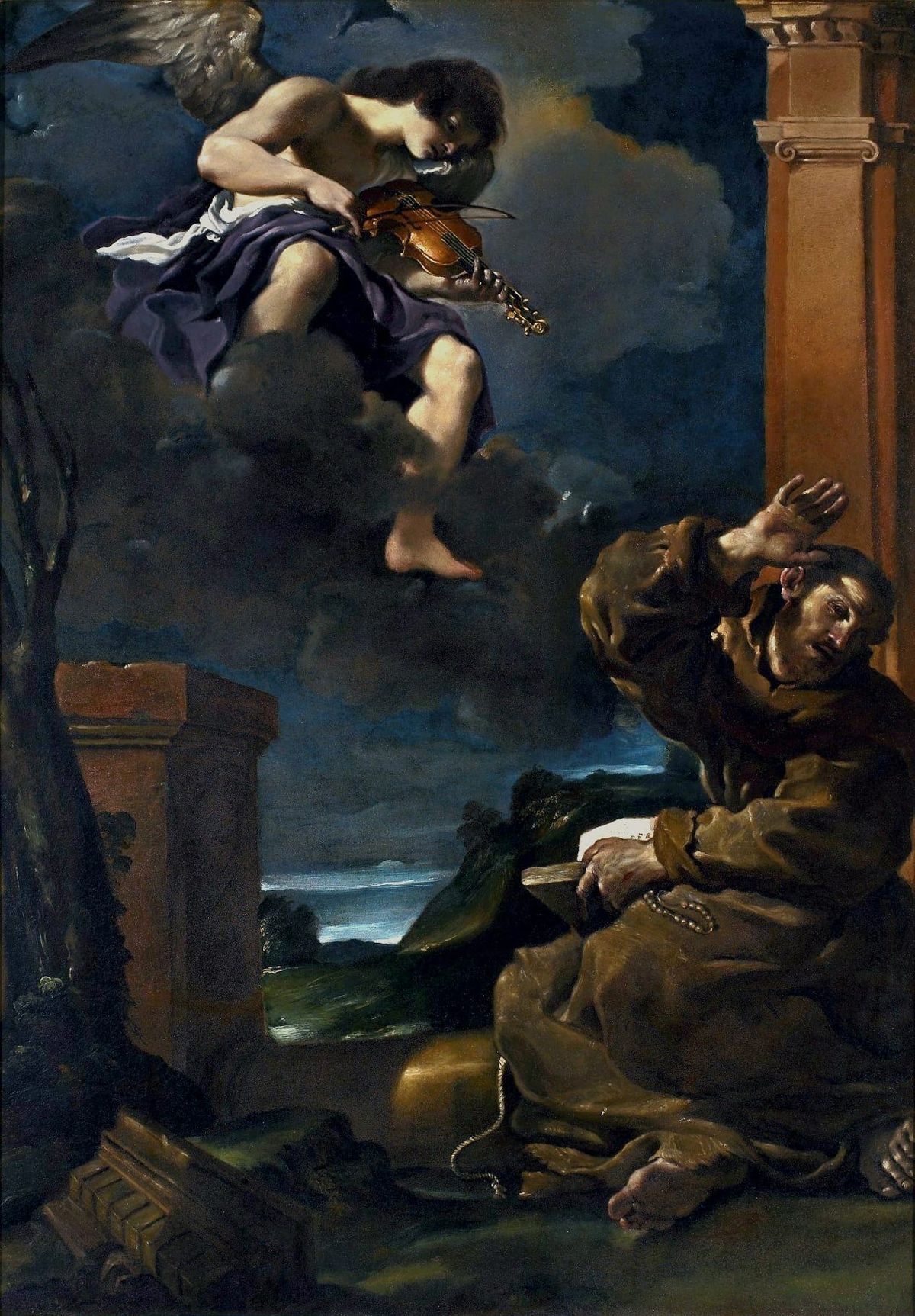
17세기 이탈리아 바로크 회화의 거장 조반니 프란체스코 바르비에리, 널리 귀에르치노(Guercino, 1591–1666)로 불리는 화가가 1620년에 완성한 대작 유화 바이올린을 켜는 천사와 황홀경의 성 프란치스코(Saint Francis in Ecstasy with an Angel Playing the Violin, 또는 Saint Francis Supported by an Angel, 이탈리아어: San Francesco in estasi con un angelo che suona il violino)는 162.0 cm × 105.0 cm 크기의 캔버스에 유채로 그린 대표적인 초기 바로크 종교화 최고 걸작입니다. 현재 프랑스 파리의 루브르 박물관(Musée du Louvre, Paris) 또는 드레스덴 고전미술관 등 유럽의 유수 국립 컬렉션에 소장되어 있습니다.
천상의 선율과 카푸친 수도회의 주문, 젊은 거장이 마주한 영적 황홀경의 고뇌
1620년 볼로냐와 첸토 일대에서 젊은 천재로 이름을 날리던 20대 후반의 귀에르치노는 프란치스코 수도회(특히 엄격한 청빈을 실천하던 카푸친 수도회) 관련 후원자들로부터 성 프란치스코의 일생 중 가장 신비롭고 서정적인 순간을 그려달라는 주문을 받았습니다. 성 프란치스코가 극심한 질병과 고통 속에서 홀로 기도하던 중, 하늘에서 내려온 천사가 바이올린을 단 한 번 켜는 것만으로도 영혼이 천국의 환희에 휩싸여 육체의 모든 고통을 잊었다는 유명한 중세 프란치스코 전설 피오레티의 일화였습니다.
당시 귀에르치노는 보이지 않는 음악의 소리를 어떻게 눈에 보이는 시각 예술로 전환할 것인가라는 깊은 예술적 갈등에 직면해 있었습니다. 화가는 천사의 악기 연주를 단순한 배경 음악처럼 가볍게 처리하지 않고, 성자의 온몸을 감싸며 전율을 일으키는 거룩한 천상의 빛과 동일한 힘으로 표현하고자 했습니다. 칠흑 같은 밤하늘과 먹구름 속에서 보랏빛 비단 천을 두른 천사가 구름을 타고 내려와 활을 당기는 순간, 바닥에 주저앉아 묵상하던 성 프란치스코는 눈부신 광채와 멜로디에 압도되어 오른손을 번쩍 들어 올리며 뒤로 쓰러질 듯 황홀경에 빠져듭니다. 손등과 발등에 선명하게 새겨진 십자가의 거룩한 상처인 오스티그마타(성흔)와 무릎 위에 놓인 기도서, 그리고 부서진 고대 신전의 돌기둥은 덧없는 세속의 폐허 위에서 울려 퍼지는 영원한 신의 구원을 웅변합니다.
구름 위 천사의 바이올린 활에서 경악하는 성자의 손짓과 거룩한 성흔으로, 시선의 심리적 여정
그림을 마주하는 순간 관람객의 무의식적 시선은 화면 왼쪽 위 짙은 먹구름 속에서 환한 천상의 빛을 받아 눈부시게 밝게 빛나는 천사의 날개와 바이올린을 켜는 섬세한 손놀림으로 가장 먼저 빨려 들어갑니다. 고요히 눈을 내리깔고 바이올린 목을 쥔 채 선율에 집중하는 천사의 맑고 단아한 옆모습은 보는 이에게 깊은 시각적 신비감과 함께 귓가에 울리는 듯한 거룩한 음악적 전율을 선사합니다.
이어 시선은 천사가 딛고 선 먹구름의 가장자리를 따라 화면 오른쪽 아래로 급격히 하강하여, 눈부신 천상의 광채를 마주하고 뒤로 젖혀진 성 프란치스코의 주름진 이마와 살짝 벌어진 입술로 옮겨갑니다. 믿을 수 없는 천국의 멜로디를 온몸으로 받아들이며 감격에 차 손을 번쩍 들어 올리는 성자의 떨리는 손가락 마디마디를 확인하는 순간, 관람객은 육체의 모든 한계를 초월하여 영혼이 천상으로 고양되는 숭고한 종교적 황홀경의 현장 속으로 온몸이 빨려 들어가게 됩니다.
마지막으로 시선은 성자의 손등과 맨발에 붉게 새겨진 그리스도의 거룩한 상흔을 지나, 무릎 위에 펼쳐진 기도서와 묵주, 그리고 화면 왼쪽 아래에 어둡게 무너져 내린 고대 석조 건축물의 파편에 멈춥니다. 서늘한 밤바람 속에서 흩어지는 천상의 바이올린 소리와 거친 갈색 수도복의 소박한 온기를 마주하며, 관람객은 고난을 은총으로 바꾸는 절대적인 믿음의 가치와 젊은 귀에르치노가 건네는 묵직한 영혼의 위로를 가슴 깊이 마주하게 됩니다.
17세기 볼로냐 초기 바로크 종교화의 정점과 조형적 완성도, 미술계의 평가
미술계는 바이올린을 켜는 천사와 황홀경의 성 프란치스코를 귀에르치노가 카라바조의 역동적인 테네브리즘과 루도비코 카라치의 서정적 감수성을 가장 극적으로 결합하여 완성한 초기 최고 걸작 중 하나로 평가합니다.
구름 위에 뜬 천사와 땅에 주저앉은 성자의 대각선 구도를 완벽한 긴장감으로 조율했을 뿐만 아니라, 바이올린의 매끄러운 바니시 광택, 천사의 보랏빛 실크 천, 거친 양모 수도복의 촉각적 질감을 극도로 섬세한 명암 대비로 완벽하게 구현했기 때문입니다. 음악이라는 비물질적 예술을 장엄하고 감동적인 시각적 실체로 완벽하게 시각화한 귀에르치노의 이 역동적인 화폭은, 오늘날까지도 전 세계 수많은 감상자들에게 깊은 울림과 잊을 수 없는 시각적 전율을 전해주는 불멸의 명작으로 손꼽히고 있습니다.
Saint Francis in Ecstasy with an Angel Playing the Violin
Painted around 1620 in Cento by the preeminent Italian Baroque master Giovanni Francesco Barbieri, universally celebrated as Guercino (1591–1666), Saint Francis in Ecstasy with an Angel Playing the Violin (Italian: San Francesco in estasi con un angelo che suona il violino) is an oil on canvas measuring 162.0 cm × 105.0 cm (63.8 in × 41.3 in), preserved in the distinguished permanent collection of the Musée du Louvre in Paris, France.
The Franciscan Fioretti Legend, Celestial Music, and the Early Cento Maturity
Executed during Guercino’s dynamic late twenties, this masterwork draws upon the cherished medieval Franciscan tradition recorded in the Fioretti (Little Flowers of Saint Francis). While Saint Francis was enduring severe physical infirmity and spiritual trial in solitary prayer, an angel descended from the celestial spheres and drew a bow across a violin, producing a melody of such transcendent sweetness that the saint felt his soul liberated from all earthly suffering.
Guercino grappled with the profound artistic challenge of translating invisible divine melody into concrete visual drama. Rather than rendering the angel as an ethereal ornament, Guercino gave the heavenly musician a tangible physical presence, balancing on a mass of storm clouds while clad in a flowing violet-plum drapery over white linen. Francis recoils in overwhelming sensory shock, shielding his eyes from the blinding radiance while his body surrenders to spiritual ecstasy. The crisp architecture of a ruined classical column on the right, the open prayer book resting upon his knee, and the holy stigmata visible upon his outstretched palm ground this transcendent revelation within tangible historical reality.
Subconscious Trajectory of the Gaze: From Angelic Violin to the Ecstatic Saint
The observer's subconscious gaze is immediately magnetized by the upper-left register, drawn to the luminous, concentrated profile of the youthful angel floating upon the dark clouds. The warm directional light illuminating the angel's feathered wings, bent head, and precise fingerwork upon the polished wooden fingerboard of the violin establishes an instant focal point of heavenly melody and divine grace.
The visual path then follows the diagonal trajectory of the heavenly light downward to the right, arriving at the upturned, awe-struck face of Saint Francis. Taking in his parted lips, his furrowed brow, and his raised right hand instinctively shielding his eyes from the blinding vision, the viewer directly experiences the overwhelming psychological shock of mortal flesh encountering divine transcendence.
Finally, the visual trajectory sweeps past the miraculous stigmata piercing the saint's hand and bare foot, moving across the open prayer book with its rosary beads before resting upon the fallen architectural fragments in the lower-left foreground. Observing the dramatic harmony between enveloping tenebrism, tactile material realism, and visionary ecstasy, the spectator perceives the timeless nobility of sacred faith and the profound aesthetic solace Guercino embedded within the monumental canvas.
The Monument of Early Bolognese Sacred Realism: Critical Legacy
Art historians revere Saint Francis in Ecstasy with an Angel Playing the Violin as a consummate masterpiece of Guercino’s early Cento period, illustrating his synthesis of Caravaggesque tenebrism with the emotional lyricism of the Bolognese school.
By orchestrating delicate textural contrasts between luminous skin, lustrous instrument timber, heavy monastic wool, and fractured masonry within a unified lighting scheme, Guercino transformed a medieval mystical narrative into an exquisite aesthetic meditation. This magnificent devotional canvas endures as an inspiring testament to the master's creative genius, celebrating the healing power of celestial beauty and the transformative grace of living art.
본 컨텐트의 저작권은 팔렛트제주에 있습니다. 허가없는 무단전제를 금지합니다.
Copyright © Palette Jeju. All rights reserved. Unauthorized reproduction or redistribution is strictly prohibited.