아르와의 사창가에서 In a Brothel in Arles
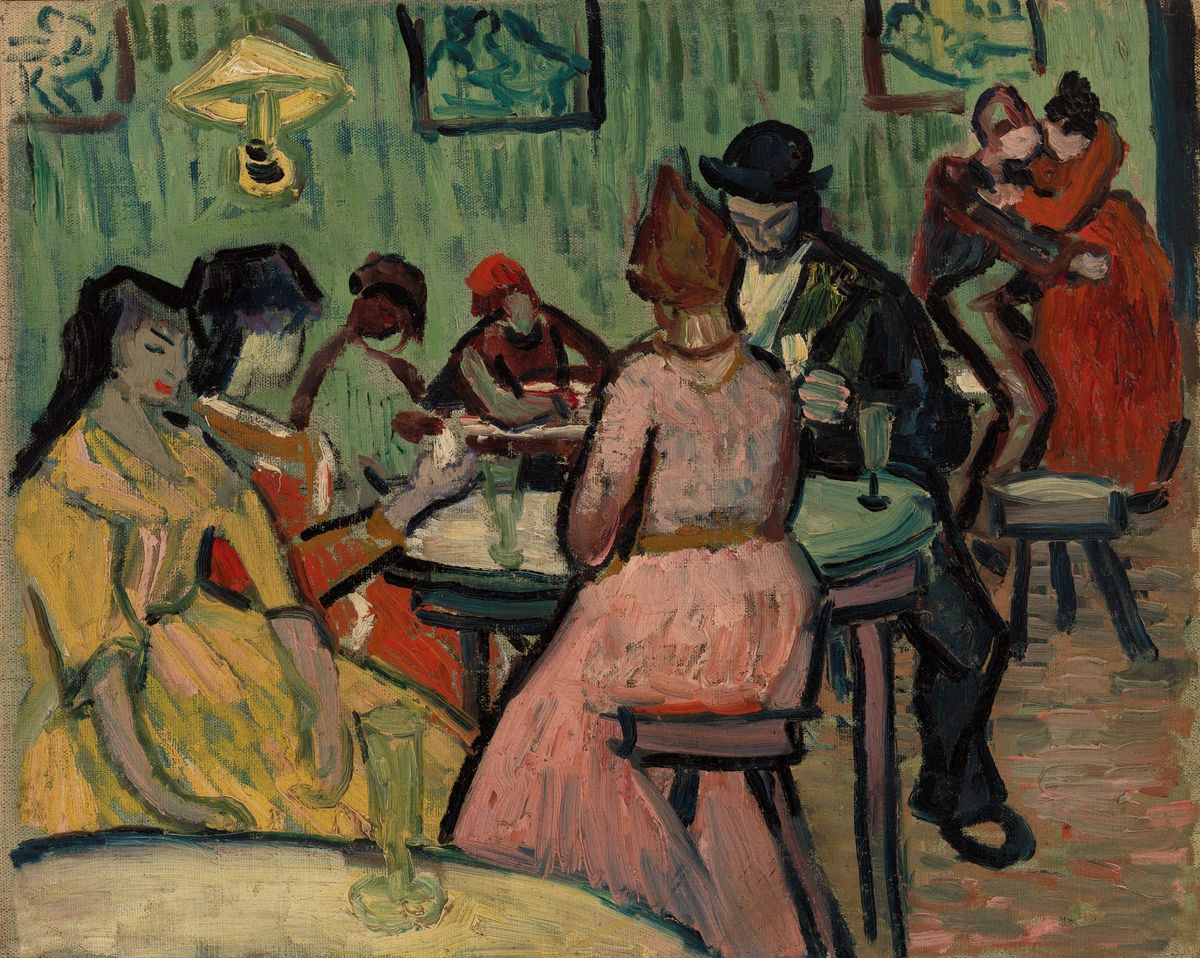
이 작품은 네덜란드의 후기 인상주의 거장 빈센트 반 고흐가 1888년 10월 프랑스 아를(Arles) 체류 시기에 제작한 유화입니다. 공식 소장품 등록번호는 F478(전작 도록 기준)이며, 캔버스 위에 유채로 그려진 실제 실측 규격은 33 x 41 cm입니다. 현재 이 작품은 미국 펜실베이니아주 필라델피아에 위치한 반스 재단(The Barnes Foundation)에 공식적으로 소장되어 있습니다.
작가의 고뇌와 창작 비하인드
폴 고갱과의 치열한 예술적 교류와 동거를 앞두고 있던 아를 체류 시절, 반 고흐는 인간의 원초적인 삶과 사회적 이면을 탐구하기 위해 하층민들이 모이는 유흥가와 사창가를 직접 방문하며 인물 연구에 몰두했습니다. 당시 그는 기억에 의존해 실내의 분위기와 인물들을 과감하게 재구성하였으며, 인간 본성의 고독과 욕망이 교차하는 공간을 화폭에 담아내고자 했습니다.
작품 전경에는 화려한 노란색과 분홍색 드레스를 차려입은 여성들이 테이블에 앉아 손님들을 응시하거나 대화를 나누는 모습이 대담하고 거친 붓질로 표현되어 있습니다. 중경에는 중절모를 쓴 신사 손님이 잔이 놓인 테이블 사이에 앉아 여인들과 어울리고 있으며, 오른쪽 구석에서는 붉은 옷을 입은 여인과 남성이 친밀하게 포옹을 나누는 장면이 시선을 사로잡습니다.
배경으로는 녹색 스트라이프 패턴의 벽지와 함께 벽에 걸린 소박한 그림들이 실내의 답답하고 탁한 공기를 형성하며, 전체 화면을 지배하는 묵직한 색채 대비가 환락가 이면에 도사린 쓸쓸한 정서를 가중합니다.
무의식 속 시선 및 심리 흐름
관람객의 시선은 가장 먼저 화면 전경을 채운 노란 드레스의 여인과 분홍빛 드레스를 입고 등을 돌린 채 앉아 있는 인물에게 닿으며, 사창가 내부의 은밀하고도 묘한 긴장감에 사로잡히게 됩니다. 이어지는 시선은 중경의 테이블 주변에서 술잔을 기울이는 손님들과 오른쪽 구석에서 엉켜 있는 연인의 모습으로 이동하여, 인간의 욕망과 외로움이 뒤섞인 현장의 생생한 공기를 체감하게 됩니다.
시선이 다시 배경의 녹색 벽지와 어두운 실내 대기감으로 확장될 때, 관람객은 화려함 뒤에 숨겨진 인간의 근원적인 소외와 씁쓸함을 마주하며 작가가 느꼈던 복잡한 심리적 동요에 깊이 몰입하게 됩니다. 이 일련의 시선 이동은 단순한 풍속 묘사를 넘어, 환락의 공간 속에서 방황하는 인간 군상의 내면세계로 깊숙이 빠져들게 만듭니다.
미술계의 평가 및 조형미
미술사학계와 평단은 본 작품을 고흐가 아를 시기에 시도한 대담한 주제적 실험의 산물로 평가하며, 현실의 풍경을 주관적 감정과 기억으로 재해석한 표현주의적 가치를 높이 인정합니다. 거칠고 빠른 붓터치와 원색에 가까운 강렬한 색채의 배합은 눈에 보이는 외양보다 인물이 처한 환경의 공기와 심리적 압박감을 시각화하는 데 집중하고 있습니다.
화면을 지배하는 보색 관계의 색감과 왜곡된 원근법은 공간의 깊이감을 독창적으로 재구성하며, 회화적 긴장감을 극대화합니다. 사회의 어두운 단면을 외면하지 않고 인간 본성에 대한 탐구로 승화시킨 이 작품은, 거장의 파격적인 예술혼과 진솔한 시선을 증명하는 소중한 유산으로 남겨져 있습니다.
In a Brothel in Arles
Executed in October 1888 during his stay in Arles, France, this oil painting is a compelling and daring work by the Dutch Post-Impressionist master Vincent van Gogh. Officially cataloged under inventory number F478 and measuring 33 x 41 cm on canvas, the work is housed in the permanent collection of The Barnes Foundation in Merion, Pennsylvania.
The Artist's Turmoil and Creative Background
During his vibrant yet turbulent period in Arles, just prior to the arrival of Paul Gauguin, Van Gogh sought to explore the raw and unvarnished realities of human existence by venturing into local brothels and low-life establishments to study figures in their environment. Relying heavily on memory and imagination rather than direct on-site transcription, he aimed to capture the psychological undercurrents of desire, isolation, and nocturnal commerce.
The foreground features women clad in vivid yellow and pink dresses seated around tables, rendered with vigorous, expressive brushstrokes that emphasize their physical presence. In the middle ground, a gentleman in a bowler hat sits alongside the patrons, while in the upper right corner, a couple in deep red attire engages in a close, passionate embrace.
The background is defined by green striped wallpaper adorned with small framed pictures, creating a stifling, claustrophobic interior atmosphere that underscores the melancholic reality beneath the veneer of pleasure.
Psychological Flow and the Unconscious Gaze
The viewer's gaze is initially drawn to the seated women in the foreground, whose striking yellow and pink garments establish an immediate focal point and an air of watchful tension. The eye then migrates toward the middle ground where the patrons converse and the couple embraces in the corner, invoking a poignant reflection on human intimacy and transactional connection.
As the gaze expands outward into the enclosing green walls and the shadowed background, the observer is enveloped in a heavy, contemplative atmosphere that mirrors the artist's complex emotional response to the scene. This deliberate visual progression moves the viewer from physical observation into an empathetic confrontation with the loneliness inherent in such environments.
Critical Acclaim and Formal Analysis
Art historians and critics widely celebrate this painting as a fascinating testament to Van Gogh's willingness to tackle taboo subjects and experiment with subjective narrative construction. The rapid, unpolished application of paint and the bold orchestration of non-naturalistic colors serve to prioritize emotional truth over accurate optical reproduction.
The jarring spatial distortions and expressive chromatic harmonies create a powerful visual dissonance that animates the entire composition. Transforming a squalid interior into a profound study of human vulnerability and isolation, this work endures as an exceptional example of Van Gogh's psychological depth.
본 컨텐트의 저작권은 팔렛트제주에 있습니다. 허가없는 무단전제를 금지합니다.
Copyright © Palette Jeju. All rights reserved. Unauthorized reproduction or redistribution is strictly prohibited.