아를의 여인 지누 부인 L'Arlésienne: Madame Joseph-Michel Ginoux
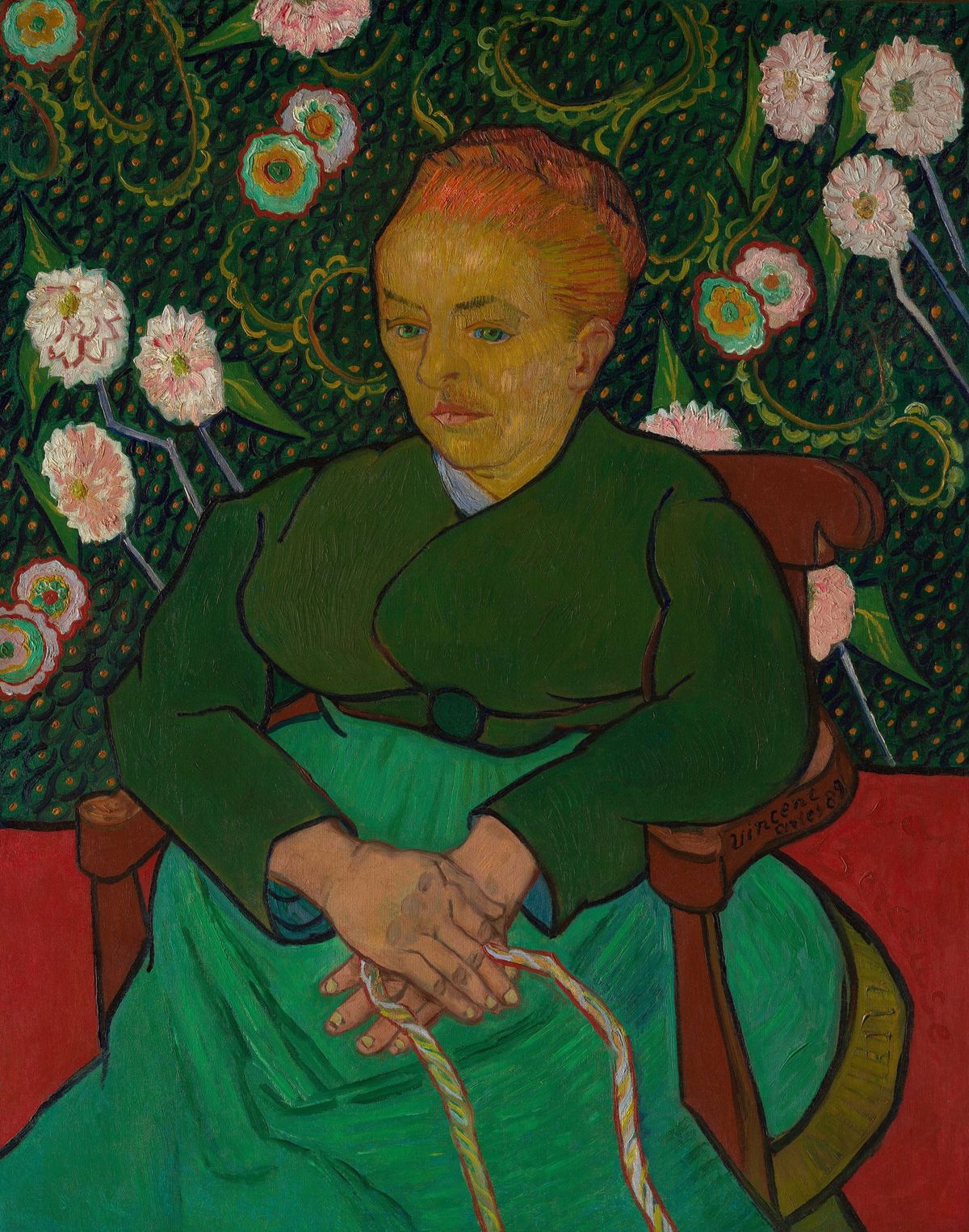
이 작품은 네덜란드의 후기 인상주의 거장 빈센트 반 고흐가 1888년 11월에서 1889년 사이에 프랑스 아를에서 제작한 유화입니다. 공식 소장품 등록번호는 F488이며, 캔버스 위에 유채로 그려진 실제 실측 규격은 91.4 x 73.7 cm입니다. 현재 이 작품은 미국 뉴욕의 메트로폴리탄 미술관에 소장되어 있으며, 1951년 샘 A. 루이소의 유증으로 미술관 컬렉션에 포함되었습니다.
작가의 고뇌와 창작 비하인드
반 고흐는 아를에 머물 당시 기차역 카페의 경영자이자 지역 주민인 마리 지누를 모델 삼아 전통적인 남프랑스 의상을 입은 여인의 모습을 화폭에 담았습니다. 당대 폴 고갱과의 예술적 교류 속에서 인물 내면의 심리와 지역 고유의 분위기를 표현하고자 치열하게 고민하던 시기에 탄생한 작품입니다.
작품 전경에는 초록색 상의와 스커트를 입은 지누 부인이 의자에 앉아 두 손을 맞잡고 있으며, 그녀의 손등 위에는 알록달록한 리본이 달린 장갑 또는 소품이 놓여 있습니다. 중경에는 부인이 앉아 있는 나무 의자의 팔걸이와 붉은색 바닥이 안정적인 구도를 형성하며, 테이블 위에는 그녀의 지적 취향을 보여주는 책들이 함께 배치되어 있습니다.
배경에는 짙은 초록색 벽지에 화려하고 독창적인 분홍색 꽃 무늬 패턴이 가득 채워져 있어, 단조로운 실내 공간에 강렬한 시각적 리듬감과 이국적인 정취를 불어넣습니다.
무의식 속 시선 및 심리 흐름
관람객의 시선은 가장 먼저 정면을 응시하면서도 깊은 상념에 잠긴 지누 부인의 얼굴로 향하며, 쓸쓸하면서도 지적인 기품이 느껴지는 표정에서 묘한 심리적 긴장감을 마주하게 됩니다. 이어지는 시선은 두 손을 차분하게 맞잡고 있는 전경의 손과 그 아래로 늘어진 리본 장식으로 이동하며, 고요한 침묵 속에서 흐르는 일상의 무게와 내면의 고독을 체감하게 됩니다.
시선이 다시 복잡하고 화려한 꽃 무늬의 초록색 배경 벽지로 확장될 때, 인물을 감싸는 장식적이고도 압도적인 패턴은 관람객에게 작가가 느꼈던 감정의 울렁임과 깊은 몰입감을 전달합니다. 이 일련의 시선 이동은 단순한 초상화를 넘어 한 인간의 내면 세계와 고요한 사유의 공간으로 깊숙이 빨려 들어가게 만듭니다.
미술계의 평가 및 조형미
미술사학계와 평단은 본 작품을 고흐가 아를 시기에 이룩한 인물화의 정점 중 하나로 평가하며, 외형의 재현을 넘어 모델의 성격과 감정을 대담한 색채로 승화시킨 걸작으로 인정합니다. 화면 전체를 지배하는 초록색과 붉은색의 강렬한 보색 대비는 시각적인 생동감을 극대화하고, 평면적인 배경 패턴과 입체적인 인물의 조화를 완벽하게 이뤄냅니다.
두껍고 거친 붓터치와 대담한 윤곽선 표현은 물감 자체의 질료적 가치를 높이며, 회화적 완성도를 최고조로 끌어올립니다. 인간에 대한 따뜻한 시선과 독창적인 조형 언어가 결합된 이 작품은, 시대를 초월해 관람객의 마음을 울리는 영원한 예술적 가치를 전합니다.
L'Arlésienne: Madame Joseph-Michel Ginoux
Executed between November 1888 and 1889 in Arles, France, this oil painting is a remarkable work by the Dutch Post-Impressionist master Vincent van Gogh. Officially cataloged under inventory number F488 and measuring 91.4 x 73.7 cm on canvas, the work is housed in the permanent collection of The Metropolitan Museum of Art in New York, having entered the museum in 1951 through the bequest of Sam A. Lewisohn.
The Artist's Turmoil and Creative Background
During his time in Arles, Van Gogh sought to capture the distinct regional character of southern France by painting Marie Ginoux, the proprietress of the Café de la Gare, dressed in traditional local costume. Created during a period of intense artistic dialogue with Paul Gauguin, this portrait reflects the artist's deep exploration into psychological depth and expressive color composition.
The foreground features Madame Ginoux seated in a wooden armchair, wearing a green bodice and skirt, with her hands resting gently together over a pair of gloves or ribbons. In the middle ground, the warm red tones of the floor and the structure of the chair anchor the figure firmly in space, alongside books placed on a flat surface that emphasize her intellectual demeanor.
The background is dominated by a rich dark-green wallpaper filled with a decorative pattern of pink and white flowers, which introduces a vibrant visual rhythm and an expressive, stylized atmosphere to the interior.
Psychological Flow and the Unconscious Gaze
The viewer's gaze is immediately drawn to Madame Ginoux's melancholic yet composed face, establishing an instant psychological connection with her inward-looking, pensive expression. The eye then migrates downward to her clasped hands and the delicate accessories resting upon her lap, invoking a quiet sense of stillness and contemplative solitude.
As the gaze expands outward into the densely patterned green and pink background, the observer is enveloped in a decorative intensity that mirrors the artist's emotional fervor. This deliberate visual progression leads the viewer from individual portraiture into a deeply immersive contemplation of human interiority and mood.
Critical Acclaim and Formal Analysis
Art historians and critics widely celebrate this painting as a high-water mark of Van Gogh's portraiture from the Arles period, recognizing it as a triumph of translating subjective psychology through bold chromatic harmony. The striking interplay between the dominant greens and contrasting reds creates a powerful visual vibrancy that animates the entire surface.
The vigorous application of brushwork and expressive outlines emphasizes the tactile materiality of the paint while achieving a sophisticated balance between decorative pattern and volumetric form. Marrying keen psychological insight with revolutionary color theory, this masterpiece endures as an immortal testament to Van Gogh's artistic genius.
본 컨텐트의 저작권은 팔렛트제주에 있습니다. 허가없는 무단전제를 금지합니다.
Copyright © Palette Jeju. All rights reserved. Unauthorized reproduction or redistribution is strictly prohibited.