아를의 과수원 - Orchard in Blossom
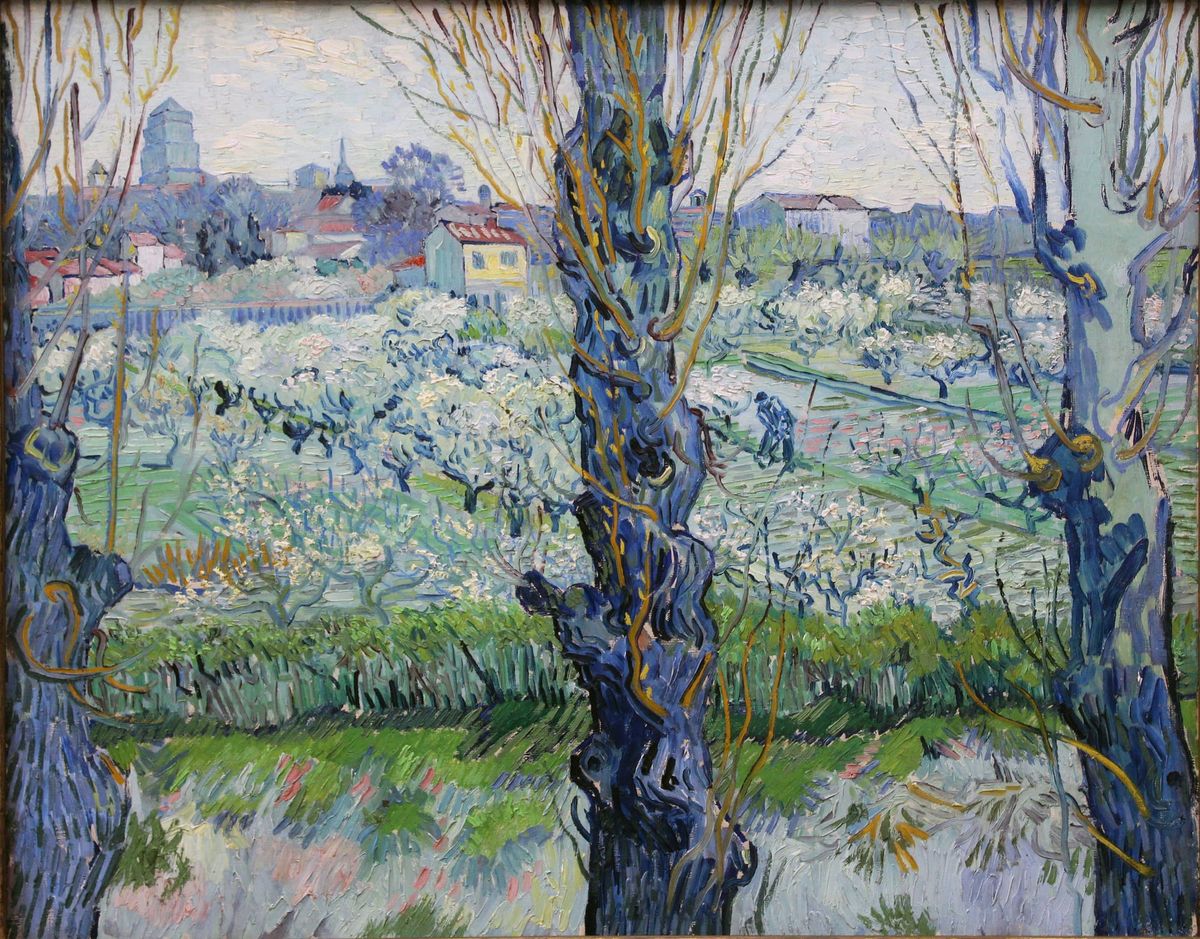
빈센트 반 고흐(Vincent van Gogh)가 남프랑스 아를(Arles)에 머물던 1889년 4월에 완성한 대표적인 유화 풍경화입니다. 현재 독일 뮌헨의 노이에 피나코테크(Neue Pinakothek, Munich)에 소장되어 있으며, 캔버스 위에 유채로 제작된 이 작품의 실제 사이즈는 약 72.0 × 92.0 cm입니다. 전경에 당당하게 버티고 선 포플러 나무 기둥 사이로 하얗게 만개한 과수원의 꽃구름과 저 멀리 아스라이 보이는 아를 시가지의 전경을 두텁고 역동적인 임파스토(Impasto) 기법과 화사한 봄의 색채로 완벽하게 포착해냈습니다.
고흐는 물감을 캔버스 위에 두껍게 얹어 전경을 가로막고 선 고목의 거친 껍질과 뒤틀린 결, 그리고 꽃나무들의 화사한 볼륨감을 조각하듯 입체적으로 구축했습니다. 전경의 나무 기둥을 채운 짙은 코발트블루와 보랏빛 선묘는 뒤편으로 펼쳐진 눈부신 백색과 연분홍빛 꽃무리, 싱그러운 연둣빛 풀밭과 경쾌한 보색 대비를 이룹니다. 일본 목판화(우키요에)의 시점 구도에서 영감을 얻은 과감한 전경 나무 기둥의 배치는 화면 전체에 깊은 원근감과 함께 살아 숨 쉬는 공간적 긴장감을 불어넣습니다.
1889년 봄, 혹독한 겨울과 정신적 위기를 견뎌낸 고흐는 다시 찾아온 봄의 찬란한 생명력에 깊이 매료되어 아를 외곽의 과수원으로 향했습니다. 전경에 우뚝 솟은 거친 고목 너머로 펼쳐진 꽃 만발한 과수원은 고흐에게 고통을 딛고 다시 피어나는 부활과 치유, 그리고 자연의 영원한 생명력을 상징했습니다. 그는 아를 시내의 생 트로핌 성당 탑과 가옥들이 은은하게 내려다보이는 들판에서 붓을 들고, 벅차오르는 봄날의 환희를 캔버스에 쏟아부었습니다.
과수원 사이에서 묵묵히 일하고 있는 작은 농부의 실루엣과 대지를 가득 채운 화사한 꽃빛은 자연과 인간의 조화로운 공존을 증명합니다. 미술사에서는 고흐가 일본 미술의 공간 구성미를 서양의 야외 풍경화에 완벽히 융합시켜, 자연의 계절적 갱신을 화가 자신의 영적 재생으로 승화시킨 아를 시기의 최고봉 걸작으로 평가하고 있습니다.
관람객의 무의식적인 시선은 화면 전면 중앙에 굵고 웅장하게 서서 화면을 분할하는 포플러 나무의 뒤틀린 몸통과 짙푸른 청보랏빛 나무껍질의 질감에서 자연스럽게 출발합니다. 거친 세월의 흔적을 간직한 묵직한 고목의 조형미와 두터운 붓 터치에 시선이 머무는 순간, 보는 이는 찰나의 침묵과 함께 프로방스 봄날의 신선한 공기 속으로 단숨에 몰입하게 됩니다.
이어 시선은 나무 기둥 너머로 끝없이 펼쳐진 과수원의 눈부신 백색과 연분홍빛 꽃나무 물결을 타고 화면 안쪽으로 깊숙이 이동하여, 꽃밭 사이에서 허리를 굽히고 대지를 가꾸는 작은 농부의 푸른 실루엣에 도달합니다. 봄 햇살 아래 묵묵히 삶을 일구는 정직한 노동의 온기와 생명의 개화를 마주하며, 대지가 품은 풍요로운 안식과 따스함을 깊이 체감하게 됩니다.
이후 시선은 과수원 너머 지평선에 자리 잡은 아를 마을의 붉은 지붕들과 높이 솟은 옛 성당의 탑, 그리고 캔버스 상단을 은은하게 감싸고 있는 맑고 투명한 하늘의 붓자국을 훑은 뒤, 전경의 싱그러운 연둣빛 풀밭을 타고 다시금 나무 기둥으로 부드럽게 내려앉습니다.
장엄한 고목의 뼈대와 찬란하게 만개한 봄꽃의 조화를 따라 순환한 시선이 편안히 안착할 때, 관람객의 내면에는 복잡한 일상의 번뇌와 피로가 씻겨 내려가고, 혹독한 겨울을 이겨내고 다시 피어난 봄이 건네는 깊은 위로와 함께 흔들리지 않는 심리적 안도감이 가득 차오르게 됩니다.
Orchard in Blossom
Painted by Vincent van Gogh in April 1889 during his momentous stay in Arles, France, this celebrated landscape is preserved in the permanent collection of the Neue Pinakothek in Munich, Germany. Executed in oil on canvas, the actual size of the work is approximately 72.0 × 92.0 cm. Framing a flourishing sea of white blossoms and the distant silhouette of the ancient town through the muscular trunks of foreground poplars, the composition unites tactile impasto, dramatic spatial framing, and radiant vernal light.
Van Gogh applied unmixed paint with sculptural density, carving out the furrowed bark of the vertical tree trunks and the delicate, fluttering petals of the blooming orchard. The cool indigo and violet contours defining the foreground trees establish a dynamic chromatic vibration against the luminous whites, soft pinks, and fresh lime-greens of the flowering meadow. Strongly influenced by the cropped foreground aesthetics of Japanese ukiyo-e woodblock prints, this bold vertical barrier creates an expansive sense of atmospheric depth.
In the spring of 1889, recovering from physical exhaustion and emotional crises, Van Gogh found immense solace in the regenerative energy of nature returning to the countryside around Arles. To him, the blooming orchards framed by rugged, enduring trunks symbolized resurrection, psychological healing, and the invincible triumph of life over winter hardships. Looking out across the fields toward the historic towers of Saint-Trophime and the rooftops of Arles, he poured his revived creative passion directly into the canvas.
With a lone peasant figure quietly tending the soil amid the flowering trees, the composition connects seasonal renewal with honest human labor. Art historians celebrate this masterpiece as one of the expressive summits of Van Gogh's Arles period, where Eastern decorative framing was masterfully synthesized with subjective Impressionism to create an enduring hymn to natural vitality.
A viewer's subconscious gaze is intuitively anchored first by the thick, twisting trunk of the central poplar tree rising boldly in the foreground, sculpted with rich layers of deep blue and violet paint. Absorbing the solid, grounding presence and rough texture of the ancient wood, the observer is drawn into an immediate atmosphere of rustic permanence, seasonal freshness, and contemplative stillness.
The gaze then glides past the foreground trees into the middle ground, sweeping across the radiant sea of blossoming fruit trees and arriving at the small silhouette of the farmer working in the field. Encountering this humble figure tending the blooming earth, the viewer experiences a reassuring sense of domestic tranquility, natural harmony, and agrarian peace.
The eye continues its journey toward the horizon, taking in the picturesque rooftops and ancient church tower of Arles set against the pale, luminous spring sky, before descending smoothly along the sun-dappled grasses back to the base of the foreground trees.
Completing this visual and emotional circulation, the observer feels a profound release of modern tension. The joyful awakening of nature and balanced harmony of the landscape leave the viewer restored with a lasting sense of inner renewal, spiritual hope, and enduring psychological peace.
본 리뷰에서 작품을 제외한 컨텐츠의 저작권은 팔렛트제주에 있습니다.
"퍼블릭도메인 고전명화"를 제외한 모든 창작 콘텐츠는 저작권법 제4조 및 제10조에 의거하여 보호됩니다. 무단 도용시 저작권법 제136조(벌칙)에 의거, 당사의 사전 서면 승인 없는 저작권 침해 행위를 금지합니다.