아를의 병원 정원 - Garden of the Hospital in Arles
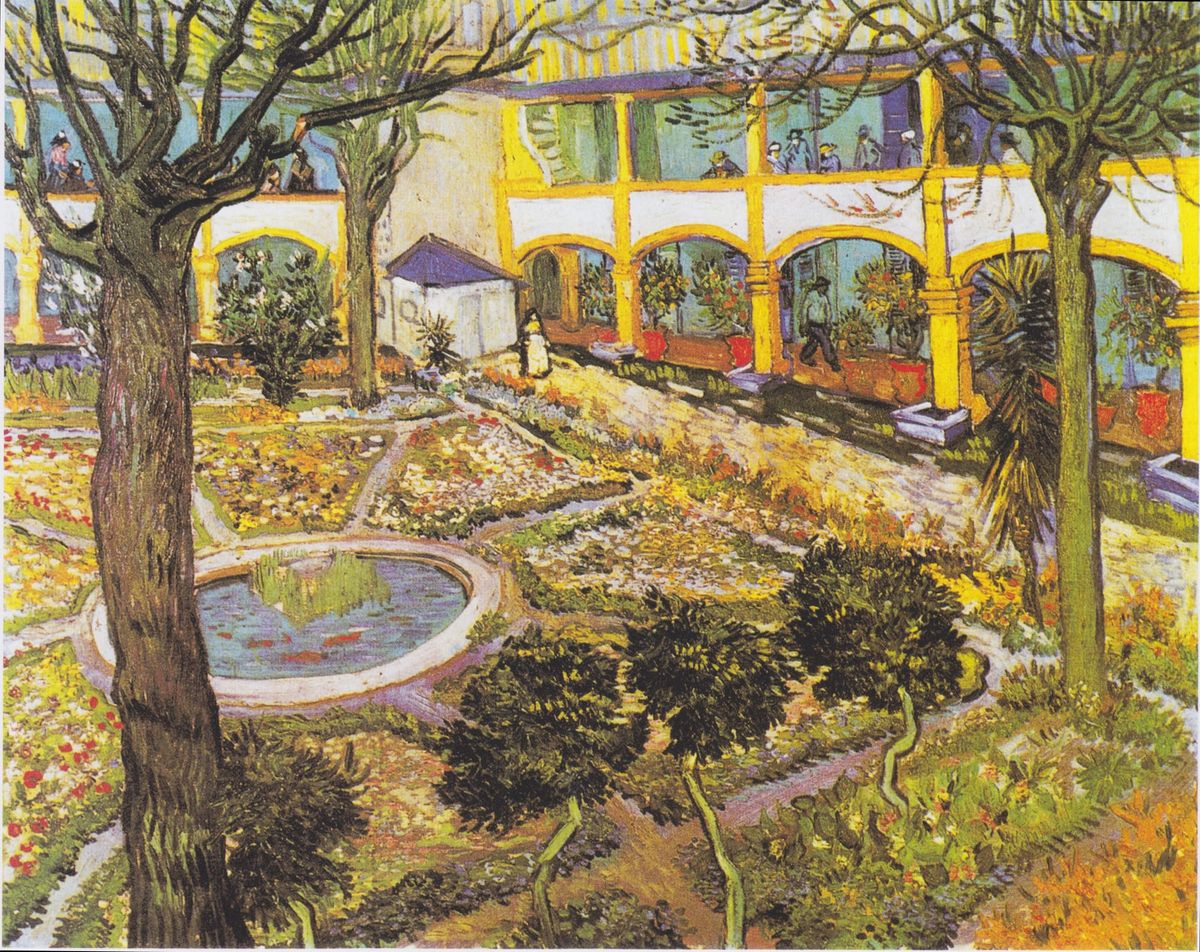
빈센트 반 고흐(Vincent van Gogh)가 남프랑스 아를(Arles)의 시립병원에 입원해 있던 1889년 4월에 완성한 대표적인 유화 걸작입니다. 현재 스위스 빈터투어의 오스카 라인하르트 컬렉션 '암 뢰머홀츠'(Sammlung Oskar Reinhart 'Am Römerholz')에 소장되어 있으며, 캔버스 위에 유채로 제작된 이 작품의 실제 사이즈는 약 73.0 × 92.0 cm입니다. 병원 중정을 둘러싼 노란 아치형 회랑과 화사하게 만개한 꽃밭, 그리고 중앙의 둥근 연못을 두텁고 역동적인 임파스토(Impasto) 기법과 찬란한 원색 대비로 포착하여 고통 속에서도 피어나는 치유와 생명의 활력을 웅장하게 담아냈습니다.
고흐는 물감을 두껍게 얹어 전경에 우뚝 솟은 고목의 거친 껍질, 연못 수면에 비친 맑은 물결, 그리고 방사형으로 펼쳐진 꽃단의 화려한 볼륨감을 조각하듯 입체적으로 빚어냈습니다. 2층 구조의 회랑을 물들인 눈부신 크롬 옐로와 주황빛 기둥은 뒤편과 그늘의 짙은 청록색, 보랏빛 톤과 강렬한 보색 대비를 이루며, 화면 좌우를 가로지르는 굵은 나무 기둥들은 정적인 안뜰 풍경에 묵직한 조형적 균형감과 깊은 공간감을 불어넣습니다. 부감 시점으로 내려다본 독특한 구도는 만발한 봄꽃의 율동을 한눈에 조망하게 합니다.
1889년 초 귀를 다치는 비극적인 사건 이후 아를 시립병원(오텔 디외)에 머물며 치료를 받던 고흐는, 회복기 동안 병원 안뜰의 활기찬 정원을 바라보며 깊은 정서적 안식을 얻었습니다. 4개 구역으로 반듯하게 나뉜 정원에 심어진 붓꽃, 메리골드, 장미 등 다채로운 꽃들과 맑은 물이 솟는 둥근 연못은 고흐에게 육체적·정신적 고통을 씻어내는 부활과 치유의 상징이었습니다. 그는 회랑을 거니는 수녀들과 환자들의 모습을 자연의 생명력 속에 조화롭게 녹여내며 삶에 대한 굳은 의지를 다졌습니다.
동생 테오에게 보낸 편지에서 고흐는 병원 정원의 화사한 봄기운을 그리며 비로소 마음의 맑은 평온을 되찾았다고 적었습니다. 미술사에서는 고흐가 질병의 어둠 속에서도 순수한 색채의 해방과 치밀한 구성을 통해 비극을 찬란한 예술적 승리로 전환해낸 아를 시기의 최고봉 걸작으로 평가하고 있습니다.
관람객의 무의식적인 시선은 화면 좌측 하단에 단정하게 자리 잡은 원형 분수 연못의 잔잔한 푸른 수면과 금붕어들의 붉은 색점에서 자연스럽게 출발합니다. 맑은 물줄기를 머금은 연못의 차분하고 고요한 질감에 시선이 머무는 순간, 보는 이는 찰나의 침묵과 함께 봄날 정원의 싱그러운 공기 속으로 단숨에 몰입하게 됩니다.
이어 시선은 연못을 중심으로 사방으로 뻗어나간 기하학적 산책로와 화사한 노란색, 주황색, 붉은색 꽃단의 율동적인 붓 터치를 타고 화면 안쪽으로 이동하여, 노란 아치 회랑 그늘 아래를 조용히 거닐고 있는 수녀와 환자들의 소박한 실루엣에 도달합니다. 평온한 일상 속에서 서로를 보살피는 따스한 손길을 마주하며, 고난을 감싸 안는 인간적인 온기와 위로를 깊이 체감하게 됩니다.
이후 시선은 캔버스 상단을 가로지르며 햇살을 받아 찬란하게 빛나는 2층 목조 회랑의 웅장한 노란 기둥들과 테라스의 난간을 훑은 뒤, 좌우에 굳건히 버티고 선 거대한 나무 기둥의 묵직한 줄기를 타고 다시금 전경의 풍성한 화단으로 유연하게 내려앉습니다.
노란 건축물과 찬란한 꽃밭이 빚어내는 장엄한 색채의 순환을 따라 순환한 시선이 편안히 안착할 때, 관람객의 내면에는 복잡한 일상의 번뇌와 피로가 씻겨 내려가고, 혹독한 시련을 딛고 피어난 봄 정원이 건네는 깊은 위로와 함께 흔들리지 않는 심리적 안도감이 가득 차오르게 됩니다.
Garden of the Hospital in Arles
Painted by Vincent van Gogh in April 1889 during his recuperation at the municipal hospital in Arles, France, this celebrated masterpiece resides in the permanent collection of the Sammlung Oskar Reinhart 'Am Römerholz' in Winterthur, Switzerland. Executed in oil on canvas, the actual size of the work is approximately 73.0 × 92.0 cm. Capturing the flourishing central courtyard of the ancient Hôtel-Dieu framed by radiant yellow arcades and structured flower beds, the composition unites rich impasto, brilliant complementary contrasts, and an elevated perspective to express profound psychological renewal.
Van Gogh applied unmixed pigments with dense, tactile brushwork, sculpting the rugged bark of the foreground trees, the smooth circular pool, and the radiating beds of vibrant blossoms. The glowing chrome yellow and ochre tones of the two-story arcade establish a striking chromatic vibration against the deep viridian, violet, and cool shadows beneath the arches. The high vantage point and the strong vertical framing of the tree trunks lend the expansive courtyard garden both dynamic structural stability and rhythmic vitality.
In the spring of 1889, while recovering from severe physical and mental distress following the breakdown of his Yellow House studio, Van Gogh found immense solace in the enclosed hospital garden. The manicured quadrants filled with irises, marigolds, and roses around the central fountain represented a living sanctuary of healing, regeneration, and natural order. Watching patients and Catholic nuns strolling beneath the arcades, he translated the quiet rhythms of convalescence into an enduring visual hymn to life.
In letters to his brother Theo, Van Gogh described the therapeutic power of painting the blooming courtyard, noting how the immersion in color restored his creative clarity and inner fortitude. Art historians celebrate this composition as one of the expressive summits of his late Arles period, demonstrating his extraordinary ability to transcend personal anguish and transmute institutional confinement into a luminous vision of hope.
A viewer's subconscious gaze is intuitively anchored first by the tranquil circular pond resting in the lower left quadrant, its cool blue water enlivened by bright flecks of orange and gold. Lingering upon this clear reflective oasis that centers the composition, the observer is drawn into an immediate atmosphere of springtime freshness, sanctuary, and contemplative stillness.
The gaze then follows the geometric gravel pathways radiating outward through the lush, multicolored tapestry of blooming flower beds, arriving at the gentle figures of the nuns and patients walking quietly beneath the arched gallery. Encountering these restful silhouettes taking refuge in the shade, the viewer experiences a reassuring sense of compassion, care, and quiet solidarity.
The eye continues upward across the sweeping, sun-drenched architecture of the yellow loggia and the upper balconies, before tracing the solid, textured trunks of the framing trees and descending smoothly back to the rich blossoms below.
Completing this visual and psychological circulation, the observer feels a profound release of modern tension. The joyful harmony of architecture and blossoming nature leaves the viewer restored with a lasting sense of emotional renewal, spiritual fortitude, and enduring psychological peace.
본 리뷰에서 작품을 제외한 컨텐츠의 저작권은 팔렛트제주에 있습니다.
"퍼블릭도메인 고전명화"를 제외한 모든 창작 콘텐츠는 저작권법 제4조 및 제10조에 의거하여 보호됩니다. 무단 도용시 저작권법 제136조(벌칙)에 의거, 당사의 사전 서면 승인 없는 저작권 침해 행위를 금지합니다.