아를의 병원 병실 Ward in the Hospital in Arles
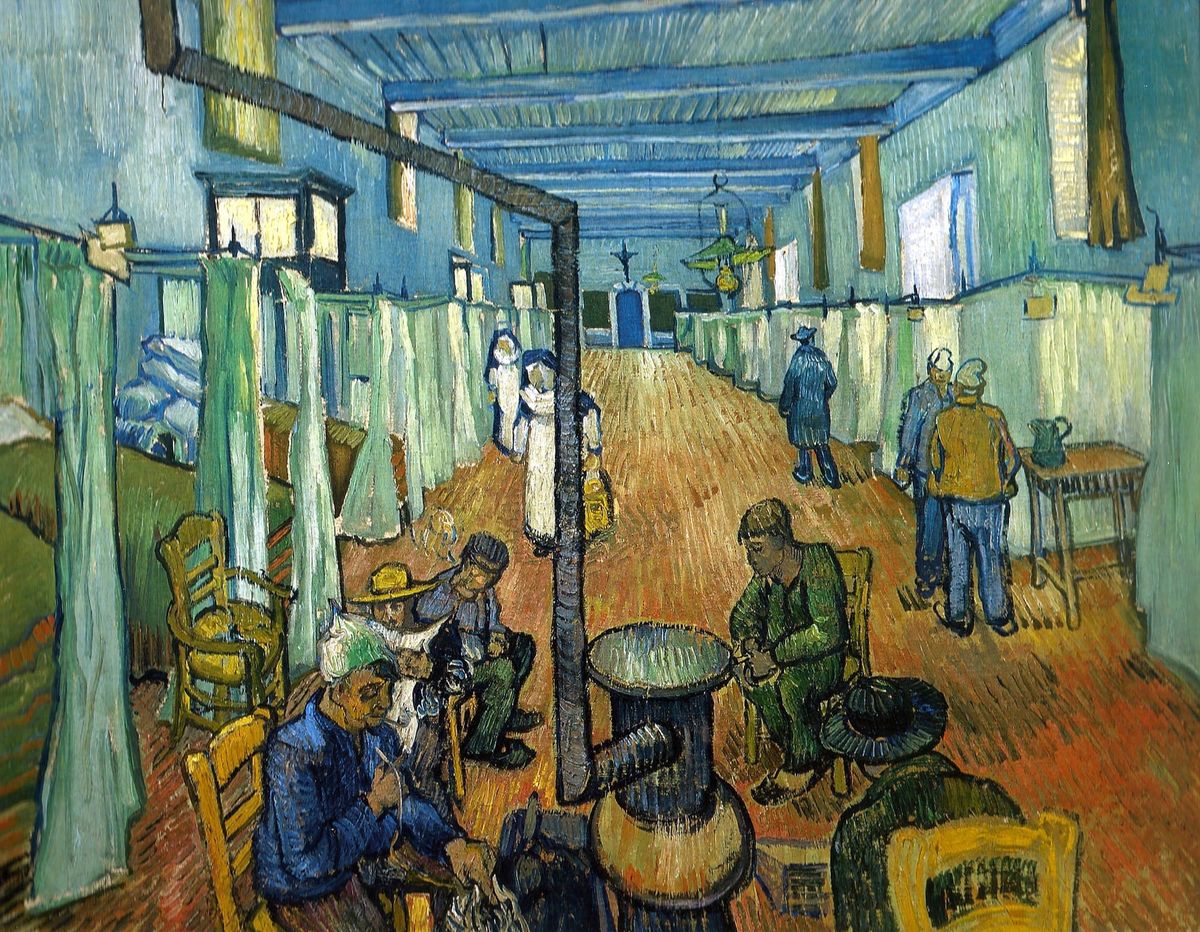
이 작품은 네덜란드의 후기 인상주의 거장 빈센트 반 고흐가 1889년 4월 프랑스 아를(Arles) 체류 시기에 제작한 유화입니다. 공식 소장품 등록번호는 F646 (존 홀스커 분류 기준 JH 1686)이며, 캔버스 위에 유채로 그려진 실제 실측 규격은 74 x 92 cm입니다. 현재 이 작품은 스위스 빈터투어에 위치한 암 뢰머홀츠 오스카 라인하르트 미술관(Sammlung Oskar Reinhart «Am Römerholz»)에 공식적으로 소장되어 있으며, 폴 고갱과의 갈등 이후 자신의 귀를 자르는 비극적인 사건을 겪고 시립 병원에 입원했던 아픈 기억 속에서 완성되었습니다.
작가의 고뇌와 창작 비하인드
1888년 말 극심한 정신적 발작과 자해 사건을 겪은 뒤 아를의 시립 병원에 강제 수용되었던 반 고흐는, 자신을 짓누르는 고통과 환자들의 신음이 가득한 폐쇄적인 병실 내부를 차분한 시선으로 마주하고자 했습니다. 당시 그는 동생 테오에게 보낸 편지에서 하얀 커튼이 드리워진 수많은 침대와 환자들이 오가는 길쭉한 병실의 구조를 상세히 묘사하며, 병원 안의 스산하면서도 정돈된 분위기를 화폭에 담아내고자 소회를 밝혔습니다.
작품 전경에는 차가운 철제 연통이 뻗어 나온 거대한 검은색 난로가 화면의 중심을 무겁게 가르고 있으며, 그 주변으로 환우들이 모여 앉아 적막 속에서 깊은 상념에 잠겨 있습니다. 중경에는 양옆으로 길게 늘어선 하얀 커튼의 침상들과 수간호사들의 모습이 아치형 회랑처럼 안쪽으로 아스라이 이어지며, 공간의 압도적인 깊이감과 답답한 폐쇄성을 동시에 자아냅니다.
배경으로는 병실 맨 끝 벽면에 걸린 십자가와 예배실로 통하는 푸른 문이 묵직하게 자리 잡고 있으며, 전체 화면을 지배하는 라벤더빛 흰색과 차가운 초록빛의 조화는 고통받는 영혼들이 머무는 공간의 서늘한 정서를 고스란히 전해줍니다.
무의식 속 시선 및 심리 흐름
관람객의 시선은 가장 먼저 화면 전경의 거대한 난로와 그 곁에 웅크린 환자들의 어두운 실루엣으로 향하며, 차가운 병실 안에서 감도는 고독과 침묵의 무게를 마주하게 됩니다. 이어지는 시선은 길게 뻗은 마루 바닥을 따라 양옆으로 도열한 침대 커튼과 묵묵히 걸어 다니는 환우들의 중경으로 이동하여, 환자들이 겪는 신체적·정신적 고립감을 깊이 체감하게 됩니다.
시선이 다시 배경의 아득한 끝에 걸린 십자가와 성스러운 대기감으로 확장될 때, 관람객은 절망의 깊은 터널 속에서도 영원한 구원과 평안을 갈구했던 작가의 애틋한 내면세계에 온전히 동화됩니다. 이 일련의 시선 이동은 단순한 병실 풍경의 기록을 넘어, 인간의 가장 취약한 순간과 마주하며 예술로 치유를 갈구했던 거장의 처절한 심리적 여정으로 우리를 이끕니다.
미술계의 평가 및 조형미
미술사학계와 평단은 본 작품을 고흐가 아를 병원 체류 시기에 이룩한 가장 상징적이고 심오한 실내화의 정수이자, 자신의 상처와 환자들의 아픔을 객관적이고도 따스한 시선으로 승화시킨 걸작으로 평가합니다. 캔버스 위에 거칠고 두껍게 얹어진 임파스토 기법은 침대 커튼의 결, 마루 바닥의 질감, 그리고 난로의 입체적인 양감을 손에 잡힐 듯 생생하게 살아나게 만듭니다.
화면 전반을 지배하는 라벤더빛이 감도는 흰색과 민트빛 초록색, 그리고 바닥의 붉은 타일이 이루는 조화는 시각적인 안정감과 동시에 묘한 심리적 긴장감을 유발합니다. 고통과 절망의 현장을 자신만의 독창적인 색채와 구도로 영원불멸의 예술적 기록으로 남긴 이 작품은, 시대를 초월해 관람객의 마음에 깊은 울림을 전하는 소중한 유산입니다.
Ward in the Hospital in Arles
Executed in April 1889 during his confinement at the municipal hospital in Arles, France, following his infamous breakdown and self-mutilation, this oil painting is a haunting and deeply moving masterpiece by the Dutch Post-Impressionist master Vincent van Gogh. Officially cataloged under inventory number F646 (JH 1686) and measuring 74 x 92 cm on canvas, the work is housed in the permanent collection of the Sammlung Oskar Reinhart «Am Römerholz» in Winterthur, Switzerland.
The Artist's Turmoil and Creative Background
After suffering a severe psychological crisis and mutilating his ear in late 1888, Van Gogh was hospitalized in Arles, where he confronted the raw, institutional reality of the men's ward shared with other ailing patients. In his letters to his brother Theo, he meticulously described the long, claustrophobic ward lined with rows of curtained beds, seeking to document the stark environment with a detached yet deeply empathetic artistic vision.
The foreground features a prominent, dark iron stove with its snaking vertical pipe, anchoring the viewer in the physical chill of the room, flanked by huddled patients sitting in quiet despair. In the middle ground, the seemingly endless rows of white-curtained beds stretch down the perspective of the wooden floor, interspersed with the quiet figures of patients and attendants moving through the solemn space.
The background recedes toward the distant end of the ward, where a crucifix hangs above a closed door leading to the chapel, enveloped in a pale, lilac-white and greenish atmosphere that defines the austere interior.
Psychological Flow and the Unconscious Gaze
The viewer's gaze is initially drawn to the heavy black stove and the slumped figures in the foreground, establishing an immediate atmospheric confrontation with the oppressive silence and confinement of the ward. The eye then migrates down the linear perspective of the wooden floorboards past the rhythmic rows of white curtains, absorbing the profound isolation experienced by the patients.
As the gaze expands outward toward the distant crucifix and the hazy background illumination, the observer is enveloped in a poignant spiritual resonance that reflects a desperate yearning for grace amidst suffering. This deliberate visual progression moves the viewer from a stark physical observation of institutional reality into an empathetic meditation on human vulnerability and endurance.
Critical Acclaim and Formal Analysis
Art historians and critics widely celebrate this painting as one of the most powerful psychological documents of Van Gogh's career, recognizing it as a triumph of translating personal trauma into rigorous pictorial form. The vigorous application of paint through a tactile impasto technique imparts sculptural weight and material reality to the rustic floorboards, the canvas curtains, and the metallic stove.
The sophisticated orchestration of cool lilac-whites, muted greens, and earthy red tones generates a balanced chromatic harmony charged with emotional gravity. Transmuting a site of personal suffering into an enduring monument of compassionate observation, this masterpiece stands as an immortal testament to Van Gogh's resilient artistic genius.
본 컨텐트의 저작권은 팔렛트제주에 있습니다. 허가없는 무단전제를 금지합니다.
Copyright © Palette Jeju. All rights reserved. Unauthorized reproduction or redistribution is strictly prohibited.