아를의 붉은 포도밭 The Red Vineyard at Arles
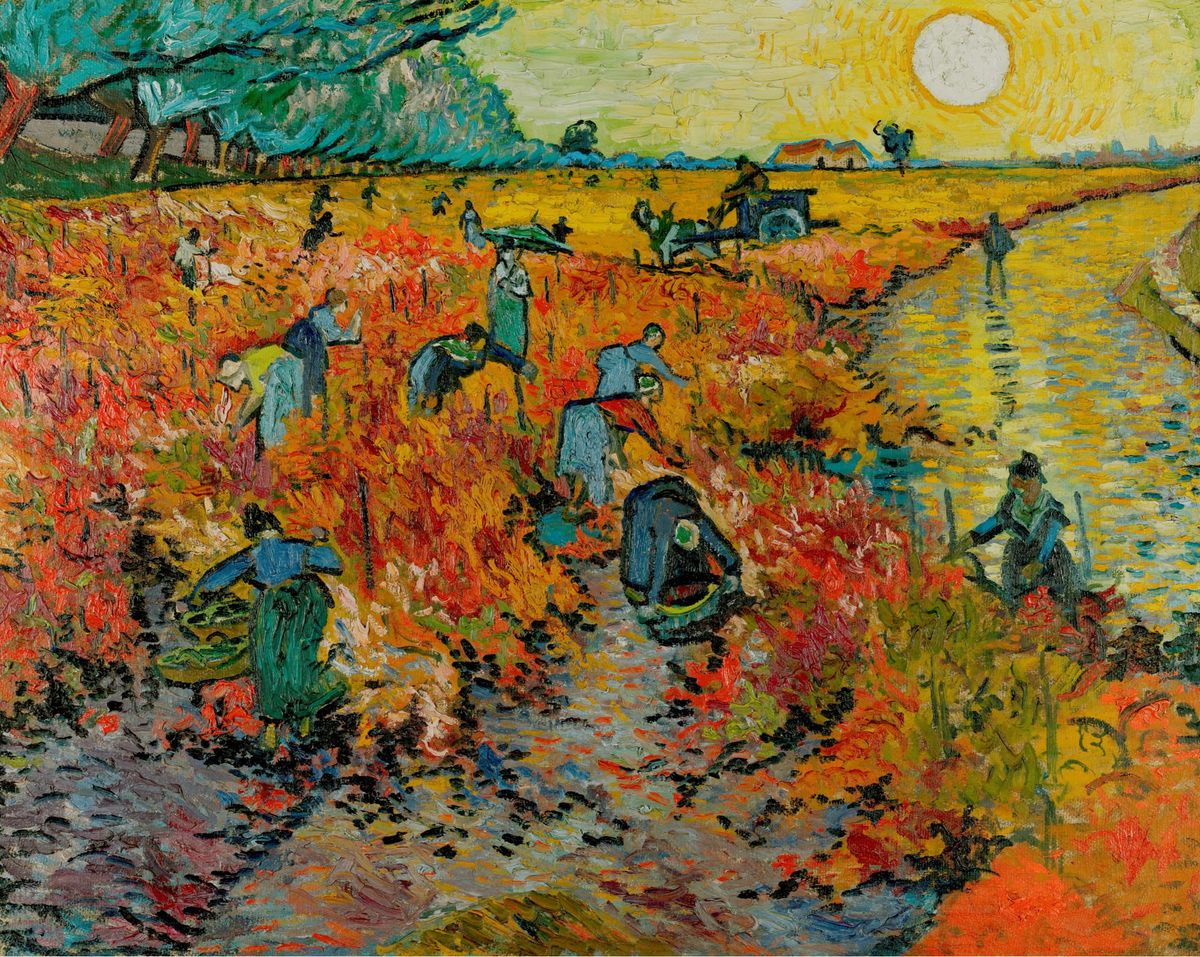
빈센트 반 고흐는 1888년 프랑스 남부 아를에 체류하던 시기에 가을철 붉게 물든 포도밭에서 수확에 몰두하는 농부들의 강렬한 풍경을 화폭에 담아내며 자신만의 독창적인 색채 예술을 펼쳤습니다.
이 작품은 그가 아를에 체류하던 1888년 11월에 제작된 유채화로, 야콥 바르트 드 라 파이유의 전작 도록 기준 공식 등록번호는 F495이며 실제 작품의 실측 규격은 75.0 × 93.0 cm입니다.
현재 러시아 모스크바에 위치한 푸시킨 미술관에서 소장하고 있으며, 화가가 생전에 공식적으로 판매한 유일한 작품으로 유명합니다.
작가의 고뇌와 비하인드
작품을 제작할 당시 아를의 들녘에는 찬 바람이 뼛속까지 파고들고, 노란 집 안에서는 폴 고갱과의 예술적 견해 차이로 인한 숨막히는 긴장감과 고독이 화가의 마음을 차갑게 짓누르고 있었습니다.
매서운 가을 추위와 다가오는 정신적 혼란 속에서도 그는 남프랑스의 저녁 노을 아래 타오듯 빛나는 포도밭의 강렬한 색채에 모든 영혼을 집중하며 외부의 고통을 이겨내고자 붓을 쥐었습니다.
화면 전면에는 짙은 보랏빛과 어두운 흙빛의 차가운 대지 위로 불길처럼 타오르는 붉은색과 주황빛 포도나무 잎사귀들이 두터운 임파스토 기법으로 소용돌이치듯 펼쳐져 있습니다.
중경에는 허리를 숙여 포도를 부지런히 수확하는 여러 명의 농부들과 수레를 끄는 말의 모습이 바쁘게 움직이고 있으며, 화면 오른쪽에 내리쬐는 햇빛을 받아 황금빛으로 눈부시게 번지는 운하의 물결이 시선을 사로잡습니다.
원경의 지평선 위로는 붉은 지붕의 가옥들과 멀리 푸른빛을 띤 산 능선, 그리고 이글거리는 커다란 노란 태양이 하늘을 가득 채워 찬란하면서도 뜨거운 가을 대기의 깊이감을 완성합니다.
무의식 속 시선 및 심리 흐름
관람객의 시선은 가장 먼저 화면 전면을 강렬하게 채운 붉은색 포도밭의 폭발적인 색채와 구부정하게 포도를 따는 농부들의 생동감 넘치는 동작에 닿으며 시각적 전율을 느끼게 됩니다.
이어지는 시선은 중앙의 수레와 일하는 사람들 사이를 거쳐, 오른쪽에 찬란하게 부서지는 황금빛 햇살과 운하의 물길을 따라 위쪽으로 자연스럽게 이동합니다.
마지막으로 화면 상단을 거대한 원형으로 비추는 이글거리는 태양과 대기감 속으로 시선이 넓게 퍼져나가며, 자연의 거대한 에너지와 고된 노동이 어우러진 순간에 마주하는 깊은 감정적 카타르시스를 체감하게 됩니다.
미술계의 평가와 조형미
미술사학계에서는 이 작품을 두고 고흐가 후기 인상주의의 대담한 보색 대비와 감정적인 붓질을 활용해 자연의 원초적 생명력을 가장 극적으로 구현한 최고 걸작 중 하나로 평가합니다.
화면 전반을 지배하는 붉은색과 녹색, 그리고 노란 태양이 자아내는 강렬한 색채의 충돌은 시각적 리듬감을 극대화합니다.
눈에 보이는 풍경의 재현을 넘어, 화가가 불안정한 현실 속에서 색채를 통해 분출해 낸 영혼의 뜨거운 호흡을 캔버스 위에 영원히 아로새긴 위대한 미술사적 성취입니다.
The Red Vineyard at Arles
Vincent van Gogh captured the blazing autumn colors and intense harvest activity of the southern French countryside after settling in Arles, creating a monumental expression of light and color in November 1888.
Created in November 1888, this oil on canvas is cataloged as F495 in J.B. de la Faille's catalogue raisonné and measures 75.0 × 93.0 cm.
The painting is currently housed in the Pushkin State Museum of Fine Arts in Moscow, Russia, and holds the historic distinction of being the only painting known to have been sold during the artist's lifetime.
During the period of its creation, a biting autumn chill swept across the fields of Arles, while inside the Yellow House, mounting artistic tensions and a suffocating sense of isolation between Van Gogh and Paul Gauguin weighed heavily on his spirit.
Amidst the advancing cold and turbulent psychological strain, he sought profound spiritual refuge by losing himself entirely in the radiant, fiery landscape of the vineyards glowing beneath the fading southern sun.
The foreground is dominated by dark, earthy tones and deep violet soil, overlaid with vibrant red and orange grape leaves rendered in thick, swirling impasto brushwork.
In the middle ground, peasants bend to harvest the grapes alongside a horse-drawn cart, while sunlight reflects brilliantly off a canal on the right, casting a shimmering golden path across the water.
In the distant background, red-roofed farmhouses, distant blue hills, and a massive, glowing yellow sun dominate the sky, establishing an overwhelming sense of atmospheric heat and depth.
The viewer's gaze is initially drawn toward the explosive red and orange hues of the vineyard and the bent figures of the workers in the lower foreground.
The perspective then follows the bright reflection along the water channel upward toward the blazing sun in the upper right quadrant.
Finally, the eye expands into the dynamic yellow and green sky, allowing the observer to experience a profound psychological transition from earthly labor to an intense, radiant visual transcendence.
Art historians regard this canvas as a defining masterpiece of Van Gogh's Arles period, where bold complementary color contrasts and emotional brushwork elevate a rural scene into a visionary symphony of light.
The striking interplay between fiery reds, deep greens, and the glowing yellow sun generates an unmatched optical vibration and emotional power.
It stands as an enduring artistic monument that immortalizes the artist's turbulent yet brilliant communion with the natural world.
본 컨텐트의 저작권은 팔렛트제주에 있습니다. 허가없는 무단전제를 금지합니다.
Copyright © Palette Jeju. All rights reserved. Unauthorized reproduction or redistribution is strictly prohibited.