아르카디아의 목동들 Et in Arcadia ego
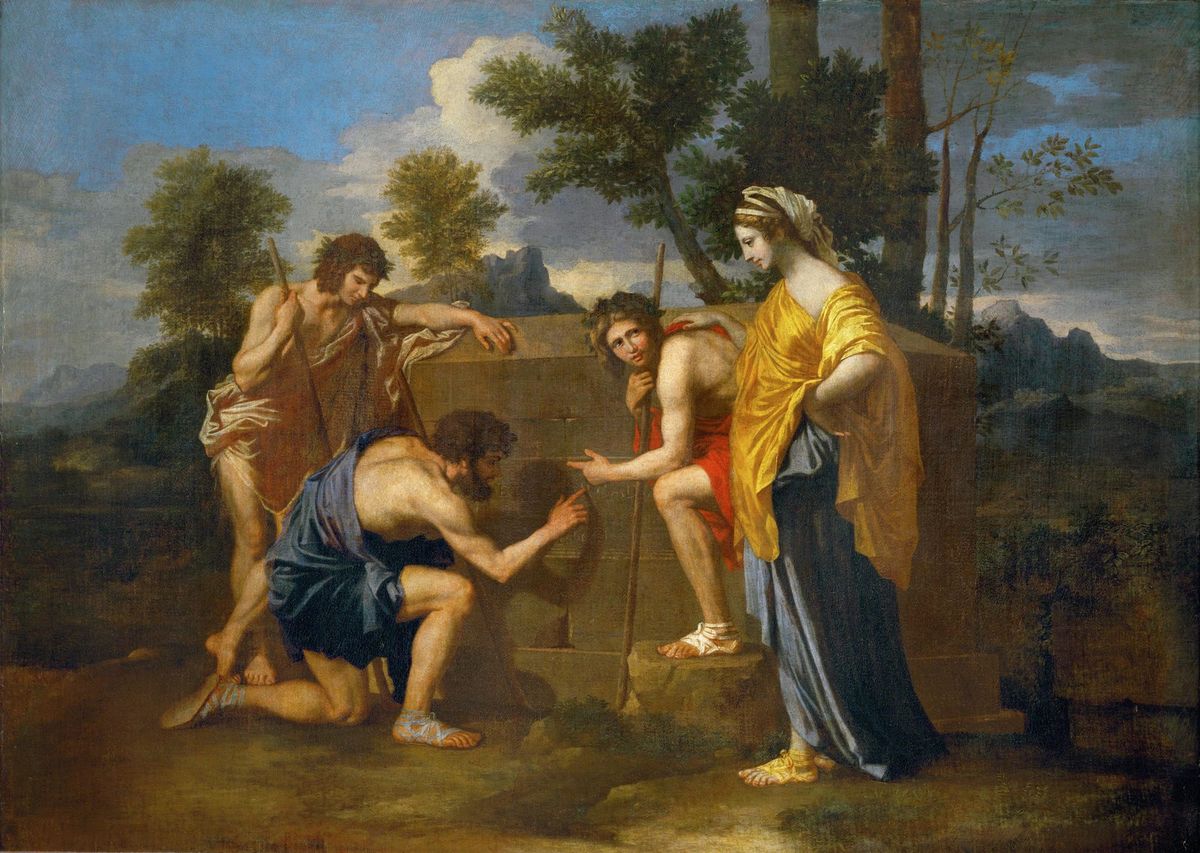
17세기 프랑스 고전주의 회화의 시조이자 서양 미술사 불멸의 철학적 화가 니콜라 푸생(Nicolas Poussin, 1594–1665)이 1637년에서 1638년경 로마에서 완성한 유화 아르카디아의 목동들(The Arcadian Shepherds, 라틴어 및 원제: Et in Arcadia ego, 또는 Les Bergers d'Arcadie, 소장품 번호: INV 7300)은 85.0 cm × 121.0 cm 크기의 캔버스에 유채로 그린 대표적인 고전 철학 우의화 최고 걸작입니다.
현재 프랑스 파리의 루브르 박물관(Musée du Louvre, Paris)에 소장되어 있습니다.
지상 낙원에서 발견한 죽음의 비문과 화가의 깊은 철학적 고뇌
로마에 정착하여 고대 그리스 로마의 문학과 스토아 철학을 깊이 탐구하던 푸생은, 이상향 속에서도 피할 수 없는 인간의 숙명인 죽음의 문제를 어떻게 회화로 표현할지 치열하게 번민했습니다. 고대 그리스의 아르카디아는 슬픔이나 고통이 없는 영원한 젊음과 평화의 지상 낙원으로 여겨졌습니다. 그러나 푸생은 낙원의 평화 속에서도 죽음이라는 피할 수 없는 진실이 늘 곁에 존재한다는 사실을 깨달았습니다.
화가는 아르카디아의 울창한 숲속에서 고대 석묘를 우연히 발견하고 그 위에 새겨진 라틴어 비문을 더듬어 읽는 세 명의 젊은 목동과 한 명의 우아한 여인을 화폭에 담았습니다. 무릎을 꿇은 목동이 손가락으로 글자를 하나하나 짚어가며 읽고 있는 문장은 바로 나 또한 아르카디아에 있노라(Et in Arcadia ego)라는 뜻입니다. 여기서 나라는 주체는 무덤에 묻힌 과거의 인물이자, 동시에 의인화된 죽음 그 자체를 의미합니다.
아름다운 여인의 어깨에 손을 얹은 채 비문의 뜻을 묻는 젊은 목동의 호기심 어린 눈빛과, 석묘에 비친 자신의 손가락 그림자를 응시하는 수염 난 목동의 진지한 표정은 보는 이에게 깊은 사색을 불러일으킵니다. 아무리 아름다운 이상향에 살고 있을지라도 모든 인간은 언젠가 죽음을 맞이한다는 메멘토 모리(죽음을 기억하라)의 숭고한 메시지는, 슬픔이나 공포가 아닌 차분하고 우아한 지적 평온으로 화면 가득 펼쳐집니다.
비문을 짚는 목동의 손가락에서 고요한 여인의 눈빛과 고대 석묘로, 시선의 심리적 여정
그림을 마주하는 순간 관람객의 무의식적 시선은 화면 왼쪽 아래 짙은 푸른색 겉옷을 입고 무릎을 꿇은 채 석묘의 비문을 향해 오른손 검지를 뻗고 있는 수염 난 목동의 손끝으로 가장 먼저 빨려 들어갑니다.
거친 돌 표면에 새겨진 글자를 조심스럽게 더듬으며 돌 위에 드리워진 손가락의 그림자를 바라보는 목동의 집중된 옆얼굴은 보는 이에게 깊은 지적 긴장감과 함께 비문의 비밀을 함께 읽어 내려가는 몰입감을 선사합니다.
이어 시선은 목동의 등 뒤에 서서 턱을 괴고 석묘를 바라보는 왼편 목동을 지나, 화면 중앙에서 붉은 옷을 걸치고 서서 여인을 올려다보는 젊은 목동의 놀란 눈빛으로 이동합니다.
젊은 목동이 손짓으로 비문을 가리키며 무언가를 묻자, 그의 어깨에 부드럽게 손을 얹고 조용히 서 있는 고대 여신의 자태를 지닌 여인의 우아한 옆얼굴을 확인하는 순간, 관람객은 지상 낙원의 활기찬 젊음이 영원한 철학적 성찰로 전환되는 고요한 의식의 한복판 속으로 온몸이 빨려 들어가게 됩니다.
마지막으로 시선은 화면 우측을 묵직하게 받치고 있는 여인의 노란 숄과 푸른 치마의 고전적인 주름을 지나, 화면 중앙에 단단한 직사각형으로 자리 잡은 고대 석묘와 저 멀리 푸른 하늘 아래 펼쳐진 아르카디아의 험준한 산맥에 멈춥니다.
완벽한 기하학적 균형을 이루는 네 인물의 조각 같은 배치를 마주하며, 관람객은 유한한 삶 속에서 인간이 지녀야 할 도덕적 평정심과 노거장 푸생이 건네는 묵직한 지적 위로를 가슴 깊이 마주하게 됩니다.
17세기 프랑스 고전주의 철학화의 정점과 조형미, 미술계의 평가
미술계는 루브르 박물관의 아르카디아의 목동들을 푸생이 만년에 도달한 고전주의 엄격한 조형 질서와 스토아 철학의 정수를 완벽하게 응축해 낸 불멸의 최고 대표작으로 평가합니다.
단순한 전원 풍경을 넘어 고대 그리스 조각상의 완벽한 비례를 갖춘 네 명의 인물을 건축적인 좌우 대칭 구도로 완벽하게 배치했을 뿐만 아니라, 노란색, 파란색, 붉은색 삼원색의 조화로운 분배와 섬세한 명암 대비를 통해 철학적 사유를 품격 높은 시각적 질서로 승화시켰기 때문입니다.
삶과 죽음의 영원한 수수께끼를 가장 지적이고 우아한 시각 언어로 풀어낸 푸생의 이 걸작 화폭은, 오늘날까지도 전 세계 수많은 감상자들에게 깊은 감탄과 잊을 수 없는 시각적 전율을 전해주는 서양 미술사의 절대적인 명작으로 손꼽히고 있습니다.
The Arcadian Shepherds
Painted between 1637 and 1638 in Rome by the founder of French classicism and immortal master Nicolas Poussin (1594–1665), The Arcadian Shepherds (also titled Et in Arcadia ego, French: Les Bergers d'Arcadie, Inventory No. INV 7300) is a monumental philosophical allegory in oil on canvas measuring 85.0 cm × 121.0 cm (33.5 in × 47.6 in).
It is preserved in the distinguished permanent collection of the Musée du Louvre in Paris, France.
The Pastoral Utopia, the Inscribed Tomb, and the Stoic Riddle of Mortality
Immersing himself in ancient classical literature, geometry, and Stoic philosophy while working in Rome, Nicolas Poussin contemplated how to translate the universal human confrontation with mortality into visual terms. In ancient lore, Arcadia represented an idyllic agrarian sanctuary blessed with perpetual spring, untouched by earthly strife or suffering. Yet Poussin recognized that even within the most sublime earthly paradise, the immutable reality of death inevitably endures.
The master staged a gathering of three rustic Arcadian shepherds and a noble, statue-like maiden encountering an ancient stone tomb nestled within the pastoral landscape. A kneeling shepherd traces the Latin inscription carved upon the weathered stone block with his finger: Et in Arcadia ego (Even in Arcadia, there am I). The speaking subject of this solemn epitaph represents both the deceased individual resting beneath the earth and the universal personification of Death itself.
Beside him, a youthful companion leans toward the classical woman, pointing to the words in searching inquiry while she rests a reassuring hand upon his shoulder. Rather than inducing terror or despair, Poussin transformed the traditional memento mori (remember that you must die) into a serene philosophical meditation, offering a timeless visual discourse on the dignified acceptance of human mortality.
Subconscious Trajectory of the Gaze: From Kneeling Shepherd to the Classical Maiden
The observer's subconscious gaze is immediately magnetized by the lower-left-central register, drawn to the muscular back and extended right index finger of the bearded shepherd kneeling in ultramarine drapery.
His concentrated profile, the precise alignment of his hand upon the carved letters, and the distinct shadow cast by his finger upon the stone create an instant focal point of intellectual discovery, psychological concentration, and tactile reality.
The visual path then ascends past the leaning shepherd on the far left to the standing youth in the center clad in a red mantle.
Taking in the youth's questioning gaze, his outstretched arm, and the calm, classical countenance of the draped maiden standing beside him, the viewer directly experiences the transition from youthful curiosity to mature philosophical enlightenment.
Finally, the visual trajectory sweeps down the rich yellow and blue folds of the woman's classical garments, moving across the solid architectural geometry of the sarcophagus before resting upon the idyllic trees and distant mountain peaks beneath the cloud-swept sky.
Observing the harmonious equilibrium between classical contrapposto, harmonious primary colors, and Stoic clarity, the spectator perceives the timeless nobility of human intellect and the profound aesthetic solace Poussin embedded within the monumental canvas.
The Monument of French Classical Philosophical Allegory: Critical Legacy
Art historians revere The Arcadian Shepherds as the supreme pinnacle of Poussin’s entire oeuvre, illustrating his consummate mastery of rational composition, archaeological purity, and profound philosophical allegory.
By orchestrating delicate textural contrasts between warm sunlit flesh, rhythmic drapery folds, weathered limestone, and expansive landscape foliage within a frieze-like relief composition, Poussin elevated a pastoral myth into an exquisite philosophical treatise on the human condition.
This grand historical canvas endures as an inspiring testament to the master's creative fortitude, celebrating the triumph of reason over fear and the transformative grace of living art.
본 컨텐트의 저작권은 팔렛트제주에 있습니다. 허가없는 무단전제를 금지합니다.
Copyright © Palette Jeju. All rights reserved. Unauthorized reproduction or redistribution is strictly prohibited.