아르장퇴유의 센 강 The Seine at Argenteuil
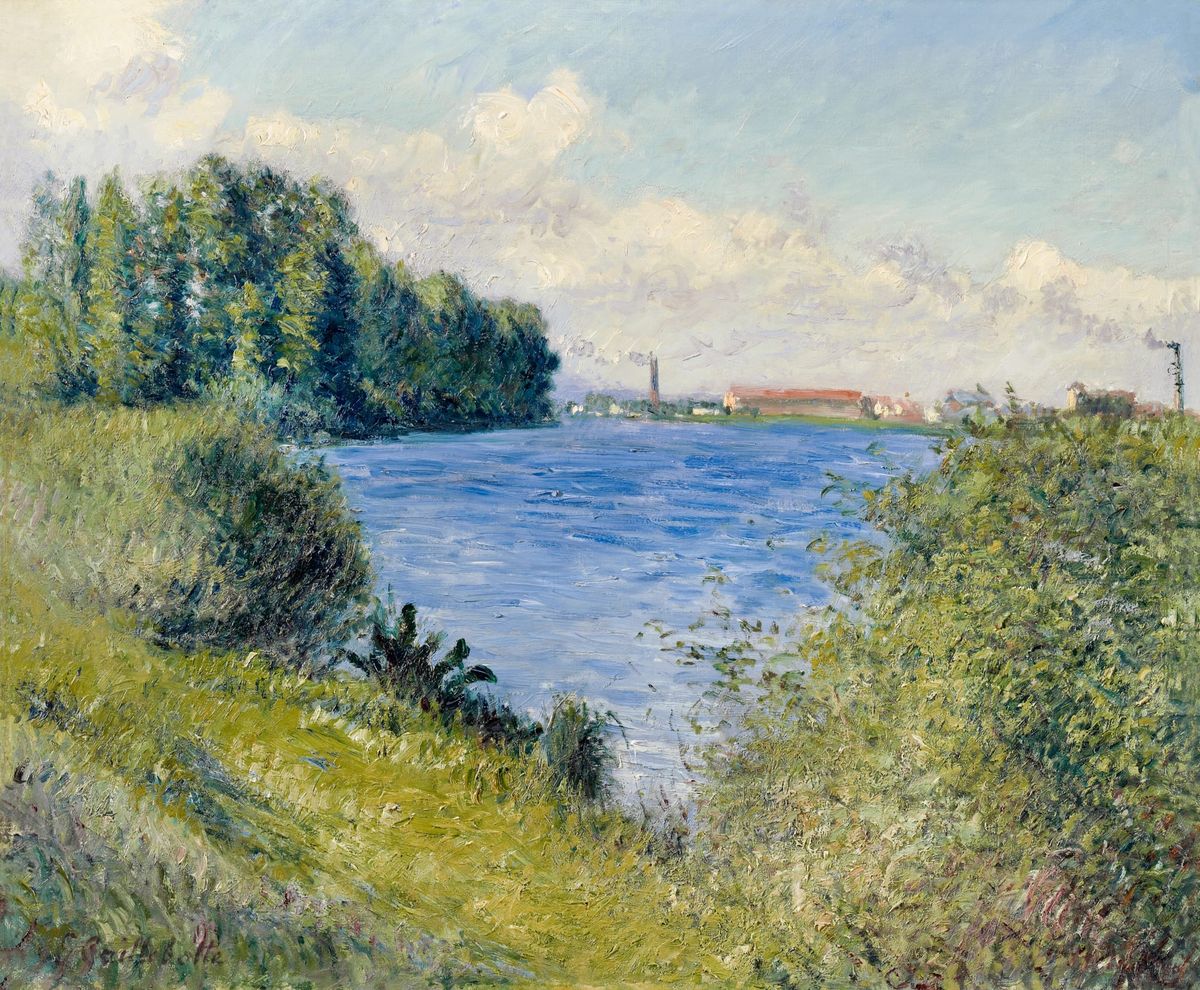
거친 붓 터치로 표현된 무성한 수풀 너머로 푸르고 넓은 강물이 시원하게 펼쳐지는 이 작품은, 귀스타브 카유보트가 1892년경에 완성한 명작입니다. 세로 54.3cm, 가로 65.1cm의 실제 캔버스 크기를 지니고 있으며, 당시 급격히 산업화가 진행되던 파리 외곽 아르장퇴유 지역의 센 강 풍경을 담담하고 아름답게 담아내고 있습니다.
그림 앞에 선 관람자의 시선은 가장 먼저 화면의 아래쪽과 양옆을 꽉 채우고 있는 짙고 거친 녹색 수풀에 닿게 됩니다. 두껍게 칠해진 물감의 질감이 살아있는 이 전경의 식물들은, 우리가 매일 마주하며 부딪히는 복잡하고 얽힌 현실 세계, 즉 뚜렷한 의식의 상태를 상징합니다.
하지만 이내 우리의 눈길은 화면 중앙을 가로지르는 맑고 푸른 센 강의 잔잔한 물결 위로 자연스럽게 흘러갑니다. 얇고 부드러운 붓질로 묘사된 이 드넓은 수면은 팍팍한 현실의 긴장감을 씻어내고, 감상자를 고요하고 깊은 무의식의 안식처로 부드럽게 이끄는 심리적인 통로 역할을 합니다.
그리고 마침내 시선은 강 건너편 아득한 지평선에 서 있는 공장 굴뚝과 붉은 지붕의 건물들, 그리고 그 위로 넓게 펼쳐진 구름 낀 하늘에 머물게 됩니다. 과거 파리 도심을 그릴 때 날카롭고 무거운 도시의 단면을 강조했던 것과 달리, 이곳의 공장 연기는 부드러운 구름 속으로 자연스럽게 스며들며 흩어집니다. 이는 차가운 근대의 현실조차 대자연의 품 안으로 넉넉하게 수용하려는 화가의 성숙한 내면과 깊은 해방감을 엿볼 수 있는 절묘한 장치입니다.
이토록 평화롭고 아름다운 풍경화가 탄생한 비하인드 스토리에는 카유보트의 각별한 자연 사랑과 삶의 변화가 자리 잡고 있습니다. 1880년대 후반부터 그는 화려한 파리 중심부를 떠나 센 강변의 쁘띠 주느빌리에에 정착했습니다.
그는 이곳에서 자신이 직접 가꾼 정원과 요트 타기를 즐기며 온전히 자연과 교감하는 삶을 살았습니다. 1892년 당시 인상파 화가들의 모임은 이미 흩어지고 각자의 길을 가고 있었지만, 카유보트는 옛 동료들과 함께 그림을 그리던 강변을 향한 짙은 향수를 안고 이 그림을 완성했습니다. 복잡한 세상을 떠나 자연 속에서 자신만의 예술적 리듬을 찾고자 했던 그의 진솔한 숨결이 묻어나는 대목입니다.
오늘날 미술사학자들은 이 작품을 카유보트가 인상주의를 넘어 자신만의 독창적이고 성숙한 화풍을 완성했음을 보여주는 걸작으로 평가합니다. 빛에 따라 변하는 순간적인 인상을 포착하는 데 그치지 않고, 화면 앞쪽의 두터운 질감과 뒤쪽의 얇은 묘사를 극적으로 대비시킨 그의 시도는 매우 혁신적이었습니다.
이러한 과감한 화면 구성과 풍부한 색채의 사용은 그가 단순히 동료들을 후원하던 부유한 수집가가 아니라, 시대를 앞서간 탁월한 시각과 감각을 지닌 진정한 예술가였음을 완벽하게 증명하고 있습니다. 이 그림은 근대 풍경화가 현대적인 추상의 영역으로 한 걸음 나아가는 매우 중요한 발자취로 확고히 인정받고 있습니다.
The Seine at Argenteuil
This artwork, where a wide, blue river refreshingly unfolds beyond lush, heavily textured bushes, is a masterpiece completed by Gustave Caillebotte around 1892. With actual canvas dimensions of 54.3 by 65.1 centimeters, it calmly and beautifully captures the scenery of the Seine River in the Argenteuil region, which was undergoing rapid industrialization on the outskirts of Paris at the time.
The viewer's gaze standing before the painting is first drawn to the deep, rough green foliage densely filling the bottom and sides of the canvas. These foreground plants, alive with the texture of thickly applied paint, symbolize the complex and tangled reality we face every day—the distinct state of consciousness.
However, our eyes soon flow naturally over the gentle ripples of the clear, blue Seine River cutting across the center of the canvas. This expansive water surface, depicted with thin, fluid brushstrokes, washes away the tension of harsh reality and acts as a psychological passage that smoothly guides the observer into a serene and deep sanctuary of the unconscious.
Finally, the gaze rests on the distant horizon across the river, where factory chimneys and red-roofed buildings stand beneath a vast, cloudy sky. Unlike his earlier depictions of downtown Paris, which emphasized the sharp and heavy facets of the city, the factory smoke here naturally permeates and dissipates into the soft clouds. This is an exquisite device that reveals the artist's mature inner mind and profound sense of liberation, generously embracing even the cold modern reality within the bosom of Mother Nature.
The behind-the-scenes story of how such a peaceful and beautiful landscape was born lies in Caillebotte's extraordinary love for nature and the changes in his life. Starting in the late 1880s, he left the glamorous center of Paris and settled in Petit-Gennevilliers along the banks of the Seine.
Here, he lived a life entirely communing with nature, enjoying sailing and the garden he personally cultivated. By 1892, the original group of Impressionist painters had already disbanded and gone their separate ways, but Caillebotte completed this painting with deep nostalgia for the riverbanks where he used to paint alongside his former colleagues. This vividly reflects his genuine breath as he sought to find his own artistic rhythm in nature, away from the complicated world.
Today, art historians evaluate this artwork as a masterpiece that proves Caillebotte had moved beyond Impressionism to perfect his own highly original and mature style. His attempt to dramatically contrast the thick impasto texture in the foreground with the thin, delicate rendering in the background was highly innovative, going beyond merely capturing the fleeting impressions of changing light.
Such bold composition and rich use of color perfectly prove that he was not simply a wealthy collector who supported his peers, but a true artist with an exceptional, ahead-of-his-time vision and sensibility. This painting is firmly recognized as a crucial footprint in the progression of modern landscape painting toward the realm of modern abstraction.
ⓒ 본 리뷰의 저작권은 "팔렛트제주"에 있으며, 무단 전재 및 재배포를 엄격히 금합니다. / Copyright 2026 by Palette Jeju. All rights reserved. Unauthorized reproduction or distribution is strictly prohibited.