아폴론과 마르시아스 Apollo and Marsyas
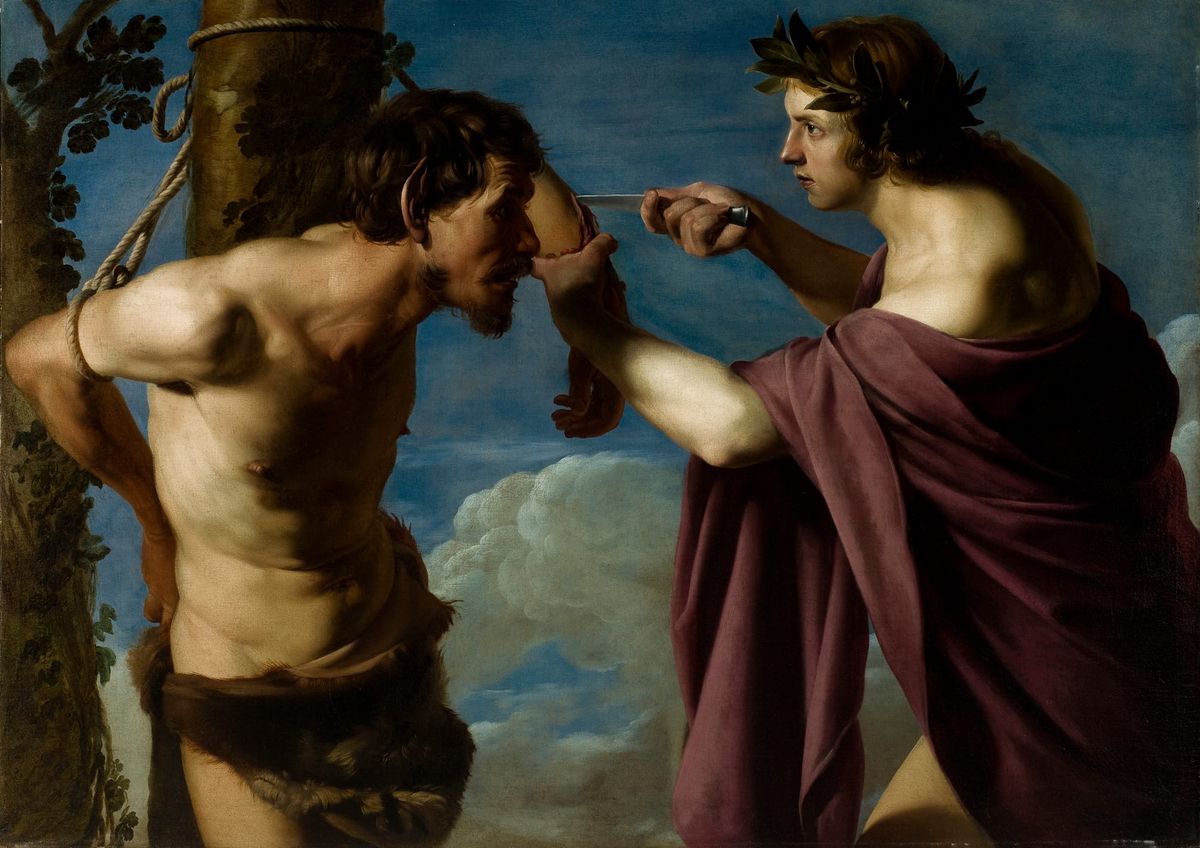
17세기 전반에 이탈리아의 화가 바르톨로메오 만프레디(Bartolomeo Manfredi)가 제작한 이 작품은, 신과의 음악 대결에서 패한 사티로스가 맞이하는 처절한 형벌과 오만한 권능이 빚어내는 비극적 긴장감을 카라바조파 특유의 강렬한 명암 대조로 투영합니다.
미국 세인트루이스 미술관(Saint Louis Art Museum)에 소장된 이 작품의 공식 소장품 등록번호는 62-2004이며, 실제 작품의 실측 규격은 높이 116.8 cm, 너비 154.9 cm의 캔버스 유채화입니다.
작가의 고뇌/비하인드
작품의 전면에는 나무에 묶인 채 고통에 일그러진 마르시아스의 팔을 아폴론이 냉혹하게 칼로 베어내는 잔혹한 처벌의 순간이 묘사되어 있으며, 신화적 오만함이 초래한 파멸의 실상을 고스란히 드러냅니다.
월계관을 쓰고 차가운 시선으로 형벌을 집행하는 아폴론의 우아한 자태와 이에 맞서 고통을 온몸으로 받아내는 마르시아스의 처연한 표정은 예술적 오만함에 대한 가혹한 대가를 가감 없이 보여줍니다.
특히 중경에는 어두운 그림자와 인물들의 상반신을 비추는 극적인 빛의 조명이 입체적인 볼륨감을 형성하고 있으며, 원경의 푸른 하늘과 뭉게구름 배경은 비극적인 현장 대기감을 차분하게 자아냅니다.
무의식 속 시선 및 심리 흐름
관람객의 시선은 가장 먼저 화면 우측에서 월계관을 쓰고 차분하면서도 매서운 눈빛으로 칼을 겨누는 아폴론의 붉은 망토 자락과 날카로운 시선으로 강렬하게 꽂힙니다.
이어 시선은 아폴론의 손끝에서 마르시아스의 팔로 이어지는 잔혹한 형벌의 접점과 고통에 일그러진 사티로스의 어두운 얼굴 표정으로 부드럽게 이동한다.
마지막으로 시선은 화면 좌측의 튼튼한 나무 기둥과 우측의 트인 하늘 배경으로 확장되며, 거대한 신의 권능 앞에서 무력하게 꺾이는 인간적 비극의 묵직한 울림을 체감하게 된다.
미술계의 평가 및 조형미
미술사학계는 이 작품을 17세기 이탈리아 바로크 미술과 만프레디안 방식의 정수이자, 신화적 서사의 잔혹한 긴장감과 인물의 해부학적 사실주의를 경이로운 명암 대비로 포착한 뛰어난 수작으로 평가합니다.
캔버스 위에 겹겹이 쌓아 올린 유채 물감은 아폴론의 자줏빛 천이 지닌 풍성한 질감, 빛을 받는 인물들의 입체적인 피부 톤, 그리고 배경의 대기감을 생생하게 살아나게 만듭니다.
신화 속 비극과 인간의 한계를 예술의 경지로 조화롭게 녹여낸 이 작품은, 오랜 시간이 지나도 변함없는 미술사적 가치를 지니고 있다.
영문 번역본 구성
Apollo and Marsyas
Created in the first half of the seventeenth century by the Italian master Bartolomeo Manfredi, this work quietly reflects the tragic tension forged between the merciless punishment inflicted upon a satyr who lost a musical contest with a god and the arrogant authority of divinity, captured through the intense chiaroscuro characteristic of the Manfredian style.
Housed in the Saint Louis Art Museum in the United States, this piece bears the official inventory number 62-2004, and the actual physical dimensions of the oil on canvas measure 116.8 cm in height and 154.9 cm in width.
The Artist's Struggle and Behind-the-Scenes
In the immediate foreground, Apollo is depicted coldly slicing into the arm of Marsyas, who is bound to a tree and twisted in agony, vividly exposing the reality of destruction brought by mythological hubris.
The graceful posture of Apollo wearing a laurel wreath and executing the punishment with a cold gaze, contrasted with the desolate expression of Marsyas enduring pain with his entire body, unsparingly reveals the harsh price of artistic arrogance.
In the middle ground, dramatic illumination cutting through dark shadows highlights the volumetric presence of the figures' upper bodies, while the blue sky and billowing clouds in the distance gently generate a poignant atmospheric weight over the tragic scene.
Subconscious Gaze and Psychological Flow
The viewer's gaze is initially drawn directly to the purple drapery and sharp gaze of Apollo on the right, who wears a laurel wreath and brandishes a blade with a composed yet fierce look.
The eye then shifts smoothly from the tip of Apollo's knife toward the focal point of the cruel punishment on Marsyas's arm and the distressed, shadowed face of the satyr warped in suffering.
Finally, the gaze drifts outward across the sturdy tree trunk on the left and the open sky in the background, evoking a heavy resonance of human tragedy helplessly crushed before the overwhelming power of a god.
Art World Evaluation and Formal Beauty
Art historians evaluate this work as a masterpiece of seventeenth-century Italian Baroque painting and the Manfredian style, successfully capturing the brutal tension of a mythological narrative and the anatomical realism of the subjects through astonishing contrast of light and shadow.
The layered application of oil paint on canvas brings the rich texture of Apollo's purple fabric, the volumetric skin tones catching the light, and the atmospheric depth of the background to breathtaking life.
Successfully fusing mythological tragedy and human limitation into the pinnacle of artistic mastery, this creation retains an enduring value in art history.
본 컨텐트의 저작권은 팔렛트제주에 있습니다. 허가없는 무단전제를 금지합니다.
Copyright © Palette Jeju. All rights reserved. Unauthorized reproduction or redistribution is strictly prohibited.