암논과 다말 Amnon and Tamar
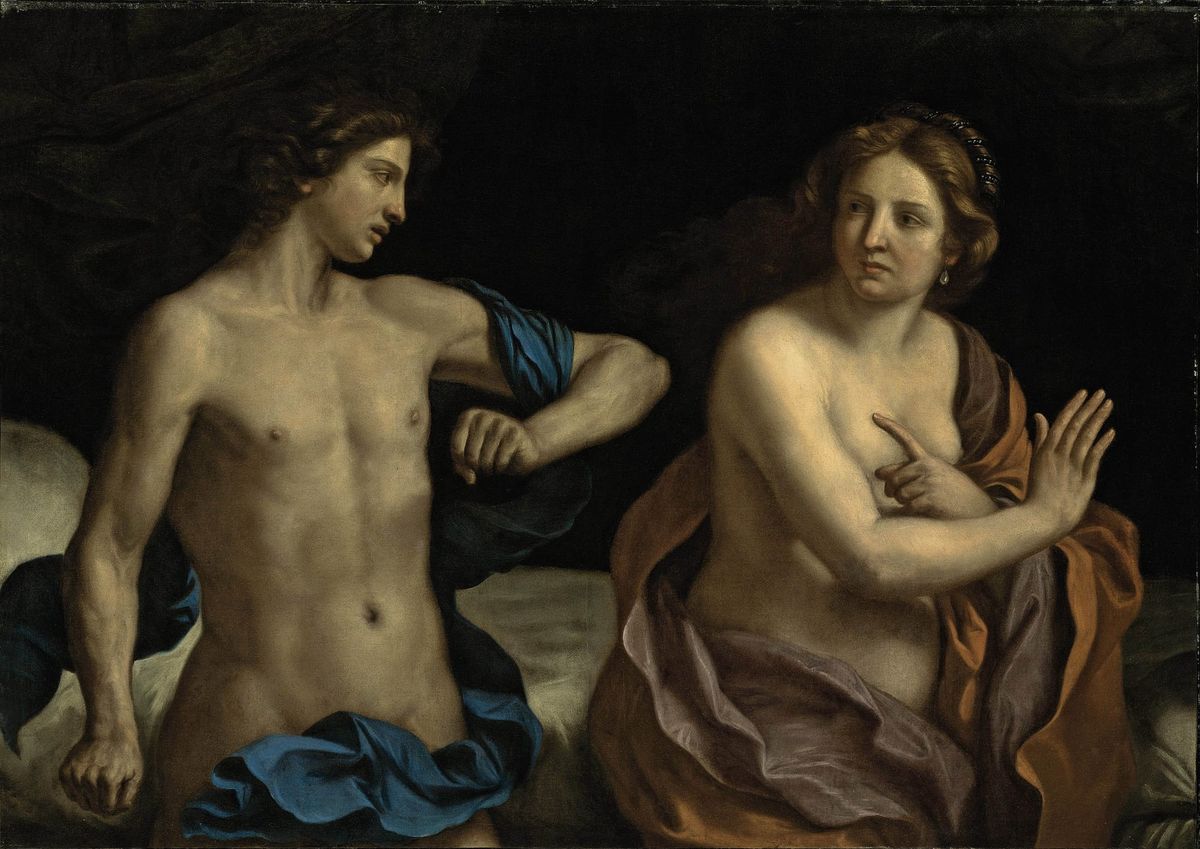
17세기 이탈리아 바로크 회화의 거장 조반니 프란체스코 바르비에리, 널리 귀에르치노(Guercino, 1591–1666)로 불리는 화가가 1649년에 완성한 유화 암논과 다말(Amnon and Tamar, 이탈리아어: Amnon e Tamar)은 123.0 cm × 168.0 cm 크기의 캔버스에 유채로 그린 대표적인 구약성경 역사화 걸작입니다. 현재 이탈리아 모데나의 에스텐세 미술관(Galleria Estense, Modena)에 소장되어 있습니다.
푸른 천을 두른 왕자의 분노와 침대 시트가 미끄러진 화실 소동
1640년대 후반 볼로냐에서 활동하던 귀에르치노는 구약성경 사무엘하에 등장하는 다윗 왕가의 비극적인 사건인 암논과 다말의 이야기를 화폭에 담아내고자 깊은 고뇌에 빠졌습니다. 이복누이 다말을 향한 맹목적인 정욕에 눈이 멀어 죄를 범한 뒤, 욕망이 순식간에 차가운 혐오와 증오로 변해 그녀를 매정하게 내쫓으려는 암논의 비열한 심리와 억울함에 치를 떠는 다말의 거부를 극적으로 대비시키고자 했습니다. 화가는 화실에 침대 무대를 마련하고, 탄탄한 체격의 젊은 남성과 우아한 여인 모델을 세운 뒤 푸른색과 황토색 비단 천을 걸치게 했습니다.
이 그림을 준비하던 날, 화실에서는 팽팽한 긴장감 속에 웃음이 절로 나오는 소동이 벌어졌습니다. 암논 역할을 맡은 모델이 허리에 푸른 비단을 두르고 주먹을 꽉 쥔 채 다말을 향해 당장 나가라며 팔꿈치를 치켜드는 격렬한 포즈를 취하고 있던 중이었습니다. 너무 힘을 준 나머지 침대 매트리스를 덮고 있던 하얀 린넨 시트가 스르륵 미끄러지면서 바닥으로 떨어졌고, 균형을 잃은 남자가 뒤로 기우뚱하며 침대 헤드를 들이받고 말았습니다.
다말 역할을 하던 여인이 거절하는 손짓을 유지한 채 쿡쿡 웃음을 터뜨렸고, 바닥에 엉덩방아를 찧을 뻔한 남자도 멋쩍은 미소를 지으며 화실 안은 한바탕 웃음바다가 되었습니다. 그 모습을 지켜보던 귀에르치노는 껄껄 웃으며, 바로 그 당황과 분노가 뒤섞여 굳어진 남자의 주먹과 차갑게 돌아선 여인의 단호한 손짓이야말로 인간의 비열한 배신을 보여줄 최고의 조형미라며 감탄했습니다. 화가는 남자의 매끄러운 피부와 팽팽한 복근, 푸른 실크 천의 깊은 주름, 그리고 여인의 진주 귀걸이와 황토색 숄의 묵직한 결까지 맹렬한 속도로 캔버스에 담아냈습니다. 사시라는 신체적 약점을 딛고 장엄한 고전주의 양식과 서정적인 명암법을 완성해 낸 거장의 원숙한 예술혼이 이 어두운 화폭 속에서 영롱하게 빛나고 있습니다.
단호하게 거부하는 여인의 손짓에서 쫓아내는 암논의 주먹으로, 시선의 심리적 여정
그림을 마주하는 순간 관람객의 무의식적 시선은 화면 오른쪽 짙은 어둠 속에서 은은한 자연광을 받아 밝게 빛나는 다말의 우윳빛 어깨와 단호하게 뻗은 두 손으로 가장 먼저 빨려 들어갑니다. 손바닥을 펼쳐 암논의 폭력을 막아서며 상대를 차갑게 쏘아보는 다말의 억울하면서도 굳센 눈빛은 보는 이에게 깊은 시각적 몰입과 함께 숨 막히는 긴장감을 선사합니다.
이어 시선은 화면 왼쪽에서 상반신을 훤히 드러낸 채 몸을 돌리고 있는 암논의 탄탄한 가슴과, 분노로 꽉 쥐어진 오른손 주먹으로 이동합니다. 죄를 짓고도 뻔뻔하게 여인을 밀쳐내며 나가라고 위협하는 왕자의 비열한 눈빛과 팔꿈치를 들어 올린 위협적인 자세를 확인하는 순간, 관람객은 죄책감을 분노로 감추려는 인간의 잔인한 본성을 온몸으로 체감하게 됩니다.
마지막으로 시선은 암논의 허리를 감싼 선명한 코발트 블루빛 비단 천의 풍성한 주름을 지나, 다말의 몸을 감싸고 있는 황토색 숄과 침대의 하얀 린넨 시트, 그리고 깊은 어둠의 배경에 멈춥니다. 칠흑 같은 어둠 속에서 오직 두 남녀의 몸짓만으로 빚어낸 비극적인 심리전을 마주하며, 관람객은 인간 영혼의 어두운 이면과 귀에르치노가 건네는 묵직한 도덕적 성찰의 울림을 가슴 깊이 마주하게 됩니다.
17세기 볼로냐 바로크 심리 역사화의 정점과 조형적 완성도, 미술계의 평가
미술계는 암논과 다말을 귀에르치노가 성경 속의 비극적인 인물 갈등을 가장 압축적이고 세련된 고전주의 명암법으로 구현해 낸 대표적인 명작으로 평가합니다.
단 두 명의 인물과 어두운 배경만으로 구성된 절제된 화면 안에서, 피부의 생생한 혈색, 푸른색과 황토색 실크의 매끄러운 질감, 그리고 격렬하게 부딪히는 두 사람의 심리적 대립을 완벽한 조형미로 표현했기 때문입니다. 인간 내면의 뒤틀린 욕망과 비장한 상처를 장엄한 시각 드라마로 완성해 낸 귀에르치노의 이 기념비적인 화폭은, 오늘날까지도 전 세계 수많은 감상자들에게 깊은 전율과 잊을 수 없는 시각적 감동을 전해주는 불멸의 명작으로 손꼽히고 있습니다.
Amnon and Tamar
Painted in 1649 in Bologna by the preeminent Italian Baroque master Giovanni Francesco Barbieri, universally celebrated as Guercino (1591–1666), Amnon and Tamar (Italian: Amnon e Tamar) is an oil on canvas measuring 123.0 cm × 168.0 cm (48.4 in × 66.1 in), preserved in the distinguished permanent collection of the Galleria Estense in Modena, Italy.
The Coiled Azure Silk and the Slipping Linen Sheet Commotion in the Studio
During the late 1640s in Bologna, Guercino dedicated his mature creative energies to intense psychological narratives from the Old Testament, focusing upon the tragic account in the Second Book of Samuel concerning Amnon and his half-sister Tamar. Having violated Tamar after feigning illness, Amnon's obsessive infatuation instantly soured into profound hatred, prompting him to violently expel her from his chambers. Guercino sought to capture this searing moment of betrayal, contrasting the cruel rejection of the prince with Tamar’s resolute moral indignation and despair. The master staged an intimate bedroom setting in his atelier, posing a muscular young model draped in cobalt silk beside a seated woman wrapped in ochre drapery.
A delightfully lively and dramatic incident occurred during the preparatory sitting. As the male model clenched his right fist and thrust his left elbow outward in a furious gesture demanding the maiden’s departure, his sudden movement pulled the white linen sheet from the studio couch. Losing his footing upon the slick mattress fabric, the youth stumbled backward against the wooden frame.
The female model broke into a quiet chuckle while maintaining her defensive hand gesture, and the atelier dissolved into warm laughter as the youth regained his balance with a grin. Guercino laughed heartily, praising the spontaneous muscular tension in the prince’s knuckles and the icy, piercing gaze of the wronged princess. The master worked with extraordinary precision, recording the luminous, supple musculature of the youth’s torso, the fluid folds of the ultramarine sash, the delicate pearl drop at Tamar’s ear, and the sculptural drape of the tawny mantle. Channeling his mature mastery over chiaroscuro, Guercino transformed this harrowing biblical narrative into an enduring visual study of moral conflict.
Subconscious Trajectory of the Gaze: From Resolute Palm to the Clenched Fist
The observer's subconscious gaze is immediately magnetized by the right register, drawn to the radiant, porcelain skin of Tamar's bare shoulders and her raised hands held up in absolute refusal. Her resolute, searching profile, parted lips, and defensive palms establish an instant focal point of violated innocence, moral dignity, and unyielding resistance.
The visual path then shifts leftward across the luminous void toward the sun-drenched torso of Amnon, following the diagonal thrust of his muscular arm and the tightly clenched fist resting beside his hip. Taking in the prince’s cold, contemptuous scowl and his raised elbow gesturing toward the door, the viewer directly experiences the chilling brutality of his sudden hatred and the psychological rupture between the two figures.
Finally, the visual trajectory sweeps across the shimmering, crumpled folds of the vibrant blue drapery wrapping Amnon's loins, descending past the white bed linen before resting upon Tamar’s heavy ochre and violet mantle. Observing the dramatic harmony between enveloping tenebrism, tactile material realism, and intense psychological confrontation, the spectator perceives the timeless nobility of sacred justice and the profound aesthetic solace Guercino embedded within the canvas.
The Monument of Bolognese Psychological Realism: Critical Legacy
Art historians revere Amnon and Tamar as a supreme pinnacle of Guercino’s mature career, demonstrating his flawless capacity to distill complex literary tragedy into a focused, two-figure psychological drama.
By rendering delicate textural distinctions between supple flesh, shimmering silk, crisp linen, and rough wool within a unified chiaroscuro scheme, Guercino elevated a difficult biblical confrontation into an exquisite aesthetic symphony. This grand historical canvas endures as an inspiring testament to the master's enduring creative genius, celebrating the profound power of human drama and the transformative grace of living art.
본 컨텐트의 저작권은 팔렛트제주에 있습니다. 허가없는 무단전제를 금지합니다.
Copyright © Palette Jeju. All rights reserved. Unauthorized reproduction or redistribution is strictly prohibited.