암굴의 성모 (Virgin of the Rocks)
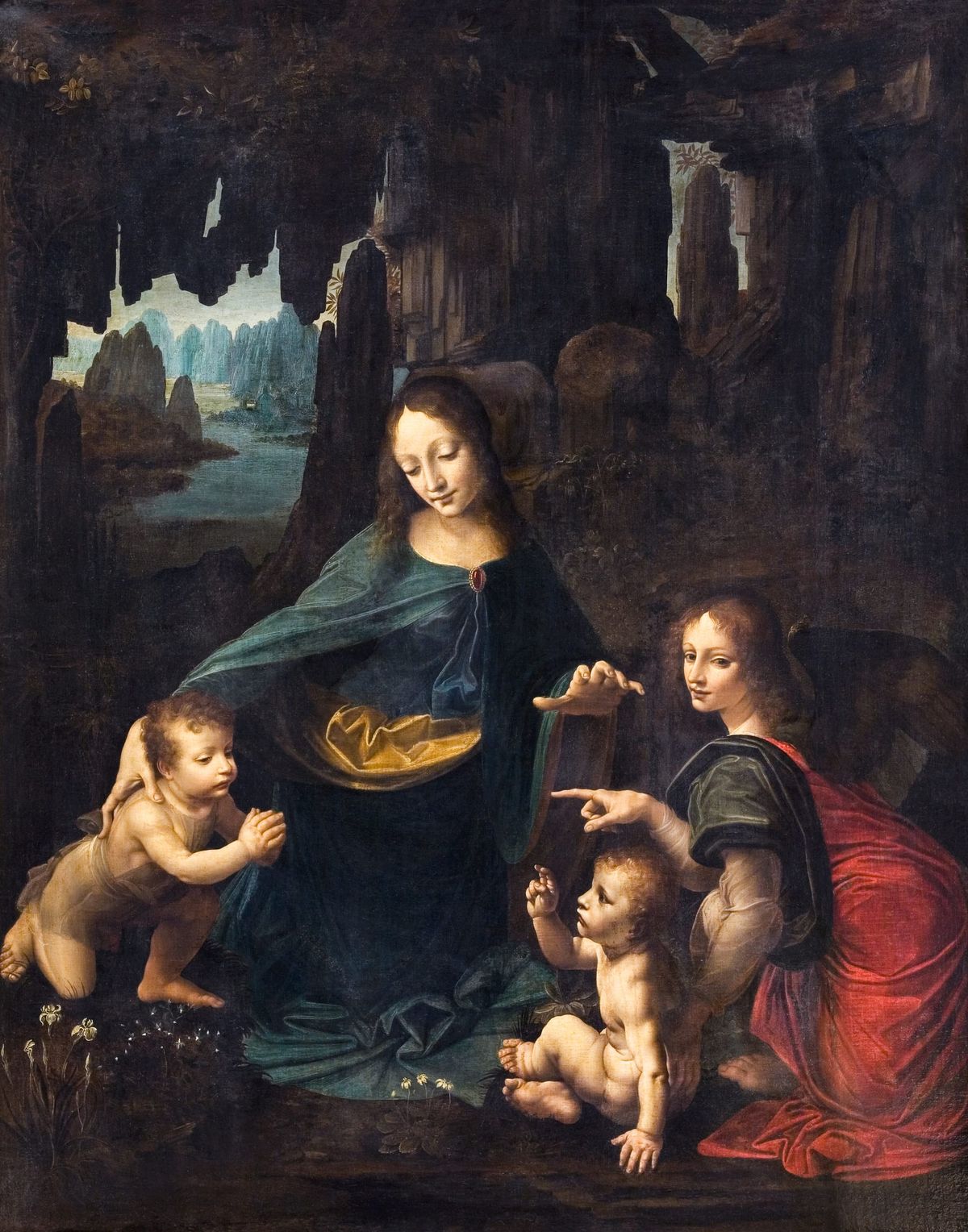
이 작품은 르네상스 시기 천재 거장 레오나르도 다 빈치(Leonardo da Vinci, 1452–1519)가 1483–1486년경 완성한 제단화 걸작 <암굴의 성모 (Virgin of the Rocks / La Vierge aux rochers)>로, 실제 규격은 가로 122cm, 세로 199cm 크기이며 현재 프랑스 파리의 루브르 박물관(Musée du Louvre, Paris)에 소장되어 있습니다. 어두운 바위 동굴 속에서 성모 마리아와 아기 예수, 어린 세례 요한, 그리고 천사 대천사 우리엘이 신성하게 모여 교감을 나누는 순간을 압도적인 기법으로 담아낸 명작입니다.
미술사학계의 도상학적 분석에 따르면, 작품 속 인물들은 레오나르도 특유의 완벽한 3차원 피라미드 구도를 이룹니다. 성모 마리아는 오른손으로 어린 세례 요한을 따스하게 감싸고 있으며, 왼손은 아기 예수의 머리 위에서 축복과 보호의 손짓을 건네고 있습니다. 그 아래 아기 예수는 손을 들어 세례 요한에게 축복을 내리고, 옆에 앉은 천사는 손가락으로 세례 요한을 가리키며 감상자를 정면으로 응시합니다. 배경의 날카로운 뾰족 바위와 신비로운 습지 식물들은 인류 구원의 전조와 대지의 모성성을 상징하며, 몽환적인 스푸마토 명암법과 어우러져 천상의 신비로움을 자아냅니다.
이 화폭에는 르네상스 미술사를 뒤흔든 대담한 계약 분쟁과 비하인드 스토리가 얽혀 있습니다. 이 작품은 밀라노의 무염시태 형제회가 성 프란체스코 대성당 제단화로 의뢰한 것이었습니다. 그러나 완성 후 레오나르도는 계약금 보수에 대한 강한 불만을 제기했고, 주문자 측은 후광(Halo)이나 십자가 지팡이 같은 전통적인 성인 기호가 누락되어 교리상 불경하다는 이유로 지급을 거부했습니다. 이 치열한 갈등 끝에 레오나르도는 이 루브르 버전을 다른 귀족에게 개별 매각해 버렸고, 훗날 법적 합의를 통해 후광과 십자가를 추가한 두 번째 버전을 제작해 전달했으니 그것이 현재 런던 내셔널 갤러리에 있는 작품입니다. 후대 미술사학자들은 이 루브르 첫 번째 버전을 레오나르도 본인의 순수한 손길이 100% 반영된 스푸마토 기법의 결정판이자, 르네상스 회화의 독창적 전환점으로 높이 평가합니다.
이 그림을 가만히 바라보고 있으면 보는 이의 무의식 속에서 정교하고 유연한 방사형 시선 순환 구조가 작동합니다. 가장 먼저 화면 우측에서 감상자를 또렷하게 응시하는 천사의 신비로운 눈빛과 세례 요한을 가리키는 손가락 끝으로 시선이 끌려들어 갑니다. 이후 기도하는 세례 요한을 지나 그를 감싸 안은 성모 마리아의 자애로운 표정과 허공에 얹어진 왼손 라인을 타고 내려와, 축복을 내리는 아기 예수의 천진난만한 손짓에 머뭅니다. 마지막으로 바위 구멍 사이로 비쳐드는 원경의 아득한 빛을 타고 다시 천사의 얼굴로 되돌아오는 유연한 시선 흐름을 완성합니다. 이러한 시각적 순환 유도는 대뇌 인지 영역에서 찰나의 긴장감을 해쇄하고, 거장의 거대한 조형적 질서 속에서 깊은 내면의 평온과 안식을 선사합니다.
This masterpiece, titled Virgin of the Rocks (La Vierge aux rochers), was created between 1483 and 1486 by Renaissance genius Leonardo da Vinci (1452–1519). Measuring 122 cm in width by 199 cm in height, this monumental oil on panel (later transferred to canvas) is currently preserved in the Musée du Louvre in Paris, France. Depicting the Virgin Mary, the Infant Christ, the young Saint John the Baptist, and an angel gathered within a shadowy, geological grotto, the painting stands as a supreme triumph of High Renaissance art.
Art historical scholarship highlights the flawless three-dimensional pyramidal geometry and rich theological narrative embedded within the composition. The Virgin Mary sits at the apex, extending her right arm protectively around the kneeling infant John while hovering her left hand in blessing above Jesus. The Infant Christ returns a gesture of benediction toward John, while the seated angel Uriel points gracefully at John while engaging the viewer with a piercing, direct gaze. The jagged basalt rock formations and meticulously detailed flora symbolize both primal creation and divine purity, illuminated through Leonardo's peerless sfumato shading.
Fascinating historical backstories and legendary post-Renaissance evaluations define the legacy of this iconic panel. Originally commissioned by the Confraternity of the Immaculate Conception in Milan for their chapel altar, the work became the center of a bitter two-decade legal feud over payment and theological iconography. The patrons objected to the absence of traditional halos and the cross-staff, prompting Leonardo to sell this original masterwork privately to a third party. Decades later, a second, more conventionally iconographic version was produced, which now resides in London's National Gallery. Modern art historians universally revere this Louvre version as the definitive, fully autograph masterpiece where Leonardo's revolutionary sfumato and atmospheric perspective reached absolute perfection.
Gazing upon this majestic composition gently awakens a subtle subconscious visual rhythm. The viewer’s eye originates at the angel’s captivating gaze and pointing finger, glides across the reverent posture of the infant John, and ascends along Mary’s embracing mantle toward her outstretched hand. The gaze then descends smoothly to the blessing figure of the Infant Jesus and floats across the illuminated cavernous background back to the angel's face, completing a soft, circular loop. This harmonious visual movement dissolves inner cognitive tension, inviting the mind into a quiet sanctuary of profound awe and serene contemplation.
본 리뷰에서 작품을 제외한 컨텐츠의 저작권은 팔렛트제주에 있습니다.
"퍼블릭도메인 고전명화"를 제외한 모든 창작 콘텐츠는 저작권법 제4조 및 제10조에 의거하여 보호됩니다. 무단 도용시 저작권법 제136조(벌칙)에 의거, 당사의 사전 서면 승인 없는 저작권 침해 행위를 금지합니다.