아기와 어린 양 습작 (Studies of the Infant Christ with a Lamb)
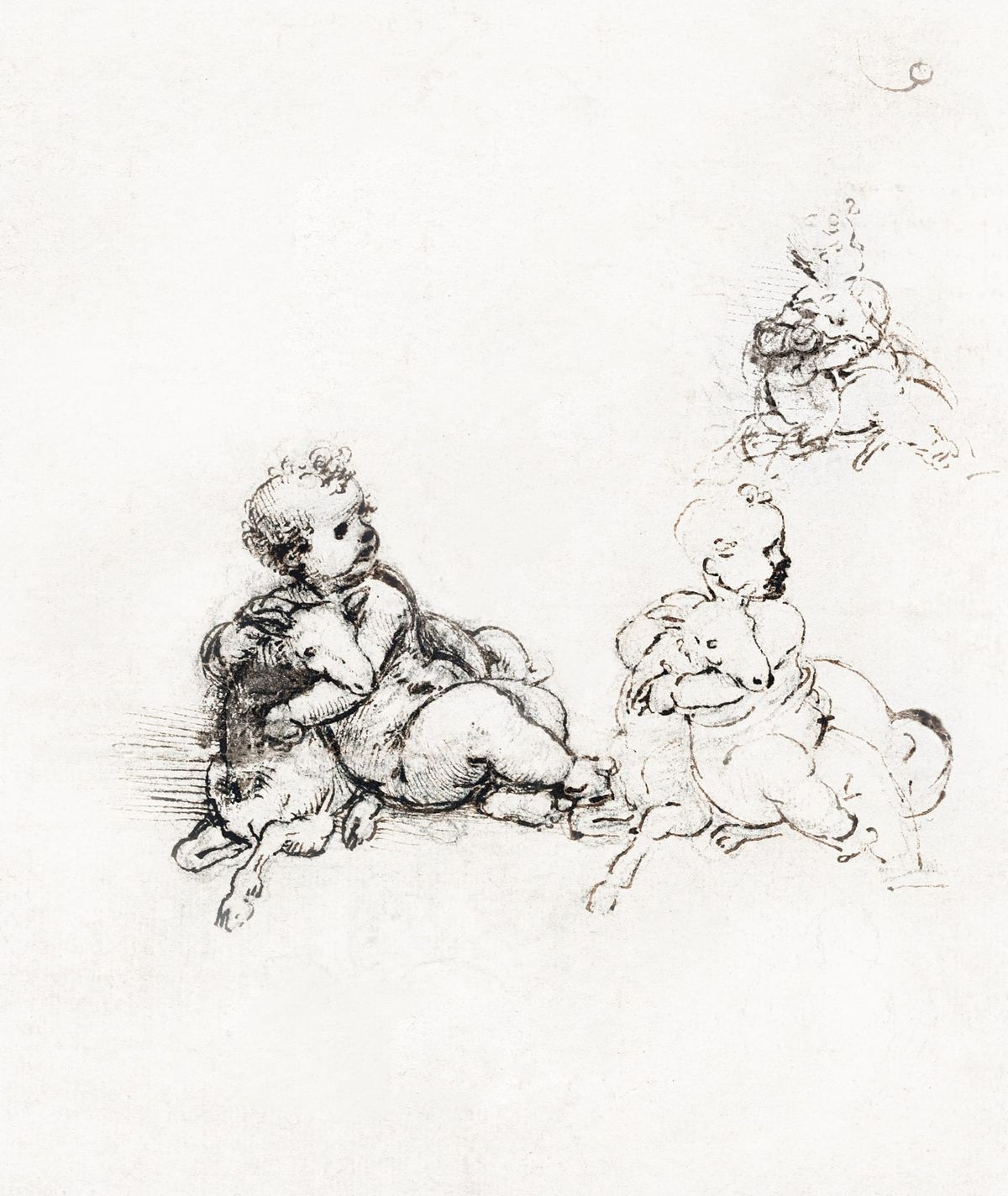
이 작품은 르네상스 시기 천재 거장 레오나르도 다 빈치(Leonardo da Vinci, 1452–1519)가 1503–1506년경 완성한 희귀 아이디어 드로잉 <어린 양을 안고 있는 아기 예수 습작 (Studies of the Infant Christ with a Lamb)>으로, 현재 영국 로열 컬렉션(Royal Collection Trust, Windsor Castle)에 소장되어 있습니다. 여백의 종이 위에 잉크와 펜, 그리고 차분한 크레용 선으로 어린 양을 끌어안고 연출해 보는 아기 예수의 다양한 동작을 정교하고 입체적으로 탐구한 수작입니다.
미술사학계의 도상학적 분석에 따르면, 종이 위에 탐구된 아기 예수와 어린 양의 결합은 단순한 아동의 유희가 아닌 인류 구원과 수난이라는 숭고한 알레고리를 내포합니다. 아기 예수가 끌어안은 어린 양은 '하나님의 어린양(Agnus Dei)'으로서 훗날 십자가에서 흘릴 희생을 상징합니다. 레오나르도는 아이의 포동포동한 신체 곡선과 어린 양을 붙잡으려 비틀어지는 인체의 동세를 정밀하게 계산함으로써, 신성한 기독교적 도상학을 인간적인 생동감과 완벽하게 결합해 냈습니다.
이 화폭에는 거장의 위대한 대작 탄생을 위한 비밀스러운 비하인드 스토리와 역사적 평가가 담겨 있습니다. 이 드로잉 스케치북 페이지는 다 빈치가 파리 루브르 박물관의 명작 <성 안나와 성모자>를 완성해 가는 과정에서 아기 예수의 구도를 정립하기 위해 구상한 결정적 아이디어 드로잉입니다. 완성작 유화에서는 예수의 자세가 다소 다르게 완성되었지만, 이 종이 위에는 거장이 마음에 드는 구도를 찾기 위해 인체의 무게중심과 해칭을 수없이 겹쳐 그려 넣은 창작의 순간이 날것 그대로 보존되어 있습니다. 후대 미술사학자들은 이 습작을 레오나르도의 순간적 직관과 정교한 기하학적 사고방식을 가감 없이 보여주는 르네상스 드로잉의 소중한 정수로 평가합니다.
이 그림을 들여다보고 있으면 보는 이의 무의식 속에서 은은한 방사형 시선 순환 구조가 부드럽게 작동합니다. 화면 중앙 왼쪽의 짙고 묵직한 펜선으로 묘사된 아기 예수의 얼굴과 어린 양의 머리에서 시작된 시선은, 우측의 유연하게 스케치된 두 번째 아기 예수의 동선을 거쳐 우측 상단 소형 스케치의 섬세한 필선으로 피어오릅니다. 이후 여백의 공간을 타고 다시 중앙의 강렬한 인체 해칭과 어린 양의 구도로 되돌아오는 유연한 시선 흐름을 완성합니다. 이러한 시각적 순환 유도는 대뇌 인지 영역에서 찰나의 피로감을 해쇄하고, 거장의 날것 그대로의 미완성 필선 속에서 내면의 고요한 평온과 안식을 선사합니다.
This masterpiece, titled Studies of the Infant Christ with a Lamb, was created around 1503–1506 by Renaissance genius Leonardo da Vinci (1452–1519) and is currently preserved in the Royal Collection Trust at Windsor Castle, United Kingdom. Executed in pen, ink, and black chalk, this rare sheet captures multiple exploratory poses of the Christ Child playfully yet reverently embracing a young lamb.
Art historical scholarship highlights the profound theological allegory embedded within these quick, dynamic studies. The lamb directly prefigures Christ's ultimate identity as the Agnus Dei, destined for sacrificial redemption. Leonardo carefully mapped the child's muscular twisting movement and organic weight shifts, blending classical anatomical precision with a touching sense of human intimacy and divine purpose.
Fascinating historical backstories and glowing post-Renaissance evaluations define this preparatory sheet. These sketches belong to the intensive sequence of preliminary studies Leonardo created while designing his celebrated oil painting The Virgin and Child with Saint Anne, now in the Louvre. While the final painting modified the Infant’s posture, this sheet preserves the raw, unedited genius of Leonardo experimenting with form, light, and hatching across the paper. Modern art historians revere this page as a captivating window into Leonardo's inventive process, celebrating its spontaneous vitality and structural mastery.
Engaging with these intimate studies gently activates a subtle subconscious visual rhythm. The viewer’s eye originates at the darker, heavily inked figure on the left holding the lamb, sweeps rightward along the lighter contour sketch, and ascends toward the delicate miniature study near the top right. The gaze then floats naturally across the empty space back to the main central figure, completing a soft, circular loop. This harmonious visual movement dissolves inner cognitive tension, inviting the mind into a quiet sanctuary of artistic wonder and serene contemplation.
본 리뷰에서 작품을 제외한 컨텐츠의 저작권은 팔렛트제주에 있습니다.
"퍼블릭도메인 고전명화"를 제외한 모든 창작 콘텐츠는 저작권법 제4조 및 제10조에 의거하여 보호됩니다. 무단 도용시 저작권법 제136조(벌칙)에 의거, 당사의 사전 서면 승인 없는 저작권 침해 행위를 금지합니다.