아기 새들에게 모이를 주는 아이들 - Children Feeding Young Birds
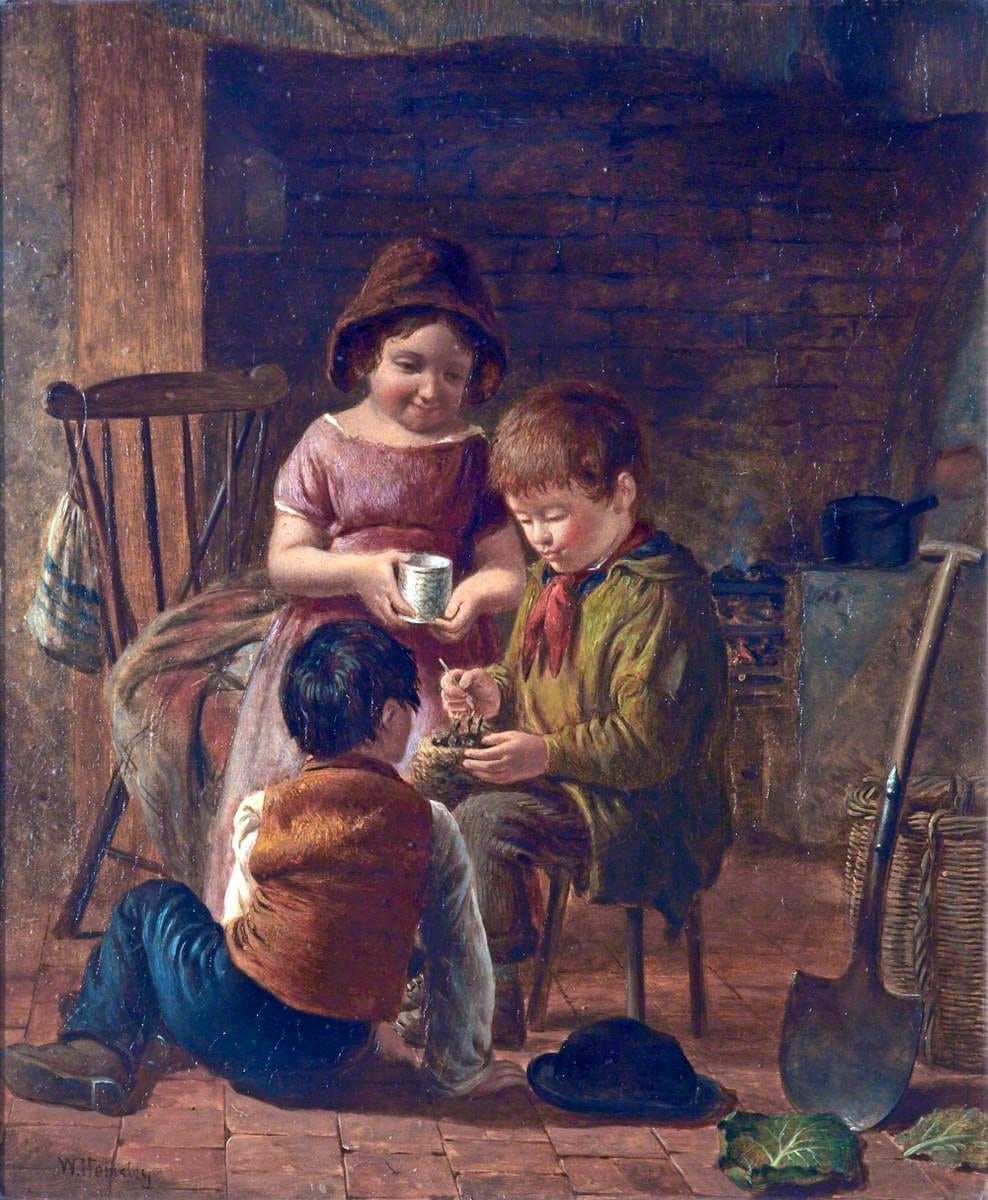
영국의 장르화가 윌리엄 헴슬리(William Hemsley)가 19세기 중반에 완성한 이 작품은 패널에 유채(Oil on panel) 기법으로 제작되었으며, 영국의 윌리엄슨 미술관 및 박물관(Williamson Art Gallery and Museum)에 소장되어 있습니다. 크기는 약 30 x 25cm 내외의 정교한 소품 형태입니다. 작가는 어두스름하고 소박한 시골 집 실내를 배경으로, 어린 아이들이 바구니 속 어린 새들에게 정성스레 모이를 주며 몰입해 있는 따스한 순간을 포착했습니다. 유화 특유의 명암 대조(Chiaroscuro) 기법을 활용하여 아이들의 얼굴과 손길에 명확한 빛을 집중시킴으로써 인물의 섬세한 표정과 소박한 옷감의 질감을 우아하게 표현해 낸 화풍이 돋보입니다.
윌리엄 헴슬리는 19세기 빅토리아 시대 서민층과 시골 아이들의 순박한 일상을 유머러스하고 따뜻한 시선으로 담아내며 당대 영국 대중과 비평가들에게 커다란 사랑을 받았습니다. 특히 동식물이나 소동물과 교감하는 어린아이의 모습은 빅토리아 시대 관람객들에게 가정의 화목함, 자애로움, 그리고 내면적 순수성을 상징하는 대표적인 주제로 통했습니다. 방 한구석의 삽과 바구니, 서정적인 소품들이 자아내는 소박한 풍경 속에서 아기 새를 살피는 아이들의 진지하고 온화한 표정은 당대 미술 비평가들로부터 서정적 온기와 인간미를 완벽하게 연출했다는 찬사를 받았습니다. 오늘날 후대 미술사에서도 19세기 영국 장르화의 사실적 기교와 도덕적 정서를 정답게 담아낸 수작으로 높은 평가를 받고 있습니다.
관람객의 시선은 가장 빛이 집중되고 이야기의 중심이 되는 중앙의 조그만 새둥지 바구니와 모이를 주는 소년의 조심스러운 손끝으로 가장 먼저 끌려갑니다. 작은 아기 새에게 온 신경을 기울이는 소년의 진지한 눈빛에서 시작된 시선은 위쪽에서 작은 잔을 들고 미소 짓는 소녀의 따뜻한 얼굴로 올라가며 소박하고 다정한 동심의 세계에 시각적으로 몰입하게 됩니다. 이어 시선은 바닥에 앉아 새들을 호기심 어린 눈빛으로 바라보는 막내아이의 뒷모습과 옆에 놓인 모자와 삽 등의 생활 소품들로 자연스럽게 흐르는데, 이 순간 관람객의 심리는 아기자기한 볼거리에 대한 흥미에서 마음 깊은 곳의 안도감과 정겨운 평온함으로 자연스럽게 전환됩니다. 마지막으로 그늘진 벽돌 벽면과 은은한 조명이 감도는 실내 배경 전체로 시선이 넓어지면서, 시골집 작은 공간을 가득 채우는 포근하고 정다운 온기 속에 온전히 빠져들게 됩니다.
Children Feeding Young Birds
Completed in the mid-nineteenth century by the British genre painter William Hemsley, this charming work was executed in oil on panel and is preserved in the Williamson Art Gallery and Museum in the United Kingdom. Measuring approximately 30 by 25 centimeters, the painting captures a quiet, intimate moment within a modest rural interior where three children gather attentively to feed a nest of fledglings. To highlight the delicate interaction and subtle expressions of the children against the dark, rustic background, Hemsley skillfully employed chiaroscuro lighting, bathing their faces and hands in a warm, gentle glow.
Hemsley achieved widespread acclaim during the Victorian era for his affectionate and often humorous depictions of country life and childhood innocence. In nineteenth-century British art, scenes of children caring for small animals or birds were cherished as poignant symbols of gentleness, moral purity, and domestic harmony. Surrounded by everyday domestic tools such as a shovel, a woven basket, and simple clay crockery, the children's earnest expressions earned high praise from contemporary critics for their genuine warmth and emotional resonance. Today, art historians continue to celebrate the painting as a delightfully detailed and heartwarming example of Victorian genre art.
Upon viewing the panel, the viewer's gaze is instantly drawn to the central focus of light: the small nest basket and the boy's careful hands delivering food to the fledglings. From the boy's absorbed expression, the eye glides naturally upward to the gentle, approving smile of the girl holding a small cup, instilling an immediate sense of quiet delight. The visual journey then sweeps down to the curious posture of the younger child seated on the tiled floor and the humble objects around them, smoothly transitioning the viewer's psychological state into a feeling of peaceful warmth and nostalgic comfort. Finally, as the eye wanders into the soft, shadowed textures of the brick wall and background, one becomes fully immersed in the cozy, timeless atmosphere of a loving home.
본 리뷰에서 작품을 제외한 컨텐츠의 저작권은 팔렛트제주에 있습니다.
"퍼블릭도메인 고전명화"를 제외한 모든 창작 콘텐츠는 저작권법 제4조 및 제10조에 의거하여 보호됩니다. 무단 도용시 저작권법 제136조(벌칙)에 의거, 당사의 사전 서면 승인 없는 저작권 침해 행위를 금지합니다.