아기 마르셀 룰랭 - Baby Marcelle Roulin
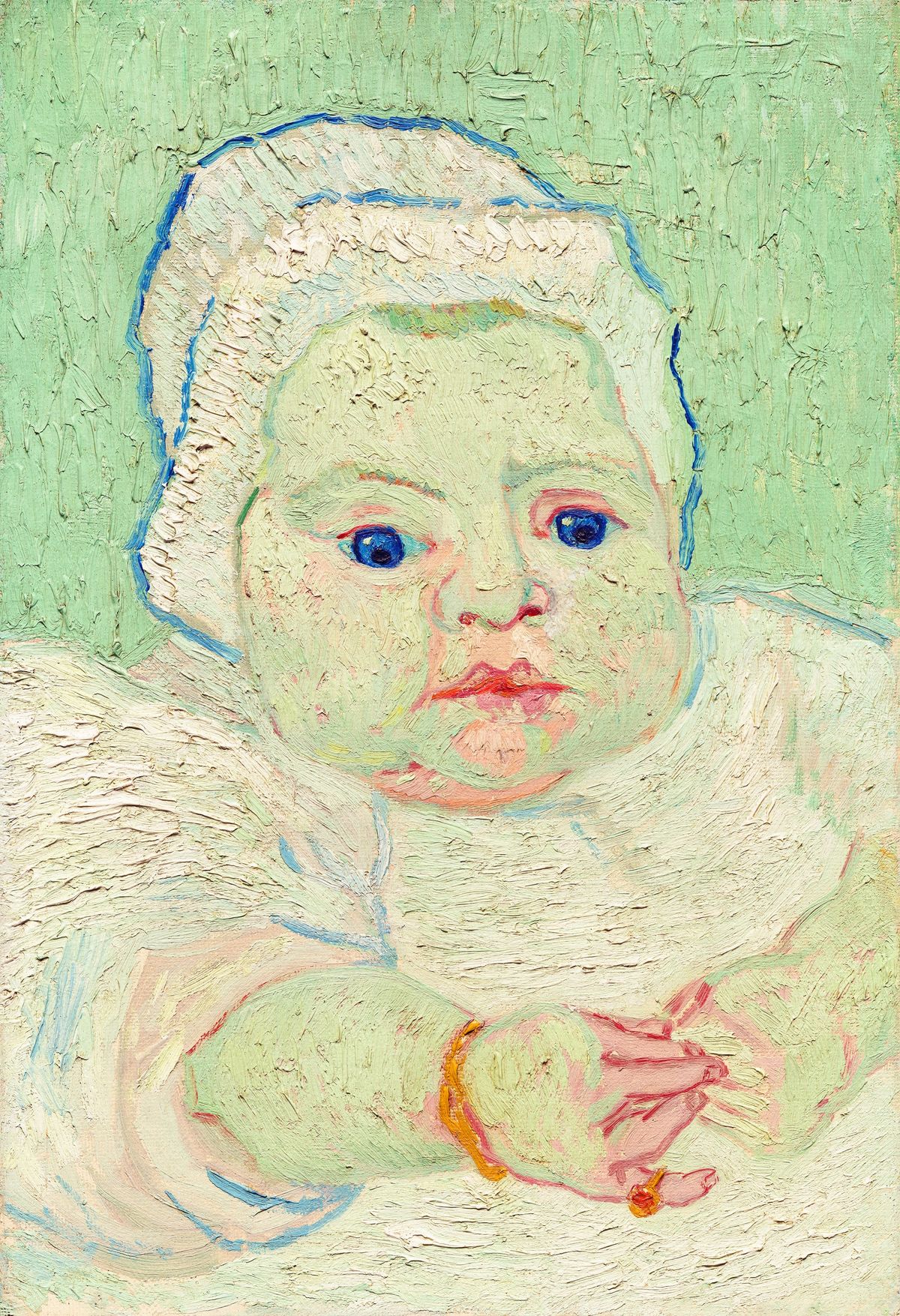
네덜란드의 후기 인상주의 거장 빈센트 반 고흐가 1888년 12월 프랑스 남부 아를에서 제작한 유화 작품으로, 캔버스에 유채 기법으로 완성되었으며 크기는 세로 35cm, 가로 24.5cm입니다. 현재 미국 워싱턴 D.C.에 위치한 국립미술관에 영구 소장되어 있습니다. 화면을 온화하게 감싸는 연녹색 배경과 순백의 모자 및 옷, 그리고 캔버스 표면에 도톰하게 조각하듯 올린 임파스토 기법과 선명한 푸른 눈동자의 터치는 반 고흐 아를 시기 인물화가 도달한 순수한 서정성과 회화적 깊이를 웅변합니다.
이 작품의 주인공은 아를 시절 반 고흐의 가장 각별한 친구이자 영혼의 버팀목이었던 우체부 조제프 룰랭(Joseph Roulin)의 막내딸 마르셀 룰랭입니다. 마르셀이 태어난 지 불과 몇 달 되지 않았을 무렵, 고흐는 룰랭 가족 모두의 초상화를 연작으로 그리며 가족의 온기와 인간적인 유대에 깊은 감동을 받았습니다. 동생 테오에게 보낸 편지에서 그는 갓 태어난 아기의 맑고 순진무구한 생명력을 화폭에 담는 과정에서 이루 말할 수 없는 마음의 평화와 순수한 창작의 기쁨을 누렸다고 고백했습니다. 미술사학계와 평단에서는 전통적인 영유아 초상화의 도상을 뛰어넘어, 두터운 질감과 대담한 색채 구성을 통해 생명의 원초적인 순수함과 숭고한 탄생의 온기를 가장 독창적으로 구현해 낸 근대 인물화의 걸작으로 평가합니다.
작품을 마주하는 관람자의 무의식적인 시선은 보석처럼 반짝이며 세상을 호기심 어린 눈으로 응시하는 아기의 맑고 푸른 두 눈동자에 가장 먼저 머뭅니다. 티 없이 맑은 눈빛은 현대인의 마음에 쌓인 시각적 피로와 복잡한 잡념을 단숨에 정화하며 순수한 정서적 이완을 이끌어냅니다. 이어 시선은 아기의 부드러운 뺨과 작은 입술을 지나, 화면 하단에서 앙증맞게 모아 쥔 작고 통통한 손과 손목의 노란 띠 장식으로 자연스럽게 이동합니다.
마지막으로 시선은 아기를 부드럽게 감싸 안고 있는 새하얀 보행복의 풍성한 질감과 화면 전체에 싱그럽게 흐르는 연녹색 배경으로 확장됩니다. 아기의 천진난만한 시선에서 출발해 배경의 포근한 온기로 귀결되는 이 시각적 여정은 관람자의 뇌파를 안정시키고 깊은 심리적 안도감과 내면의 평온을 선사합니다. 갓 피어난 생명이 전하는 무조건적인 따스함은 보는 이의 무의식 속에 잠재된 불안과 긴장을 녹여내고, 삶을 긍정하게 만드는 순수한 위로와 맑은 회복 탄력성을 불어넣어 줍니다.
Baby Marcelle Roulin - Baby Marcelle Roulin
Painted in December 1888 during his stay in Arles, France, this intimate masterwork by Dutch Post-Impressionist Vincent van Gogh is an oil on canvas measuring 35 by 24.5 centimeters. It is currently preserved in the permanent collection of the National Gallery of Art in Washington, D.C., as part of the Chester Dale Collection. Defined by a soothing pastel-green background, radiant white garments sculpted with a rich impasto, and piercing cobalt-blue eyes, the portrait exemplifies the pure lyrical tenderness and expressive power of Van Gogh's Arles period.
The subject of this tender work is Marcelle Roulin, the youngest daughter of the local postal clerk Joseph Roulin, who was Van Gogh's closest confidant and loyal friend in Arles. When Marcelle was only a few months old, Van Gogh embarked on an ambitious series of portraits capturing each member of the Roulin family, deeply moved by their domestic warmth and unpretentious humanity. In letters to his brother Theo, he warmly described his joy in painting the infant, noting how the pure, untouched vitality of the newborn brought an immense sense of serenity and emotional renewal to his heart. Modern art historians and critics celebrate this painting as a groundbreaking modern infant portrait that transcends sentimentality, transforming the fragile wonder of new life into a luminous monument of innocence and sacred warmth.
Upon engaging with the canvas, the viewer's subconscious gaze is immediately captivated by the luminous clarity of the baby's wide, brilliant blue eyes. This innocent and candid gaze disarms inner stress, instantly dissolving daily anxieties and establishing a direct emotional connection. The eye then drifts across the soft, textured modeling of the cheeks and lips before descending to the tiny, folded hands and the warm yellow band accentuating the delicate wrist.
Finally, the visual journey sweeps outward across the thick, rhythmic brushwork of the pristine white bonnet and swaddling gown, resting gently against the serene, pale green atmosphere. Moving seamlessly from the magnetic presence of the child to the enveloping tranquility of the setting, this organic rhythm fosters a profound feeling of psychological grounding, emotional catharsis, and peaceful equilibrium. The radiant innocence of the newborn offers the observer an uplifting sanctuary of peace, restoring mental vitality and inspiring gentle optimism.
본 리뷰에서 작품을 제외한 컨텐츠의 저작권은 팔렛트제주에 있습니다.
"퍼블릭도메인 고전명화"를 제외한 모든 창작 콘텐츠는 저작권법 제4조 및 제10조에 의거하여 보호됩니다. 무단 도용시 저작권법 제136조(벌칙)에 의거, 당사의 사전 서면 승인 없는 저작권 침해 행위를 금지합니다.