액자 속의 소녀(Girl in a Picture Frame)
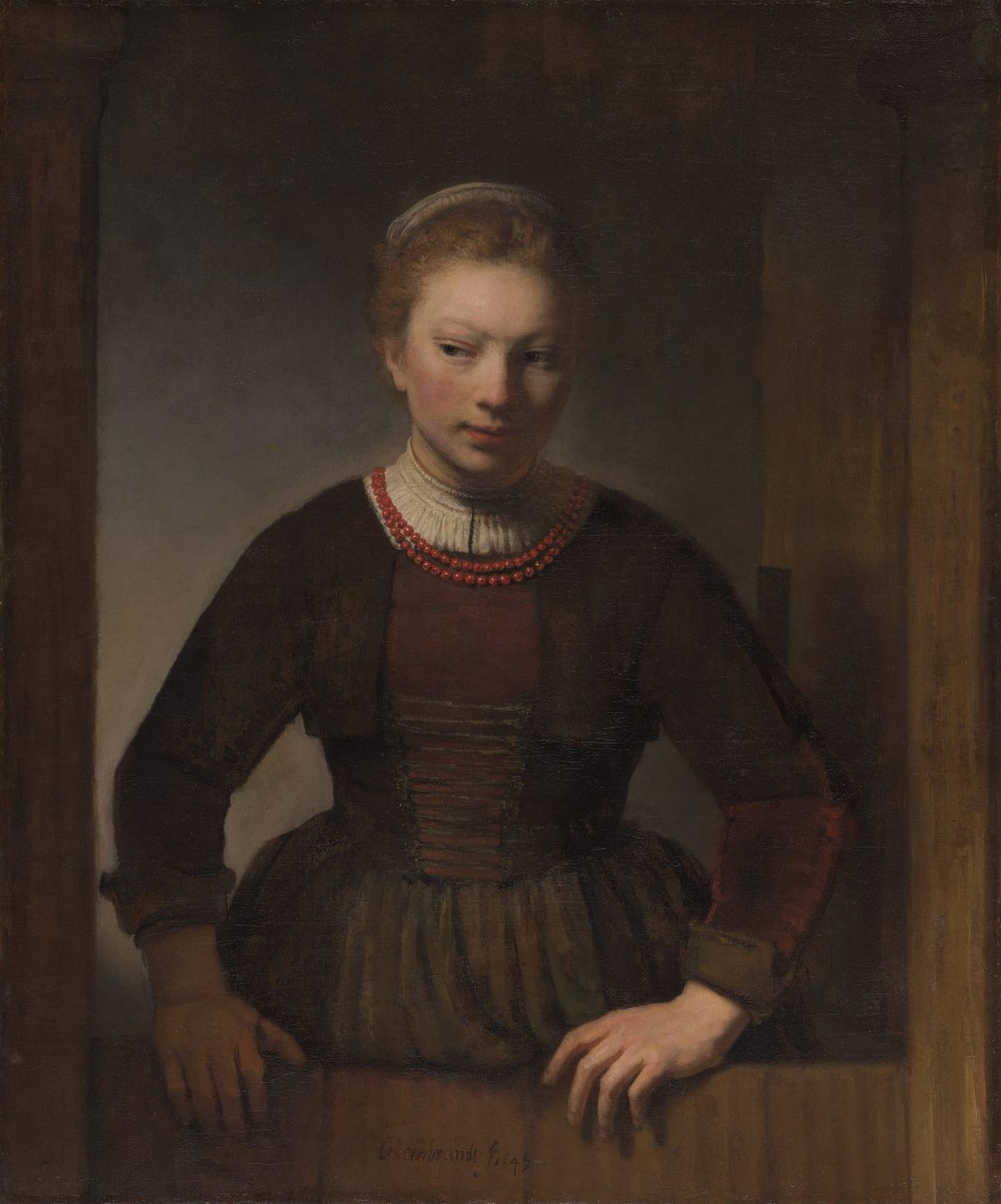
1641년 17세기 네덜란드 황금기를 대표하는 거장 렘브란트 반 레인(Rembrandt van Rijn)이 제작한 유화 작품 《액자 속의 소녀》는 패널에 유채로 그려진 초상화로, 현재 폴란드 바르샤바 왕궁 미술관(Royal Castle in Warsaw)에 소장되어 있으며 실제 크기는 약 105.5 × 76 cm입니다.
이 화면은 그림 틀(액자) 가장자리에 두 손을 올린 채 관람객 쪽을 살몃 바라보는 어린 소녀의 순박하고 신비로운 자태를 렘브란트 특유의 트롬프뢰유(Trompe-l'œil, 눈속임 기법)와 정교한 빛의 조율로 포착해 낸 걸작입니다. 화가는 소녀의 발그레한 뺨과 붉은 산호 목걸이, 단정한 흰 칼라, 그리고 손가락이 액자 목재 틀을 짚고 있는 극적인 착시 효과를 빛과 그림자의 대비 속에서 생생하게 부각시켰습니다.
작품 속에는 렘브란트의 명작이 걸어온 드라마틱한 수난과 보존의 비하인드 스토리가 흐릅니다. 이 작품은 원래 폴란드 마지막 왕 스타니스와프 아우구스트 포니야토프스키의 컬렉션이었으나, 2차 세계대전 당시 나치에 의해 수탈당하는 비운을 겪었습니다. 이후 극적으로 회수되어 란츠코론스키(Lanckoroński) 가문의 기증을 통해 바르샤바 왕궁으로 돌아왔으며, 렘브란트가 환영적 입체감을 극대화하기 위해 착시용 그림 틀을 화면 자체에 그려 넣은 대표적인 눈속임(Trompe-l'œil) 기법의 수작으로 널리 알려졌습니다.
후대 평단과 관객들은 이 작품을 2차원의 평면 캔버스 위에 3차원의 현실 공간을 완벽히 재현해 낸 렘브란트 1640년대 초상 예술의 정수로 평가합니다. 착시를 일으키는 소녀의 손길과 맑고 그윽한 눈빛은 관객에게 실재와 예술의 경계를 넘나드는 깊은 정서적 감동과 흥미를 선사합니다.
이 그림을 마주하는 관람객의 무의식적 시선은 가장 온화한 빛이 집중되는 소녀의 이마와 붉은빛이 감도는 발그레한 뺨, 그리고 좌측을 부드럽게 응시하는 맑은 눈빛으로 가장 먼저 끌려갑니다. 수줍은 듯 온화한 소녀의 표정은 관람객의 마음에 묵직한 시각적 중심과 정숙한 평온함을 안겨줍니다.
이어 시선은 목을 감싸고 있는 백색 칼라와 영롱한 붉은 산호 목걸이를 지나, 그림 하단 목재 액자 틀 위로 직접 튀어나올 듯 손가락을 얹고 있는 소녀의 두 손으로 자연스럽게 이동합니다. 액자를 짚고 있는 손가락의 정교한 입체감과 그림자 효과는 캔버스 밖 감상자의 실제 공간과 작품 속 환영 공간을 강렬하게 연결합니다.
마지막으로 시선은 인물을 감싸고 있는 기하학적 목재 액자 프레임과 그 너머의 그윽하고 어두운 배경 속으로 낙하하여 정착합니다. 이러한 무의식적 시선의 흐름은 예술적 착시가 선사하는 고요하고 신비로운 세계로 감상자를 자연스럽게 인도하며, 마음에 닿는 차분하고 정갈한 여운을 오래도록 남깁니다.
In 1641, Rembrandt van Rijn, one of the paramount masters of the Dutch Golden Age, created the masterful oil painting titled "Girl in a Picture Frame" (also known as The Jewish Bride in historical inventories). Preserved in the Royal Castle in Warsaw, Poland, this original panel measures approximately 105.5 × 76 cm. This artwork finely captures the youthful innocence and illusionistic presence of a young girl through an extraordinary application of trompe-l'œil and chiaroscuro.
The painting visually manifests a young girl dressed in a dark gown with red sleeves and a coral necklace, resting her hands directly upon a painted wooden picture frame that boundaries the composition. Historical context reveals a dramatic provenance; once part of King Stanisław August Poniatowski's collection, it was looted during World War II before being recovered and generously donated to the Polish state by the Lanckoroński family. By incorporating a faux frame into the painting itself, Rembrandt blurred the boundary between physical reality and artistic illusion.
Art historians and critics continuously extol this masterwork for its technical brilliance and psychological freshness, celebrating Rembrandt's ability to render tactile flesh, reflective beads, and dimensional space. The striking contrast between her softly illuminated face, her realistic hands crossing the frame, and the surrounding dark interior creates an enduring atmosphere of quiet charm and spatial wonder.
The moment an observer encounters this artwork, their gaze is subconsciously drawn straight to the brightly lit, rosy-cheeked face and gentle, inquiring eyes of the young girl. Her warm, candid expression immediately diffuses tension, instilling a comforting sense of serenity and emotional ease.
Next, the eye glides smoothly down to the vivid red coral necklace framing her collar and moves directly toward her hands gripping the illusionistic wooden ledge. The tactile realism of her fingers projecting into the viewer's space lends physical weight and startling immediacy to her posture.
Finally, the viewer's gaze drifts along the painted wooden architecture of the inner frame before coming to rest upon the calm, shadowy spatial backdrop. This natural visual journey guides the spectator into a state of quiet appreciation, leaving a lasting impression of grace, illusionistic wonder, and timeless peace.
본 리뷰에서 작품을 제외한 컨텐츠의 저작권은 팔렛트제주에 있습니다.
"퍼블릭도메인 고전명화"를 제외한 모든 창작 콘텐츠는 저작권법 제4조 및 제10조에 의거하여 보호됩니다. 무단 도용시 저작권법 제136조(벌칙)에 의거, 당사의 사전 서면 승인 없는 저작권 침해 행위를 금지합니다.