아담과 하와 Adam and Eve
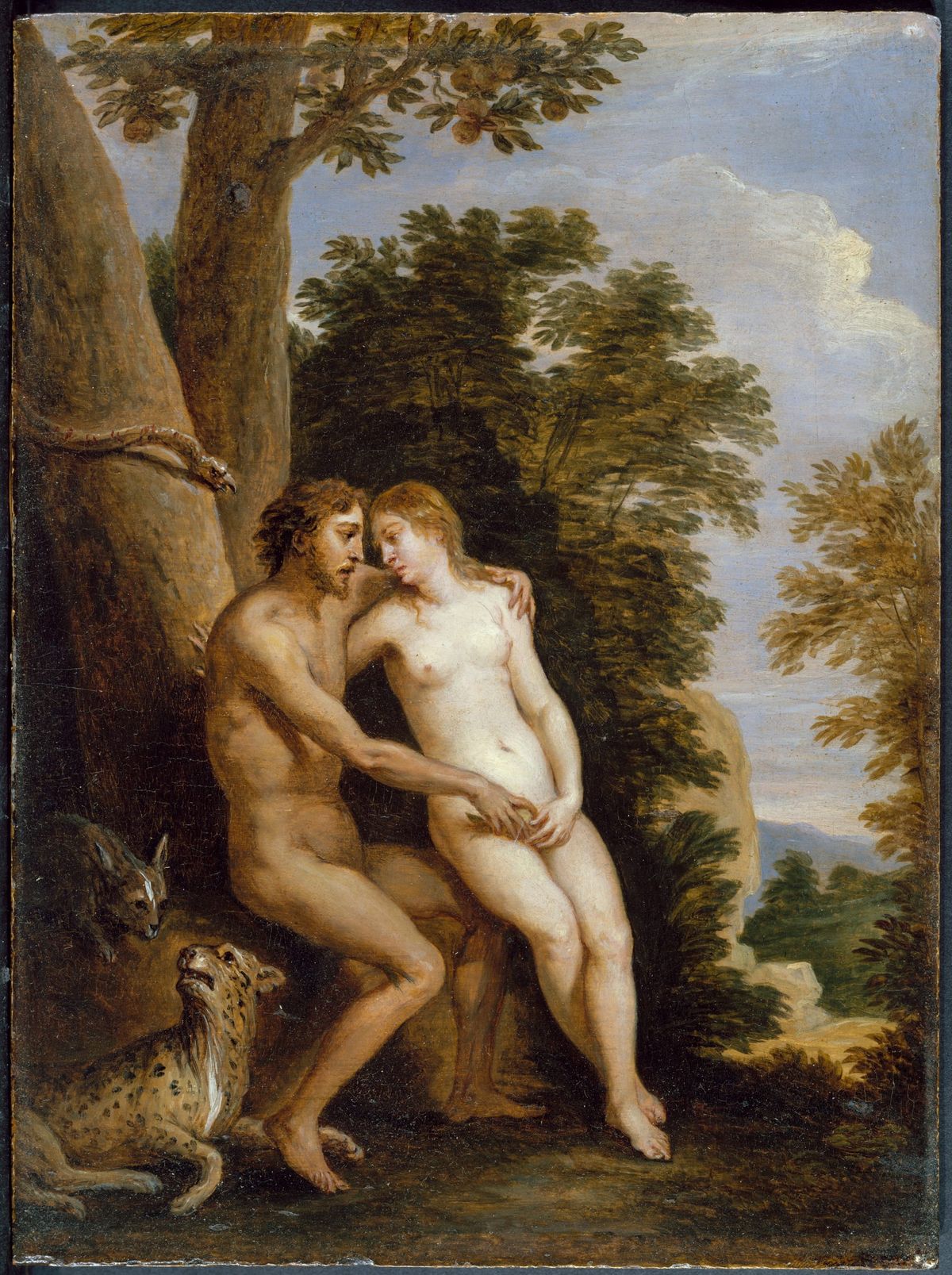
17세기 플랑드르 바로크 풍속화 및 궁정 역사화의 거장 소 다비드 테니어르스(David Teniers le Jeune, 1610–1690)가 1650년대 중반 브뤼셀 궁정 화가 재임 시절 베네치아 르네상스 명화를 모사 연구하며 완성한 기념비적 성경 유화 아담과 하와(Adam and Eve, 프랑스어: Adam et Ève, 소장품 번호: DT3090 또는 1939.81)는 24.1 cm × 17.8 cm 크기의 아담한 목판(패널)에 유채로 그린 대표적인 구약 성서화 최고 걸작입니다.
오스트리아 레오폴트 빌헬름 대공의 전설적인 이탈리아 회화 컬렉션을 집대성한 테아트룸 픽토리움(Theatrum Pictorium) 화보집 제작 과정에서 베네치아 거장 파리스 보르도네(Paris Bordone)의 원작 구도를 바탕으로 제작되었으며, 현재 미국 뉴욕의 메트로폴리탄 미술관(The Metropolitan Museum of Art, New York)에 소장되어 있습니다.
베네치아 거장의 황금빛 색채와 원죄의 슬픔을 향한 화가의 고뇌
1650년대 초반 남네덜란드 총독 레오폴트 빌헬름 대공의 수석 궁정 화가이자 미술관장으로 활약하던 테니어르스는, 대공이 수집한 수백 점의 이탈리아 르네상스 걸작들을 판화집으로 엮어 전 유럽에 알리는 거대한 국가적 예술 프로젝트를 총괄했습니다.
화가는 선배 거장 파리스 보르도네가 남긴 아담과 하와의 고결한 인체 비례와 관능적인 베네치아식 황금빛 색채를 플랑드르 특유의 투명하고 정교한 유화 기법으로 재현하면서, 금지된 선악과를 따먹은 직후 인간이 처음으로 마주한 수치심과 슬픔의 내면을 어떻게 화폭에 담아낼지 치열하게 번민했습니다.
성경 창세기에 기록된 인류 최초의 타락 순간 속에서, 화가는 낙원의 풍요로움 뒤에 드리운 죄책감과 서로를 보듬는 연인의 애절한 정서를 포착했습니다.
화면 중앙 선악과나무 아래 바위에 걸터앉은 아담과 하와는 이미 선악과를 맛본 뒤 자신의 벗은 몸을 부끄러워하며 무화과 잎으로 몸을 가리고 있습니다.
하와는 슬픔에 찬 눈빛으로 고개를 숙인 채 아담에게 몸을 기대고 있으며, 다부진 체격의 아담은 한 팔로 하와의 어깨를 감싸 안고 다른 손으로 그녀를 부드럽게 위로하고 있습니다.
나무줄기를 휘감고 있는 교활한 뱀의 머리와 발치에서 아담을 올려다보는 표범과 토끼, 그리고 저 멀리 펼쳐진 에덴동산의 푸른 숲과 하늘은, 낙원의 영원한 평화를 잃어버리고 유한한 운명을 마주하게 된 인류의 첫 고뇌를 손에 잡힐 듯 생생하게 웅변합니다.
무화과 잎을 쥔 하와의 손길에서 위로하는 아담과 똬리 튼 뱀으로, 시선의 심리적 여정
그림을 마주하는 순간 관람객의 무의식적 시선은 화면 중앙 어두운 숲속에서 부드러운 자연광을 받아 눈부신 백옥처럼 환하게 빛나는 하와의 매끄러운 나체와 무화과 잎을 쥐고 있는 가녀린 손끝으로 가장 먼저 빨려 들어갑니다.
선악과를 범한 뒤 밀려오는 부끄러움과 두려움으로 고개를 떨군 하와의 슬픈 옆얼굴은 보는 이에게 깊은 시각적 연민과 함께 원죄를 짊어진 인간의 근원적 슬픔을 선사합니다.
이어 시선은 하와를 감싸 안고 있는 아담의 구릿빛 팔과 따뜻한 손길을 따라 이동하여, 슬픔에 잠긴 아내를 그윽하게 바라보며 다독이는 아담의 자애로운 눈빛과 굳게 다문 입술로 옮겨갑니다.
두려움 속에서도 서로의 체온에 의지하며 슬픔을 나누는 첫 인간 부부의 애절한 교감을 확인하는 순간, 관람객은 낙원의 문턱에서 펼쳐지는 인간적인 비극과 사랑의 한복판 속으로 온몸이 빨려 들어가게 됩니다.
마지막으로 시선은 아담의 등 뒤 거대한 고목 기둥을 휘감고 있는 날카로운 뱀의 머리를 지나, 왼쪽 바닥에 웅크려 맹수의 야성을 잃지 않은 채 주인을 올려다보는 표범과 저 멀리 황금빛 햇살이 깃든 에덴동산의 언덕에 멈춥니다.
빛을 받는 하와의 우윳빛 피부와 아담의 짙은 음영, 그리고 울창한 수풀이 빚어내는 완벽한 명암의 조화를 마주하며, 관람객은 금기를 넘어선 인간의 운명과 거장 테니어르스가 건네는 묵직한 영혼의 울림을 가슴 깊이 마주하게 됩니다.
17세기 플랑드르 궁정 성서 모사화의 정점과 조형미, 미술계의 평가
미술계는 메트로폴리탄 미술관의 아담과 하와를 테니어르스가 베네치아 르네상스의 이상적인 인체 묘사와 북유럽의 정밀한 세밀화 기법을 완벽하게 융합해 낸 최고봉의 궁정 캐비닛 걸작으로 평가합니다.
대공의 명화 컬렉션을 판화로 옮기기 위해 제작된 소형 모사화(Pastiche/Modello)임에도 불구하고, 단순한 복제를 뛰어넘어 여인의 부드러운 살결, 남성의 탄탄한 근육, 나무껍질과 표범 털의 생생한 질감을 극도로 섬세한 북유럽 사실주의 유화 기법으로 완벽하게 구현했기 때문입니다.
인류의 시초가 겪은 비극적 갈등과 사랑을 가장 격조 높은 시각 서정시로 승화시킨 테니어르스의 이 걸작 화폭은, 오늘날까지도 전 세계 수많은 감상자들에게 깊은 감탄과 잊을 수 없는 시각적 여운을 전해주는 불멸의 명작으로 손꼽히고 있습니다.
Adam and Eve
Painted around the mid-1650s in Brussels by the master of Flemish Baroque genre and court history painting David Teniers the Younger (1610–1690), Adam and Eve (French: Adam et Ève, Accession No. DT3090 / 1939.81) is an intimate biblical oil on panel measuring 24.1 cm × 17.8 cm (9.5 in × 7.0 in).
Executed as a preparatory model for the royal catalog Theatrum Pictorium after an original composition by the Venetian Renaissance master Paris Bordone, it is preserved in the distinguished permanent collection of the Metropolitan Museum of Art in New York, United States.
Theatrum Pictorium Project, Bordone's Venetian Splendor, and the Sorrow of the Fall
During his tenure as court painter and director of the royal art collection for Archduke Leopold Wilhelm of Austria in Brussels, David Teniers the Younger oversaw the engraving of hundreds of Italian masterpieces for the landmark publication Theatrum Pictorium.
While translating the sensual warmth and heroic proportions of Paris Bordone’s Venetian prototype onto a small wooden panel, Teniers meditated deeply upon the immediate psychological aftermath of original sin—capturing the profound shame, vulnerability, and mutual consolation of the first parents.
Drawing from the Book of Genesis, the narrative stages the pivotal moment following the consumption of the forbidden fruit in Eden.
Seated beneath the Tree of Knowledge, Adam and Eve cover their nakedness with freshly gathered fig leaves.
Eve leans despondently against her husband, her downcast profile reflecting sorrowful repentance, while Adam embraces her gently, placing a consoling hand upon her arm.
Beside them, the serpent coils around the rough tree trunk while a leopard and a rabbit recline quietly at their feet, framing a poignant visual meditation on lost innocence, mortal consequence, and enduring human love.
Subconscious Trajectory of the Gaze: From Eve's Fig Leaf to the Coiled Serpent
The observer's subconscious gaze is immediately magnetized by the central-lower register, drawn to the luminous, porcelain radiance of Eve's pale skin and the green fig leaf held delicately over her lap.
Her drooping posture, downcast eyes, and vulnerable expression establish an instant focal point of human fragility, sacred shame, and tender melancholy.
The visual path then follows Adam’s protective embrace along his warm, muscular arm to his compassionate profile and bearded countenance looking down at Eve.
Taking in his comforting touch and the solemn psychological bond uniting the fallen pair, the viewer directly experiences the intimate moral gravity and emotional tenderness of the biblical tragedy.
Finally, the visual trajectory ascends past the massive tree trunk to the sinister head of the serpent nestled in the branches, before descending toward the spotted leopard in the foreground and the sunlit hills of paradise beyond.
Observing the harmonious equilibrium between warm Venetian sfumato, crisp Netherlandish brushwork, and classical anatomy, the spectator perceives the timeless nobility of sacred history and the profound aesthetic solace Teniers embedded within the panel.
The Monument of Flemish Court Narrative: Critical Legacy
Art historians revere the Metropolitan Museum's Adam and Eve as an extraordinary demonstration of Teniers’s stylistic versatility, illustrating his ability to assimilate the rich colorism of the Venetian school within an intimate northern format.
By orchestrating delicate textural contrasts between luminous porcelain flesh, sun-bronzed muscular anatomy, rough tree bark, spotted animal fur, and atmospheric foliage within a unified tonal space, Teniers elevated a preparatory cabinet study into an exquisite aesthetic treatise on human vulnerability and redemption.
This precious historical panel endures as an inspiring testament to the master's creative fortitude, celebrating the enduring power of empathy and the transformative grace of living art.
본 컨텐트의 저작권은 팔렛트제주에 있습니다. 허가없는 무단전제를 금지합니다.
Copyright © Palette Jeju. All rights reserved. Unauthorized reproduction or redistribution is strictly prohibited.