아브라함 델 쿠르트와 그의 아내 마리아 데 카에르히에터 Abraham del Court and his Wife Maria de Kaersgieter
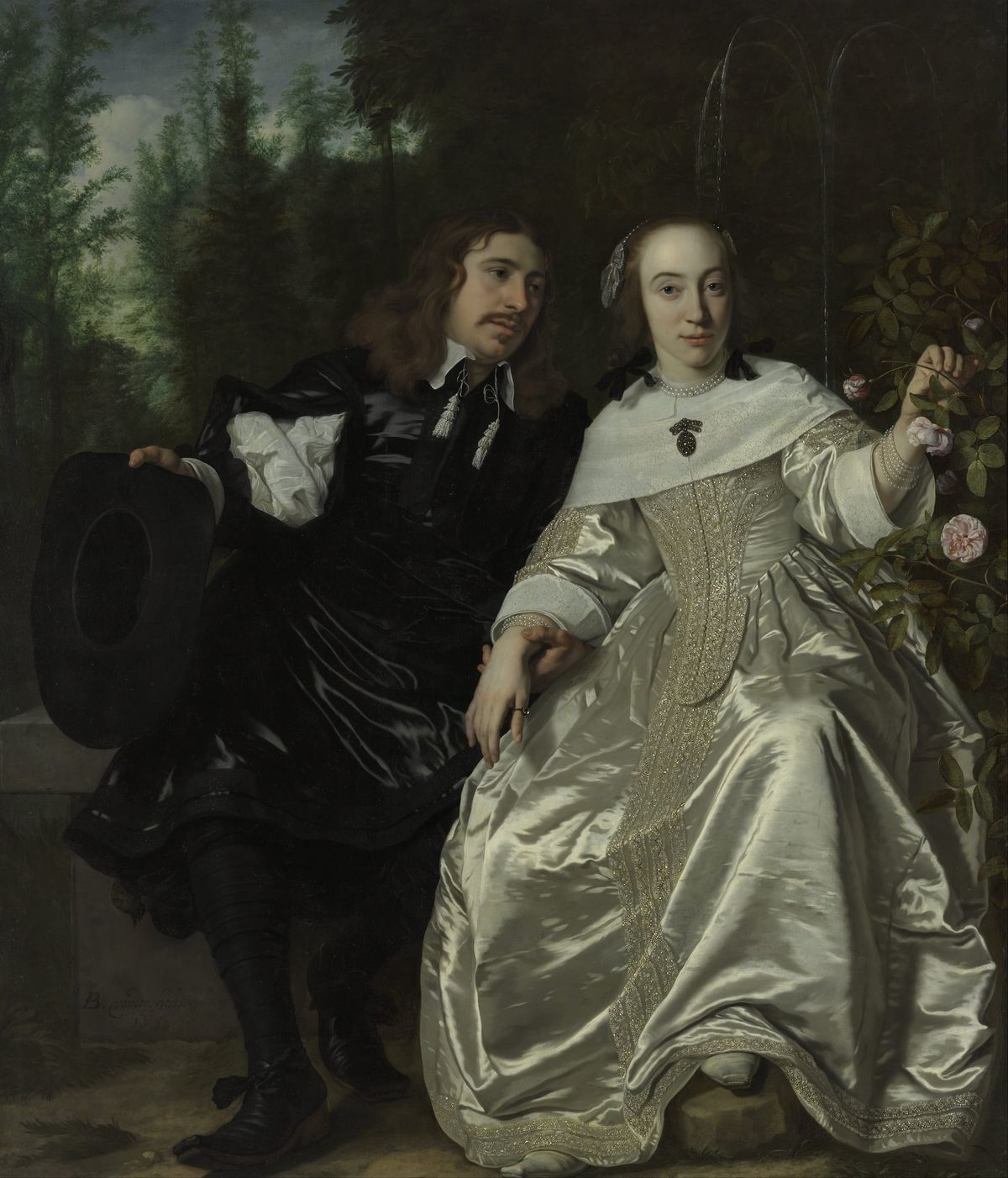
1654년에 네덜란드의 대표적인 초상화가 바르톨로메우스 판 데르 헬스트(Bartholomeus van der Helst)가 암스테르담에서 제작한 이 작품은, 17세기 네덜란드 황금시대 상류층 부부가 누리는 번영과 깊은 애정, 그리고 정원 속에서 교감하는 평화로운 일상을 차분하게 투영합니다.
네덜란드 로테르담의 보이만스 판 뵈닝겐 미술관(Museum Boijmans Van Beuningen, Rotterdam)에 소장된 이 작품의 공식 소장품 등록번호는 1113 (OK)이며, 실제 작품의 실측 규격은 높이 139 cm, 너비 117 cm의 캔버스 유채화입니다.
작가의 고뇌/비하인드
작품의 전면에는 검은색 실크 의복을 입은 아브라함 델 쿠르트와 화려한 은빛 드레스를 입은 아내 마리아 데 카에르히에터가 정원 풍경 속에 나란히 앉아 서로의 손을 다정하게 맞잡은 모습이 묘사되어 있으며, 부부 간의 돈독한 유대와 가문의 번영을 고스란히 드러냅니다.
남편의 부드러운 눈빛과 아내가 장미 넝쿨의 꽃송이를 만지는 우아한 손동작은 당시 상류층 부부 초상화가 지닌 도상학적 의미와 조화로운 삶의 실상을 가감 없이 보여줍니다.
특히 중경에는 인물들의 풍성한 의복 질감과 서로 맞잡은 손의 섬세한 묘사가 입체적인 볼륨감을 형성하고 있으며, 원경의 울창한 정원과 나무 배경은 차분하고 자연스러운 대기감을 자아냅니다.
무의식 속 시선 및 심리 흐름
관람객의 시선은 가장 먼저 화면 우측에서 은빛 광채를 뿜어내는 화려한 드레스를 입고 장미꽃을 향해 손을 뻗는 아내의 밝고 우아한 얼굴과 상반신으로 자연스럽게 꽂힙니다.
이어 시선은 두 사람이 부드럽게 맞잡은 손을 거쳐, 다정한 눈빛으로 아내를 바라보는 좌측 남편의 검은 실크 의복과 모자를 든 손길로 부드럽게 이동합니다.
마지막으로 시선은 화면 전체를 감싸는 웅장한 정원의 녹음과 어두운 숲 배경으로 확장되며, 황금시대 네덜란드 귀족 가문이 누리던 안정과 깊은 신뢰의 울림을 체감하게 됩니다.
미술계의 평가 및 조형미
미술사학계는 이 작품을 17세기 네덜란드 황금시대 초상화의 정수이자, 부부의 애정과 사회적 지위를 자연스러운 정원 배경 속에 우아하게 녹여낸 뛰어난 초상화 수작으로 평가합니다.
캔버스 위에 정교하게 쌓아 올린 유채 물감은 검은 실크의 깊은 광택, 은빛 드레스의 서늘한 질감, 그리고 정원 나무 스며드는 빛의 효과를 생생하게 살아나게 만듭니다.
인간의 세련된 품격과 자연스러운 교감을 예술의 경지로 조화롭게 담아낸 이 작품은, 오랜 시간이 지나도 변함없는 미술사적 가치를 지니고 있습니다.
영문 번역본 구성
Abraham del Court and his Wife Maria de Kaersgieter
Created in 1654 in Amsterdam by the prominent Dutch master Bartholomeus van der Helst, this work quietly reflects the prosperity, deep affection, and peaceful everyday harmony enjoyed by an upper-class couple during the seventeenth-century Dutch Golden Age within a lush garden setting.
Housed in the Museum Boijmans Van Beuningen in Rotterdam, Netherlands, this piece bears the official inventory number 1113 (OK), and the actual physical dimensions of the oil on canvas measure 139 cm in height and 117 cm in width.
The Artist's Struggle and Behind-the-Scenes
In the immediate foreground, Abraham del Court dressed in black silk and his wife Maria de Kaersgieter in a luminous silver gown are depicted sitting side by side in a garden landscape, tenderly holding hands to vividly expose the strong bond of marriage and the prosperity of their lineage.
The husband's gentle gaze and the wife's elegant gesture of touching a rose blossom unsparingly reveal the iconographic significance and harmonious reality of contemporary upper-class double portraits.
In the middle ground, the rich fabric textures of the figures' garments and the delicate depiction of their clasped hands establish a volumetric spatial presence, while the lush garden and trees in the distance gently generate a serene, natural atmosphere.
Subconscious Gaze and Psychological Flow
The viewer's gaze is initially drawn directly to the bright, elegant face and upper body of the wife on the right, who wears a shimmering silver dress and reaches toward the roses.
The eye then shifts smoothly across their gently joined hands toward the dark silk attire and the hand holding a hat of the husband on the left, who gazes affectionately at his wife.
Finally, the gaze drifts outward into the lush greenery of the grand garden and the darkened forest background, evoking a profound resonance of the stability and deep mutual trust enjoyed by aristocratic families of the Golden Age.
Art World Evaluation and Formal Beauty
Art historians evaluate this work as a masterpiece of seventeenth-century Dutch Golden Age portraiture, successfully capturing marital affection and social status gracefully embedded within a natural garden backdrop.
The meticulous layering of oil paint on canvas brings the deep luster of the black silk, the cool textures of the silver gown, and the effects of light filtering through the garden foliage to breathtaking life.
Successfully fusing human refinement and natural communion into the pinnacle of artistic mastery, this creation retains an enduring value in art history.
본 컨텐트의 저작권은 팔렛트제주에 있습니다. 허가없는 무단전제를 금지합니다.
Copyright © Palette Jeju. All rights reserved. Unauthorized reproduction or redistribution is strictly prohibited.