6층에서 바라본 알레비 거리 Rue Halevy Seen from the Sixth Floor
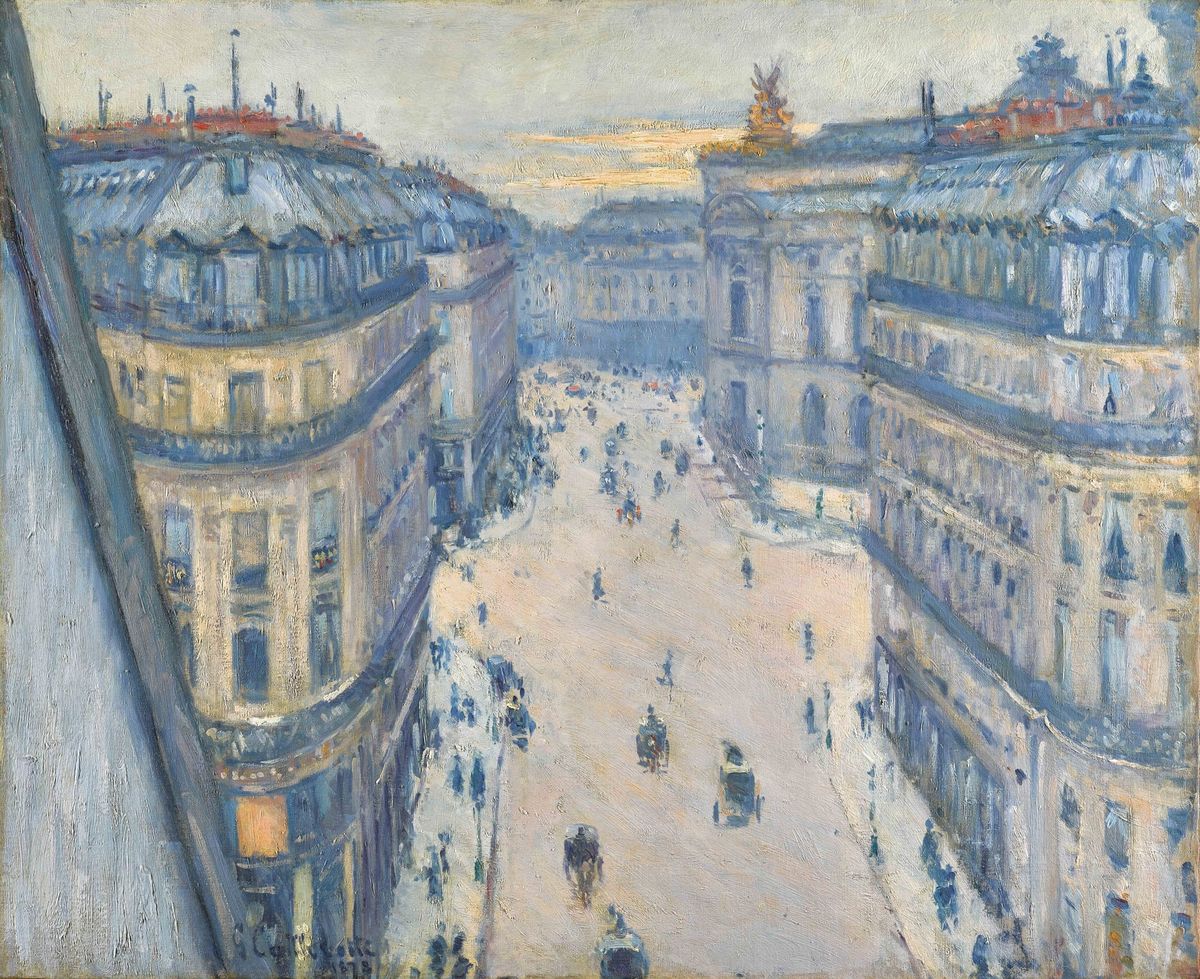
아찔하게 높은 곳에서 내려다본 파리 도심의 풍경이 강렬한 인상을 주는 이 작품은, 귀스타브 카유보트가 1878년에 완성한 명작입니다. 세로 59.5cm, 가로 73cm의 실제 캔버스 크기를 지닌 이 그림은 오스만 남작의 거대한 도시 계획으로 새롭게 정비된 근대 파리의 압도적인 스케일과 그 이면의 분위기를 마치 한 장의 사진처럼 생생하게 담아내고 있습니다.
그림을 마주한 감상자의 시선은 가장 먼저 화면 양옆을 거대하게 에워싸고 있는 웅장한 아파트 건물들에 닿게 됩니다. 완벽한 원근법으로 정밀하게 묘사된 이 견고한 건축물들은 우리가 일상에서 마주하는 철저히 계산되고 통제된 이성적인 현실, 즉 완벽하게 짜인 의식의 세계를 상징합니다.
하지만 이내 우리의 눈길은 깊게 파인 구도를 따라 저 아래 넓게 펼쳐진 알레비 거리의 바닥으로 빠르게 빨려 들어갑니다. 화면의 아래쪽과 거리를 걷고 있는 점 같은 사람들의 모습은 형체를 알아보기 힘들 정도로 흐릿하게 묘사되어 있습니다. 이 아득하고 텅 빈 공간감은 화려한 도시 속에서 개인이 겪게 되는 깊은 소외감과 짙은 고독이라는 무의식의 심리적 심연으로 감상자를 이끌어갑니다.
그리고 마침내 시선은 화면 좌측 하단에 날카롭게 사선을 긋고 있는 차가운 아연 지붕의 모서리에 머물게 됩니다. 거리와 철저히 단절된 채 높은 곳에서 세상을 관망하게 만드는 이 아찔한 프레임은, 현대 도시인이 느끼는 심리적 거리감을 극대화하는 매우 탁월한 장치입니다.
이토록 파격적인 시점이 탄생한 비하인드 스토리에는 부유한 부르주아 계층이었던 카유보트 특유의 서늘한 관찰력이 숨어 있습니다. 그는 모네나 르누아르가 눈앞에서 사람들과 교감하며 따뜻한 풍경을 그릴 때, 홀로 높은 아파트 발코니로 올라가 최신 사진기의 렌즈를 내려다보듯 이 차가운 풍경을 기획했습니다. 군중 속에 섞이지 못한 채 거리를 관망하는 산책자로서, 그는 근대화된 파리의 화려함 이면에 자리 잡은 인간관계의 단절을 화폭에 솔직하게 기록한 것입니다.
오늘날 미술사학자들은 이 작품을 인상주의의 빛나는 색채와 사진적인 시각이 완벽하게 결합된 최고의 걸작 중 하나로 평가합니다. 전통적인 눈높이의 풍경화를 과감히 탈피하고, 위에서 아래를 굽어보는 이 파격적인 조감도 구도는 현대 시각 예술의 문을 연 매우 혁신적인 시도였습니다. 이 그림은 단순한 도시 풍경을 넘어, 현대인들의 우울하고 세련된 심리적 지형도를 날카롭게 그려낸 예술적 성취로 확고히 인정받고 있습니다.
Presenting a dizzying view of downtown Paris from high above, this artwork is a masterpiece completed by Gustave Caillebotte in 1878. With actual canvas dimensions of 59.5 by 73 centimeters, this painting vividly captures the massive scale and underlying atmosphere of modern Paris—newly renovated by Baron Haussmann's grand urban planning—as if taking a photograph.
Upon facing the painting, the viewer's gaze first lands on the magnificent, sweeping apartment buildings massively enclosing both sides of the canvas. These solid architectural structures, meticulously depicted with perfect perspective, symbolize the thoroughly calculated, controlled, and rational reality we face in everyday life—the flawlessly structured world of consciousness.
However, our eyes are soon rapidly drawn down the deep, plunging composition to the expansive floor of Rue Halevy spreading out far below. The lower part of the canvas and the dot-like figures walking on the street are depicted so vaguely that their forms are barely recognizable. This distant, empty sense of space leads the observer into the psychological abyss of the unconscious—the profound sense of alienation and dense solitude experienced by individuals within a glamorous city.
Finally, the gaze rests on the sharp, diagonal edge of the cold zinc roof slicing through the lower-left corner of the frame. This dizzying framing, which completely disconnects the observer from the street and forces them to watch the world from a high vantage point, is an exceptional device that maximizes the psychological distance felt by modern urbanites.
The behind-the-scenes story of how such an unconventional viewpoint was born lies in the uniquely cool, observational skills of Caillebotte, who belonged to the wealthy bourgeois class. While other Impressionists like Monet and Renoir painted warm landscapes, interacting with people at eye level, Caillebotte went up to a high apartment balcony alone and designed this cool space as if looking down through the lens of a state-of-the-art camera. As a flâneur who observed the streets without blending into the crowd, he honestly recorded on canvas the disconnection of human relationships hidden beneath the glamour of modernized Paris.
Today, art historians evaluate this piece as one of the greatest masterpieces where the brilliant colors of Impressionism and a photographic vision are perfectly combined. Boldly breaking away from traditional eye-level landscape paintings, this unconventional bird's-eye view was a highly innovative attempt that opened the door to modern visual art. This painting is firmly recognized as an artistic achievement that goes far beyond a simple cityscape, sharply illustrating the melancholic and sophisticated psychological topography of modern people.
ⓒ 본 리뷰의 저작권은 "팔렛트제주"에 있으며, 무단 전재 및 재배포를 엄격히 금합니다. / Copyright 2026 by Palette Jeju. All rights reserved. Unauthorized reproduction or distribution is strictly prohibited.