63세의 자화상 - Self-Portrait at the Age of 63
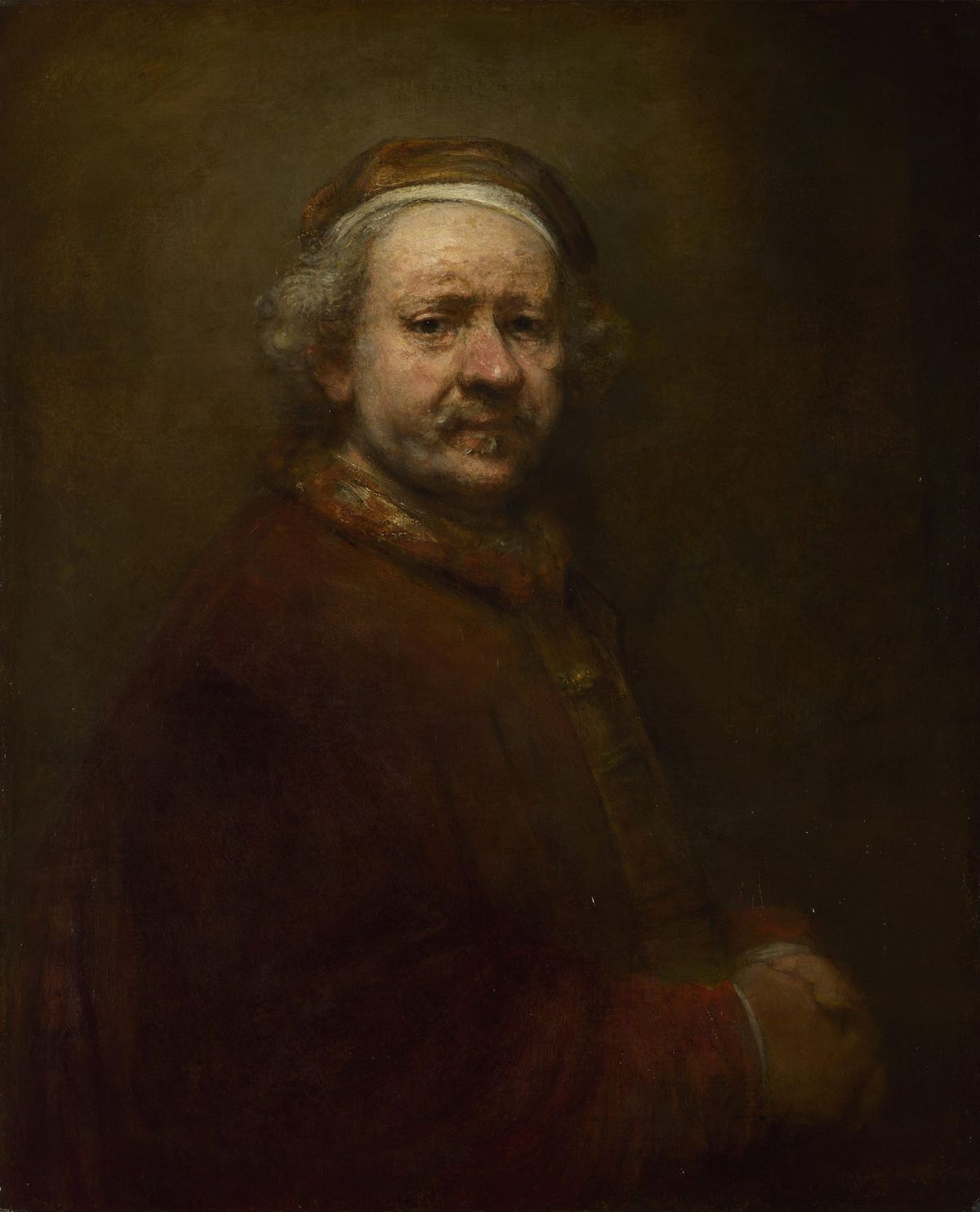
1669년 17세기 네덜란드 황금기를 대표하는 거장 렘브란트 반 레인(Rembrandt van Rijn)이 제작한 유화 작품 《63세의 자화상》은 캔버스에 유채로 그려진 초상화로, 현재 영국 런던 내셔널 갤러리(The National Gallery, London)에 소장되어 있으며 실제 크기는 약 86 × 70.5 cm입니다.
이 화면은 깊은 어둠 속에서 은은하게 비추는 따뜻한 빛을 받으며 모자를 쓰고 두 손을 모은 채 관람객을 정면으로 지그시 응시하는 렘브란트 생애 마지막 해의 숙연하고 깊은 자태를 거장 특유의 두터운 임파스토 붓터치와 절제된 명암법으로 포착해 낸 명작입니다. 화가는 세월과 고통의 흔적이 깊게 새겨진 이마와 주름진 뺨, 흰 머리칼, 그리고 붉은빛이 감도는 묵직한 의복의 질감을 빛과 그림자의 오묘한 대조 속에서 부각시켰습니다.
작품 속에는 삶의 마지막 순간에 이르러 완성된 거장의 솔직하고 깊은 내면적 자아성찰이 담긴 비하인드 스토리가 흐릅니다. 1669년 10월 세상을 떠나기 불과 몇 달 전에 완성된 이 자화상은 파산과 외로움, 그리고 사랑하는 아들 티투스의 죽음까지 겪어낸 화가가 자신의 생을 고요히 되돌아보며 남긴 유작 중 하나입니다. 화가는 인위적인 미화나 장식을 완전히 배제하고, 세월의 풍파를 온몸으로 견뎌낸 한 인간이자 예술가로서의 진솔한 영혼만을 화폭 위에 고스란히 담아냈습니다.
후대 평단과 관객들은 이 작품을 렘브란트 자화상 연작 중에서도 인간적 숭고함과 심리적 영혼의 깊이가 정점에 달한 최종적 완성작으로 평가합니다. 빛을 입어 따뜻하게 반짝이는 이마와 세월을 삼킨 듯 고요한 눈빛, 그리고 두텁게 쌓인 물감층이 선사하는 묵직한 질감은 관객에게 시대를 초월한 깊은 심리적 안식과 숭고한 감동을 선사합니다.
이 그림을 마주하는 관람객의 무의식적 시선은 가장 온화한 빛이 집중되는 렘브란트의 이마와 세월의 궤적을 품은 채 관람객을 가만히 바라보는 솔직하고 따뜻한 눈빛으로 가장 먼저 끌려갑니다. 고뇌를 넘어선 거장의 고요한 표정은 관람객의 마음에 묵직한 시각적 중심과 정숙한 평온함을 안겨줍니다.
이어 시선은 머리를 포근하게 감싸고 있는 모자의 부드러운 테두리를 따라 내려가, 가슴 앞으로 조용히 모아 쥔 두 손의 윤곽과 붉은빛의 묵직한 모피 장식 의복으로 자연스럽게 이동합니다. 단단하고 유연하게 올려진 임파스토 물감의 질감은 화면 전체에 든든한 안정감과 기품을 더해줍니다.
마지막으로 시선은 인물의 뒤편을 조용히 둘러싸고 있는 그윽하고 어두운 배경 속으로 낙하하여 정착합니다. 이러한 무의식적 시선의 흐름은 거장이 생의 마지막 순간에 도달한 고요한 내면의 안식처로 감상자를 자연스럽게 인도하며, 마음에 닿는 차분하고 정갈한 여운을 오래도록 남깁니다.
In 1669, Rembrandt van Rijn, one of the paramount masters of the Dutch Golden Age, created the deeply moving oil painting titled "Self-Portrait at the Age of 63." Preserved in the renowned National Gallery in London, this original canvas measures approximately 86 × 70.5 cm. This artwork finely captures the weathered dignity and serene self-scrutiny of the artist in the final year of his life through a rich, impasto-laden application of chiaroscuro.
The painting visually manifests Rembrandt at sixty-three, wearing a beret and a deep red coat with his hands clasped together, gazing out with an unflinching yet gentle expression. Historical context highlights this work as one of the very last paintings completed by Rembrandt before his death in October 1669, following years of financial insolvency and personal loss, including the tragic death of his son Titus. Stripping away all earthly pretense, Rembrandt recorded his own face with uncompromising truthfulness and profound spiritual poise.
Art historians and critics continuously extol this masterwork for its psychological grandeur and tactile paint handling, celebrating Rembrandt's ability to transform aging and mortality into a universal meditation on human resilience. The striking contrast between his warmly illuminated brow, his expressive eyes, and the enveloping dark backdrop creates an enduring atmosphere of quiet majesty and emotional permanence.
The moment an observer encounters this artwork, their gaze is subconsciously drawn straight to the brightly illuminated forehead, furrowed brow, and soulful, searching eyes of the elderly master. His calm, contemplative gaze immediately diffuses tension, instilling a comforting sense of serenity and emotional trust.
Next, the eye glides smoothly around the soft curve of his beret and follows the rich, crimson textures of his heavy coat toward his clasped hands. The rich, tactile quality of the layered oil paint endows the figure with physical presence and artistic composure.
Finally, the viewer's gaze drifts into the deep, velvety atmosphere of the background before coming to rest upon the surrounding spatial field. This natural visual journey guides the spectator into a state of quiet contemplation, leaving a lasting impression of wisdom, dignity, and timeless peace.
본 리뷰에서 작품을 제외한 컨텐츠의 저작권은 팔렛트제주에 있습니다.
"퍼블릭도메인 고전명화"를 제외한 모든 창작 콘텐츠는 저작권법 제4조 및 제10조에 의거하여 보호됩니다. 무단 도용시 저작권법 제136조(벌칙)에 의거, 당사의 사전 서면 승인 없는 저작권 침해 행위를 금지합니다.