병자를 고치고 어린아이들을 축복하시는 그리스도 (백 길더 판화) - Christ Healing the Sick (The Hundred Guilder Print)
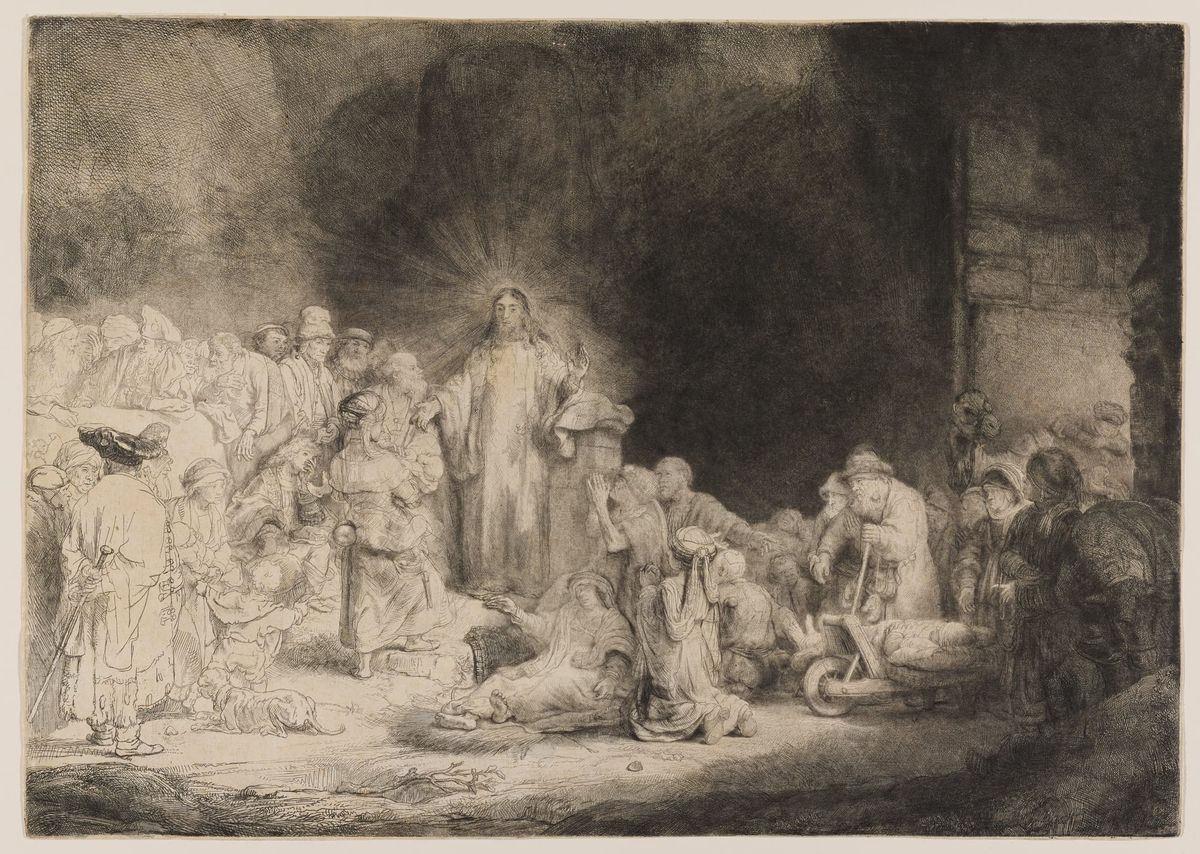
1647–1649년경 17세기 네덜란드 미술의 거장 렘브란트 반 레인(Rembrandt van Rijn)이 제작한 판화 작품 《병자를 고치고 어린아이들을 축복하시는 그리스도》는 에칭과 드라이포인트, 뷰랭 기법으로 완성된 판화 역사상 최고 걸작 중 하나로, '백 길더 판화(The Hundred Guilder Print)'라는 별칭으로 널리 알려져 있으며 현재 암스테르담 국립미술관(Rijksmuseum)과 런던 대영박물관(British Museum), 뉴욕 메트로폴리탄 미술관(The Metropolitan Museum of Art) 등에 원본 판화가 소장되어 있으며 실제 크기는 약 27.8 × 38.8 cm입니다.
이 화면은 신약성경 마태오복음 19장에 나오는 예수 그리스도의 여러 가르침과 기적—병자들의 치유, 어린아이들을 축복함, 바리사이파 사람들과의 논쟁, 그리고 부자 청년의 이야기—을 하나의 장엄한 화폭 속에 동시적으로 포착해 낸 명작입니다. 화가는 화면 중앙에서 머리 뒤로 후광을 내뿜으며 양손을 들어 대중을 맞이하는 그리스도를 중심으로, 좌측의 논쟁하는 지식인들과 어린아이를 들고 다가오는 어머니들, 그리고 우측의 그늘 속에서 휠체어와 침상에 기대어 기적을 바라는 병자들의 군상을 극적인 명암대비법(키아로스쿠로)으로 부각시켰습니다.
작품 속에는 판화사상 전무후무한 고가로 거래되어 '백 길더 판화'라는 별칭을 얻게 된 비하인드 스토리가 흐릅니다. 17세기 당시 100길더는 집 한 채의 거주 비용에 맞먹는 거금이였으며, 렘브란트가 이 판화의 단 한 장을 되사기 위해 자신의 귀한 수집품과 맞바꾸었다는 일화에서 이 명칭이 유래했습니다. 렘브란트는 수년에 걸쳐 동판 위에 섬세한 에칭과 묵직한 드라이포인트 선을 정교하게 중첩시켜, 단 한 장의 판화 안에 인간 신앙의 다채로운 스펙트럼과 구원의 신성을 완벽하게 시각화했습니다.
후대 평단과 관객들은 이 판화를 렘브란트 판화 예술이 도달한 최고의 정점이자 바로크 흑백 판화의 불멸의 유산으로 평가합니다. 화면 좌측의 밝고 명료한 선과 우측의 벨벳처럼 깊고 그윽한 어둠, 그리고 그 경계에서 빛나는 그리스도의 신성한 존재감은 관객에게 시대를 초월한 숭고한 감동과 깊은 영적 안식을 선사합니다.
이 그림을 마주하는 관람객의 무의식적 시선은 가장 눈부신 후광과 빛을 내뿜으며 화면 중앙에 인자하게 서 있는 예수 그리스도의 신성한 자태로 가장 먼저 끌려갑니다. 양손을 내밀며 자비를 베푸는 그리스도의 정숙한 포즈는 관람객의 마음에 묵직한 시각적 중심과 숙연한 평온함을 안겨줍니다.
이어 시선은 화면 좌측, 그리스도를 향해 아이를 안고 다가오는 어머니들과 서서 교리와 진리를 논쟁하는 바리사이파 사람들의 섬세한 윤곽을 지나, 우측의 짙은 음영 속에서 수레를 끌고 손을 뻗으며 기적을 갈구하는 병자들의 절박한 포즈로 자연스럽게 이동합니다. 좌우가 이루는 빛과 어둠의 명확한 대비는 화면 전체에 팽팽한 서사적 긴장감과 극적인 숭고함을 더해줍니다.
마지막으로 시선은 우측 상단 성벽의 어두운 아치형 음영과, 화면 하단을 조용히 받치고 있는 바닥의 잔잔한 여백 속으로 낙하하여 정착합니다. 이러한 무의식적 시선의 흐름은 인간의 고통과 신의 구원이 만나는 거룩한 안식처로 감상자를 자연스럽게 인도하며, 마음에 닿는 차분하고 정갈한 여운을 오래도록 남깁니다.
In c. 1647–1649, Rembrandt van Rijn, one of the paramount masters of the Dutch Golden Age, created the monumental etching titled "Christ Healing the Sick" (universally celebrated as The Hundred Guilder Print). Preserved in world-renowned collections such as the Rijksmuseum in Amsterdam, the British Museum in London, and the Metropolitan Museum of Art in New York, this original print measures approximately 27.8 × 38.8 cm. This artwork finely captures the complex theological narratives of Matthew 19 through an extraordinary, unmatched synthesis of etching, drypoint, and burin work.
The print visually manifests Jesus Christ standing centrally enveloped in a gentle divine aura, extending his hands to heal the afflicted while welcoming young children and engaging with doubting Pharisees. Historical context highlights the legendary status of this sheet; the nickname The Hundred Guilder Print arose during Rembrandt's lifetime due to the staggering sum of one hundred guilders associated with its acquisition or trade value—a fortune for a paper print at the time. By layering delicate line work with deep, velvety drypoint hatching, Rembrandt created a grand symphony of faith and human emotion.
Art historians and critics continuously extol this masterpiece as the absolute pinnacle of graphic art in Western history, celebrating Rembrandt's ability to seamlessly blend diverse biblical episodes into a unified pictorial space. The striking contrast between the brilliantly lit, sketchy figures on the left and the dense, dark atmosphere enveloping the suffering crowd on the right creates an enduring atmosphere of sacred compassion and emotional permanence.
The moment an observer encounters this artwork, their gaze is subconsciously drawn straight to the warmly illuminated figure of Christ standing at the center of the composition, framed by a soft radial halo. His serene, compassionate stance immediately diffuses tension, instilling a comforting sense of spiritual elevation and quiet reverence.
Next, the eye glides smoothly toward the left to trace the mothers bringing their children to be blessed and the debating scholars, before sweeping rightward into the rich, velvety shadows where the sick and lame reach out in desperate hope. The dramatic interplay between clear linear light on the left and deep atmospheric shadow on the right endows the scene with profound structural harmony.
Finally, the viewer's gaze drifts up into the dark archway looming in the upper right before coming to rest upon the shadowed foreground plane. This natural visual journey guides the spectator into a state of quiet, reverent reflection, leaving a lasting impression of grace, healing, and timeless peace.
본 리뷰에서 작품을 제외한 컨텐츠의 저작권은 팔렛트제주에 있습니다.
"퍼블릭도메인 고전명화"를 제외한 모든 창작 콘텐츠는 저작권법 제4조 및 제10조에 의거하여 보호됩니다. 무단 도용시 저작권법 제136조(벌칙)에 의거, 당사의 사전 서면 승인 없는 저작권 침해 행위를 금지합니다.